

The cost of a radon mitigation system depends mostly on the type of system being installed. Use this guide to learn about your options.
Put radon worries in your rear-view mirror

An air radon mitigation system uses a fan and pipe to pull radon from under your foundation and expel it outdoors.
Professional radon mitigation installation costs about $1,000, and foundation repairs cost $1,500 to $15,000 to seal gaps and limit entry.
Your radon system design matches your foundation, using a crawl space, perimeter drain pipe, under-slab piping, or a sump pit to vent soil gas.
Hiring a local radon testing professional provides peace of mind through accurate radon level measurement and proper installation that keeps your home safer.
When you are trying to enjoy a relaxing evening at home after a long day, the last thing you want to worry about is problems with your property–like termites, roof leaks, or unsafe air. Fortunately, it’s easy to eliminate one problem—radon—from your list of worries by deploying a radon mitigation system. How does a radon mitigation system work? It draws air from the ground, which may include concentrated radon gas, and expels it into the surrounding air outside of the home, keeping the air inside your home safer.
Radon is a radioactive gas that is naturally occurring throughout the United States. As uranium in the soil breaks down, it creates radon gas. It becomes especially dangerous when your home or office building has uranium in the soil below it, allowing radon gas to seep through your foundation and into the home’s atmosphere.
It doesn’t really matter if you have an older home or a newer home. Because radon comes from the soil, it could seep into any kind of home, unless the builder specifically constructed the foundation to be radon resistant.
Exposure to radon over a long period of time can cause serious health problems, including lung cancer. Lowering radon in your home requires professional knowledge and skills only available by hiring a radon mitigation pro.
Once it’s indoors, radon circulates. Concentrations build up slowly to expose your family. With long-term exposure to radon, you could suffer lung cancer. The Environmental Protection Agency (EPA) estimates about 21,000 Americans die annually from lung cancer related to radon exposure, making it the second-highest cause of lung cancer deaths.
Radon gas does not have a color or odor, so you cannot know whether you may have a problem without testing. Should tests show that you have a problem, you can reduce the level of radon that is seeping into your home or office building through mitigation.
Radon mitigation attempts to reduce the concentration of radon gas inside a building or home. Because radon particles are dangerous to breathe, the mitigation system tries to limit human exposure to these particles.
How does a radon mitigation system work? It uses a pipe and fan to pull air from the dirt underneath the home’s foundation or in crawl spaces, expelling it into the surrounding air for dissipation. The design of the system should keep the venting away from any doors and windows.
It’s important to match up the system design with the design of the foundation of your home.
Crawl space: Inside a crawl space, the installer will cover the soil with plastic. The vent pipe then goes through the plastic to pull out soil gas.
Drain tile: The vent pipe in the mitigation system goes through the foundation’s drain tile to reach the ground, and to pull out soil gas.
Sub-slab: The vent pipe goes directly underneath the foundation of the building through the concrete slab, pulling out soil gas.
Sump pump: If you already have a sump pump pit installed, it’s possible the installer can use this pit to pull out soil gas.
The lower end of the vent pipe pulls the soil gas out of a suction pit that’s dug in a location that matches the type of mitigation system design in use.
All systems then send the soil gas outside the home near the roof through the upper end of the vent pipe. Systems use powered fans to extract the soil gas. These fans often exist in an attic or garage, as you cannot install them in a living space.

Because radon gas is heavier than the normal atmosphere—by 7.5 times, according to the EPA—some people believe that a radon mitigation system does not work. They believe the radon would not dissipate in the atmosphere, falling back to the ground.
However, these systems are able to dissipate the radon gas. The force of the fan keeps radon from collecting in high concentration levels near the home. Even though radon is heavier than air, it moves readily on forced air currents, allowing the system to move it across great distances.
According to the EPA, for a radon mitigation system to work properly, it should deliver a radon level of less than 4 pCi/L (picocuries per liter) inside the home. A local radon inspection company should be able to measure your radon levels after the installation of a system, determining whether it’s working properly.
Should you install a radon mitigation system and find that it is not moving the radon particles properly, it’s rarely because the design of the system is poor. Far more often, a problem with a mitigation system occurs because of an improper installation.
The process of installing a radon mitigation system is usually a job best left to the professionals. In fact, many local and state laws require you to hire a licensed professional to do the work, rather than allowing you to do the job yourself.
Not only does the installer need to put the system in place, but the installer also may need to be able to hard wire the fan into your electrical system. The installer may need to put the lower end of the vent pipe through your foundation and the upper end through your roof safely, so this is not a job for a novice.
As part of the process for installing the system in a home where radon levels are high, the local radon mitigation company can probably seal any gaps in your foundation. The professional also knows exactly what type of system to use to match the design of your home.
The average radon mitigation system cost is about $1,000, including installation. Should you need significant repairs to the foundation to cut off the ability of the radon gas to seep into your home, you could pay anywhere from $1,500 to $15,000.
The fan in the radon mitigation system runs on electrical power. However, the cost to run the fan should be less than $100 per year.
One of my old tall evergreen trees was suddenly leaning toward the busy street in front of my house. I submitted a request for an emergency tree inspection, and Alejandro, owner of Cajete Tree Service, contacted me immediately and arrived to look at it just 20 minutes later. We agreed the...
 Cajete Tree Service LLC
Great company! Price was competitive, technician showed up on time and completed the job (exterior electric Radon fan replacement) quickly. Would hire them again.
 MaGen Property Inspections and Radon Mitigation
1 tree was cut down and 5 others including a large willow tree were trimmed. The Grant Tree Service men were professional and cleaned up afterwards. The cost of the 6 trees were affordable. I am very happy with the results. I would hire them again.
 Grants Tree Service
I had FabClean 614 clean my apartment, and she did an outstanding job. She was so professional and efficient. My apartment looks absolutely spotless every surface, every corner, all cleaned to perfection. Definitely highly recommend FabClean 614 if you're looking for top-notch cleaning...
 Fab Clean 614
It went so well! They were prompt and efficient! They were patient with last minute changes and the work was worth the money
 Security Doors and Shutters
D1 Roofing delivers outstanding service from beginning to end, backed by a strong warranty and expert teams. I highly recommend them for their excellence in meeting and surpassing expectations with unmatched communication. Choosing D1 Roofing was flawless decision
 Division 1 Roofing LLC
Seth was very professional, prompt in responding to queries about the work required , gave sincere advice as to what would be best for tree trimming and did the job timely.
I conferred with 2 other contractors before Armstrong Electric. Nick and his crew showed me that the project was not as convoluted as the other contractors made it appear to be. They completed the entire project on time. They were professional, friendly and cleaned up after at completion. I...
 ARMSTRONG ELECTRIC, LLC
The technician was very professional and friendly. He answered all my questions and was very thorough. He left the fireplace area very clean . He inspected from the roof and advised me as to other work that might need to be done. There was no pressure there. I was very satisfied with the...
 Supreme brick & chimney
I had Ace Fireplace Services install custom chimney caps for my home, and the results are stunning. They fit like a glove and have added a touch of sophistication to my chimney. I can't recommend their services enough.
 Ace Fireplace Services
From average costs to expert advice, get all the answers you need to get your job done.
The cost of a radon mitigation system depends mostly on the type of system being installed. Use this guide to learn about your options.

Get clear answers on how much radon remediation costs, including average prices, key cost factors, and tips to save money on your home’s radon mitigation.
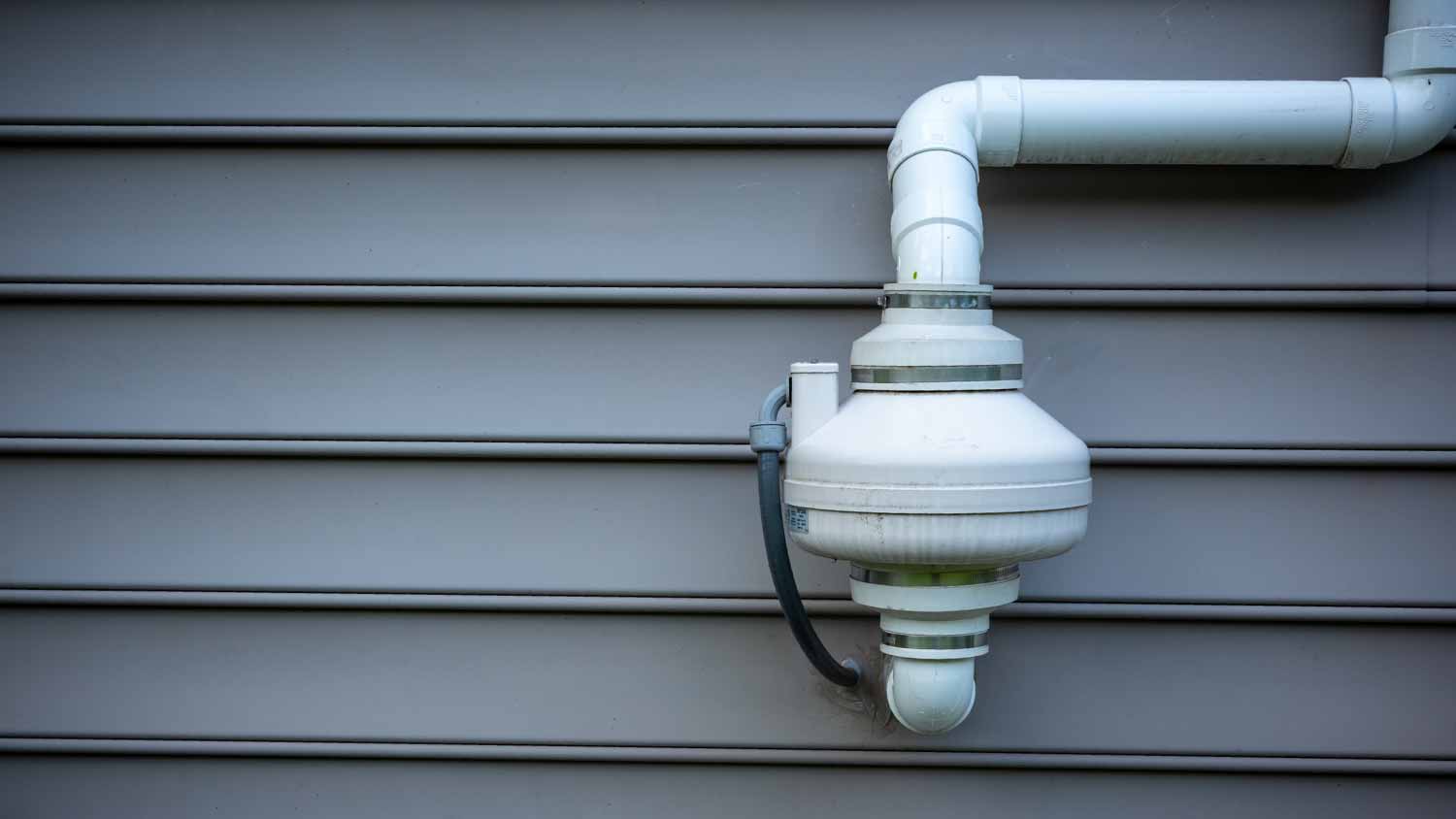
Find out the average cost of radon fan replacement, key price factors, and ways to save. Get expert tips to budget for your radon mitigation system.

Can a homeowner install a radon mitigation system? While some parts of the project are fine for DIY, you should leave the meat of the task to a licensed professional.
You need to protect your home from radon, but what does a radon mitigation system look like? Check out this radon mitigation system diagram to learn how it works.

Radon is a gas that you can't see or smell and is harmful to your health. If your home has radon, you need to know who installs radon mitigation systems.