


If you’re planning a new construction build or a home addition, you should familiarize yourself with these nine types of construction documents beforehand.
When calculating overhead, you'll need to account for general conditions costs, which can range from trailers to permits

General conditions represent essential overhead costs that are not directly linked to specific labor, materials, or equipment categories.
Failing to accurately estimate these miscellaneous expenses can lead to budget overruns and significantly reduced net profit margins.
Common examples of these costs include temporary utility hookups, site permits, mobile office trailers, and final project cleanup.
Allocating time for thorough planning is the most effective way for a contractor to keep these varied expenses controlled.
These costs often include administrative staff salaries and specialized software required for managing the project's complex daily operations.
When it comes to new home construction, overhead continues to be the primary threat to a builder's bottom line. According to recent industry benchmarks, home builders currently maintain an average gross profit margin of approximately 20%. However, their average net profit—the actual take-home after accounting for all indirect expenses, not just labor and materials—typically sits between 8% and 11%.
In a market defined by higher financing costs and stabilizing material prices, failing to control your general conditions can quickly erode these gains. But what exactly are these costs, and how can you keep them in check? This guide breaks it all down for you.
General conditions in construction, specifically residential construction, refer to those miscellaneous costs that construction managers often overlook or don’t properly estimate in their budgets. This includes things like hooking up temporary utilities to a home under construction or spending time mapping out a scope of work for a new dwelling.
While most general contractors and home builders are laser-focused on typical construction costs—such as materials, labor, and equipment—you shouldn’t forget about general conditions costs. Otherwise, you risk budget overruns, unhappy clients, and dwindling profit margins.
Basically, general conditions are your overhead costs, and keeping them under control is one of the more challenging parts of running a construction project.
Can you skip general conditions costs? Absolutely not, and for one good reason: The term "general conditions" is essentially a catch-all category for any expenses that don't fall under the main categories of labor, materials, and so on.
After all, there are some costs you just can’t eliminate. For example, you might need to rent a job site trailer to manage your construction operation. Or you might need to buy building information modeling software to handle the three-dimensional rendering of the house you’re building.
However, you can reduce the amount of money you’re spending on general conditions costs. But to do so, you must thoroughly plan for the project and identify every possible expenditure to find saving opportunities. This will take a lot of work, but it will pay off at the end of the project.

General conditions costs are many and varied, so listing them all would be a daunting task. Here are a few significant costs you can expect for most construction projects.
New-build housing projects require temporary electricity and plumbing, so you must factor these costs into the project. You'll likely have to pay hook-up fees in addition to whatever the monthly costs of those utilities are.
Construction managers must navigate a complex web of permits and local fees, which vary significantly by jurisdiction. The national average cost for a building permit has increased to approximately $1,650. However, the price range remains vast: high-demand metropolitan areas or complex new builds can see fees as high as $8,500, while minor projects in small towns may still cost as little as $150.
A project manager needs a place to work, and if there isn’t a good spot to do that at the job site, you must get a trailer. Depending on the size you need, renting a trailer can cost several hundred dollars per month. But buying a trailer outright may cost tens of thousands of dollars, depending on your needs. You’ll want to calculate what percentage of its life cycle was used for this project so you can understand the actual per-project cost of the trailer.
At the earliest stages of a construction project, when work is just getting started, you've got a lot of heavy equipment and materials to move into place. This can get expensive depending on what kind of home you're building and where. Estimate this cost carefully because this can have a wide range in terms of total price tag.
Once the project is over, you must clean up the site. That means cleaning up any dirt and debris, as well as hazardous waste and any other items left behind. You may need to hire a subcontractor to do this work.
The workers you employ at the construction site are an obvious expense, but what about your administrative staff? They may be responsible for several different projects throughout the year, so calculating how much time they're spending on this particular project may be more difficult. However, this is an expense you should not ignore.
If you haven’t done the requisite planning and budgeting for a project, general conditions can quickly inflate overhead and wipe out your profit margins, which is why it is so important to capture these costs.
It’s a lot easier to estimate how much you need in the way of materials or how many hours of labor are necessary to complete the project. Figuring out every miscellaneous cost is not nearly as easy and even with the best planning, you’re likely to be surprised by something.
While this is a solid list of what to expect regarding general conditions costs, it is not exhaustive. These costs will differ greatly depending on the contractor and the type of project. The only way to truly know if you’ve covered everything is to do your own research.
Ask yourself a few questions before your next project:
What costs did you run into during previous projects?
Are you likely to encounter them in this project, or is there a reason to believe you won’t?
What makes this project different from previous projects, and what additional costs might you expect as a result?
With those answers in hand, you can create a more exhaustive list than the one above.
General conditions costs are a good reminder to construction managers that three things reign supreme when tackling a new residential project: planning, planning, and planning.
Cutting corners because you don’t have enough time is not a good idea. You must make time at the outset of a project to protect your profit margins from cost creep throughout the project. Nothing beats finishing a project on budget with profit margins intact, so invest that time early to ensure your project’s success.
Get more jobs by signing up for Angi Pro. Angi connects you with potential clients who are ready to book and gives you an easy way to manage leads, submit bids, accept payment, and more.
1st Choice Renew is simply the best! We hired them for a complete home renovation, and they transformed our space into something truly amazing. The team attention to detail and commitment to quality were evident throughout the project. They were easy to work with, very responsive, and always...
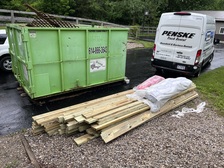 Save A Dime
Exquisite workmanship from Custom Paint Jobs LLC. My home has never looked better.
 Custom Paint Jobs, LLC
We needed windows in our home, and we couldnt believe we got our entire home done for under $14,000. We have a lot of windows, and not only was it affordable, but it got done in a timely manner! Thanks guys, I truly appreciate you all!
 Window Depot USA of Central Ohio
Chris has been completing paint projects for me on flips, rentals, and even my personal home over the last 5 years. He always does an exceptional job, and is always responsive and easy to get ahold of. Great work, great communication. Iâ d definitely recommend him!
 Y City
Working with Mike on our first home purchase was an absolute pleasure. Mike put us at ease and made the process of buying a home fun. Mike is knowledgeable, honest, professional, and punctual. He worked with our busy schedule and always made time for us. When a home came on the market that...
 Michael Marshall - Buyer's Resource Realty Svcs.
Clint was and is very Professional and takes pride in this company and his work. Definitely recommended him to everyone in my hi-rise building. Excellent proposal and no hidden charges or surprises. Don't find that in today's world.
 Footprints Floors of Columbus
From average costs to expert advice, get all the answers you need to get your job done.
If you’re planning a new construction build or a home addition, you should familiarize yourself with these nine types of construction documents beforehand.

A general contractor is an essential but costly part of a construction project. Learn how to be your own general contractor for your next home improvement project.
Planning to add a room for more square footage? Learn what permits are needed to build an addition and how to go about obtaining them.
You're ready to hire a team for your home renovation but can't decide between a construction manager vs. a general contractor. Here's what to know.
Learn how to hire a qualified workshop builder for your custom project. Find tips on vetting pros, questions to ask, and what to expect from start to finish.
Some states set terms on how long a contractor should offer a warranty on their work, while others leave it up to the company. The standard warranty length is one year.