
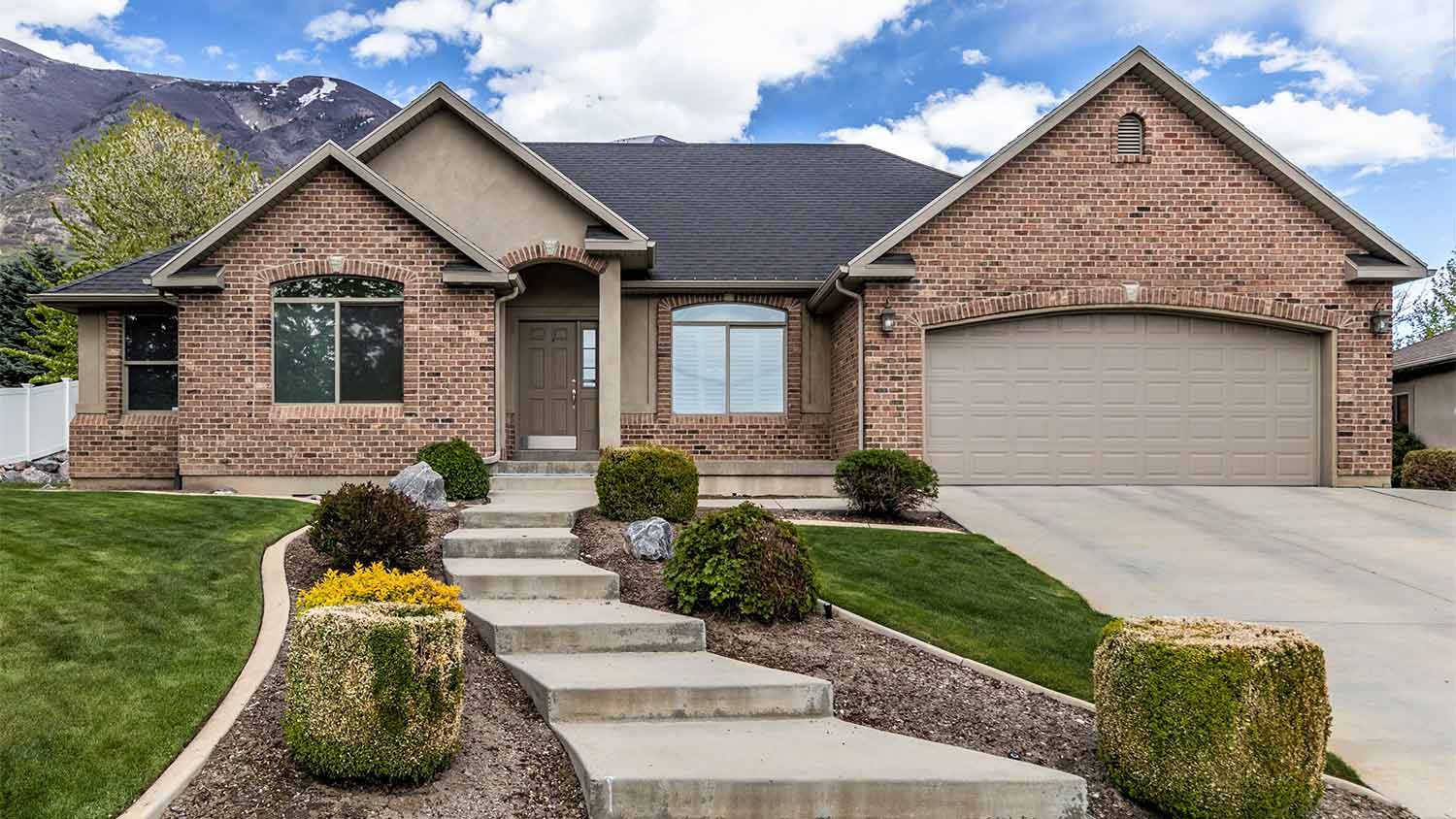
A French drain costs around $9,250 to install, but several factors will determine the final price you pay. Learn the cost to install French drains in this guide.
Stop your yard from flooding with a simple drain you dig yourself

Installing a French drain requires digging a trench at least 1 inch downward for every 10 feet of pipe to ensure water flows away from your yard.
Typical costs range from $500 to $18,000 for professional French drain installation, with average costs around $9,250 depending on your yard and drainage needs.
You'll need to call 811 before digging to mark underground utility lines, obtain permits, and plan your drainage route to avoid directing water toward your home.
Hiring a local French drain professional keeps installation on track with proper grading, pipe connections, and trench work that prevents future clogs or water pooling.
Does your yard turn into a swamp, lake, or river every time it rains? Learn how to install a French drain to fix the issue for good.
French drains consist of buried pipes and trenches that capture water and carry it away to a more convenient part of your property. Learn how to do a French drain DIY with this guide.
A french drain provides a sunken channel for water to disperse into the soil surrounding your home. Installing this type of system requires digging a trench and hooking up pipe connections, among other tasks, so it's best to hire a professional french drain installation company for this project.

Your dog (and kids) might love running through a swampy yard, but most homeowners aren’t a fan. But before you can learn how to install a French drain, you’ll have some decisions to make.
Mark the center of the area on your property where flooding occurs. This will be the starting point of your drain system. From there, find an endpoint where you’d like excess water to drain, such as a road or a retention pond.
Mark the path between the two points with spray paint, flags, or stakes. Here are some key things to keep in mind when planning your drain location:
Elevation: Place your endpoint at a lower elevation than your starting point. For best results, slope down 6 feet for every 50 feet of pipe length.
Neighbors: Don’t direct pipes to drain toward your home or onto a neighboring property.
Permits: Obtain any French drink permits and know your neighborhood’s zoning restrictions.
Utilities: Call 811 to have your local utility company come mark underground utility lines.
Obstacles: Avoid having walls, fencing, posts, trees, or shrubs along your route.
Different piping materials are better suited to different French drain installations. If your drainage route is curved or uneven, flexible corrugated piping is best. You can use PVC pipe for straight routes for a more durable and longer-lasting drain.
If using PVC, be sure to drill drainage holes every 6 inches along the length of the pipe for water to enter through.
You can also opt to purchase a gravel-free drainage pipe system, which consists of a corrugated pipe surrounded by polystyrene aggregate and pre-wrapped with filter fabric. This type of system should be installed according to the manufacturer’s instructions included with the product.
Bid your drainage problems adieu by learning how to install a french drain with this DIY project.
Dig a trench along your marked path using a shovel or trenching hoe. For longer drains, consider renting a trencher machine for this step.
Your trench should be about 1½ foot deep and 1 foot wide. Your drain needs to slope down at least 1 inch for every 10 feet of pipe so gravity can work for you, so dig deep enough so that the pipe angles downward when it’s laying in the trench. You should also have your trench parallel to any buildings.
Next, add a layer of about 3 inches of gravel or landscaping stone to the bottom of the trench you just created. Line the gravel bed along the entire trench with water-permeable landscaping fabric to keep out weeds, roots, dirt, and silt. Leave at least 10 inches of excess fabric on both sides of the trench to cover the piping later.
Place an inlet grate at the top of the trench in the center of the area that floods the most. Attach your first round of piping to the grate, then continue attaching pipes together until you reach your draining point at the end of the trench. Carefully lay the whole connected pipe structure in the trench on top of your gravel layer with drainage holes in the pipe pointed downwards.
With your pipes connected, pour water into the inlet grate and have a partner monitor the flow from the drain outlet. If you don’t see any water flow, you may need to regrade your trench with a steeper slope.
If your test works, temporarily cover the grate for protection while you fill in the trench. Fill the trench with enough additional gravel to completely cover the pipe, leaving approximately 5 inches of space between the top of the gravel and the surface of the ground. Wrap the excess fabric over the piping and gravel.
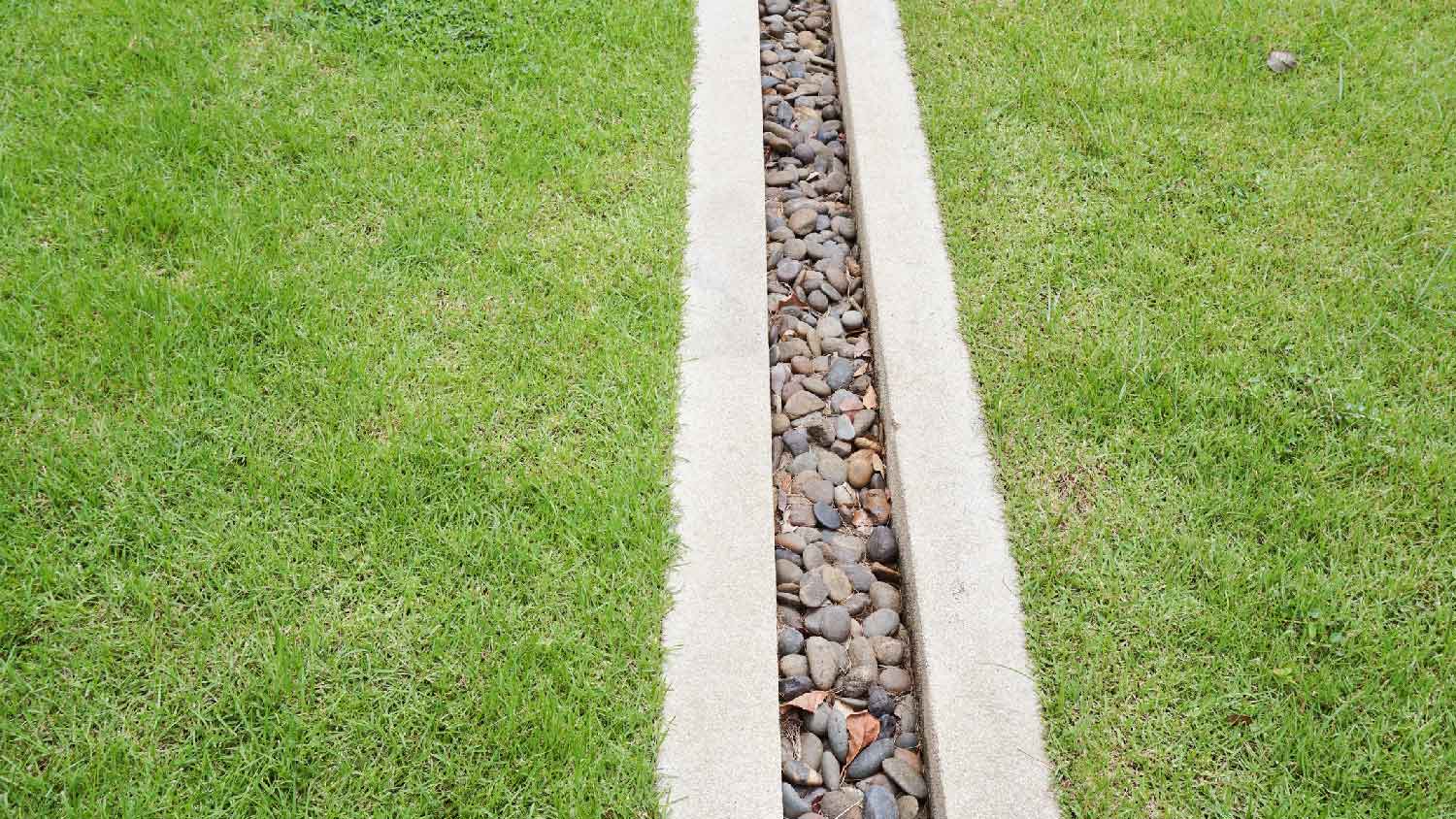
You can then cover the entire trench with topsoil, pat it flat, and reseed it. Alternatively, you can cover it with landscaping stone.
Now that you know how to install a French drain, you will want to keep maintenance top of mind to ensure it continues working properly.
Regularly inspect and clean the inlet grate and outlet point to ensure they don’t get clogged with dirt, grass clippings, or other debris.
Use your garden hose to flush debris out of the pipes and keep water flowing freely.
If your French drain does clog or break, you may need to dig it up partially or completely to inspect the damaged area and make repairs. This tends to be easier when you fill your trenches with landscaping stone instead of covering them with topsoil and reseeding the grass.
Installing a French drain yourself is a labor-intensive project that involves a lot of time, energy, and labor-intensive effort. If you’re up to the challenge, don’t forget to consider the materials and tool expense of this DIY project.
| DIY French Drain Equipment | Average Cost |
|---|---|
| Renting a sod cutter for one day | $110 |
| Trencher rental for four hours | $60 |
| Wheelbarrow | $140 |
| 4-inch PVC pipe | $30 |
| Catch basin | $50 |
| Pea gravel | $0.50–$1.50 per square foot |
| Landscape fabric | $0.45–$0.90 per square foot |
Keep in mind that mistakes like choosing the wrong piping material or miscalculating the angle for the drain can lead to clogs and water backups that will require you to dig up your yard again.
Alternatively, you can hire a local French drain installation company and have the job done professionally. You may prefer this step if the soil in your yard is particularly rocky. This saves you the step of locating and marking your own utility lines, and helps you ensure the job is done right the first time.
The cost to install a French drain is $5,000 on average, but can range from $1,000 to $18,000, depending on the type of drain you install, how long the drain is, and how much piping you’ll need.
Cody did a great job!
 Itzelpainting
Wonderful. I am going to have them remove and replace my driveway in the spring.
 All Star Paving and Sealing
We had a 20+ year old landscape lighting system that needed replacement. Midwest Lightscapes worked with us to design a much improved lighting system, lighting the exterior of the house and the back yard. Installation of the 45 light system took one and one-half days, and went very smoothly....
 Midwest Lightscapes
Did an amazing job transforming my yard. Also installed sod in places, would recommend to everyone.
 Cardinal Landscaping & Construction LLC
Always been satisfied with the service work and how they have taken care of my pool.
Bill Gerhardt sold the company to his employees at the end of 2019, apparently without a workable succession plan and without notifying prospective customers of this fact. Most aspects of the maintenance contract have not been fulfilled: no installation of anual plantings per contract, no...
They show up and they did take us on as a client which seems to be a problem with other lawn care providers. We have multiple properties and this one was located close to downtown and no one really wants to mess with it.
I was very happy with the service provided by AK Irrigation. They responded quickly to my email, and the woman I spoke with was polite and professional. I was able to get an appointment that same week. <br /> The technician (Tyler) arrived on time. He was very knowledgeable, and worked...
 AK Irrigation
The worker came out when he was supposed to come. He informed me he would honor the Angie's List deal, but would not do any more work for me since my son in law owns lawn care company as well, even though they do not do the same type of work. He said he did not feel comfortable giving me...
 Bello Giardino LLC
E & L Lawn Care was super. They were very responsive before and after service. They were efficient and were able to complete the job within 1 day. I have had concern about one section of sod - the owner was pro-active and did a visit to evaluate. I have no doubt they will stand behind...
 E&L lawn care
From average costs to expert advice, get all the answers you need to get your job done.
A French drain costs around $9,250 to install, but several factors will determine the final price you pay. Learn the cost to install French drains in this guide.
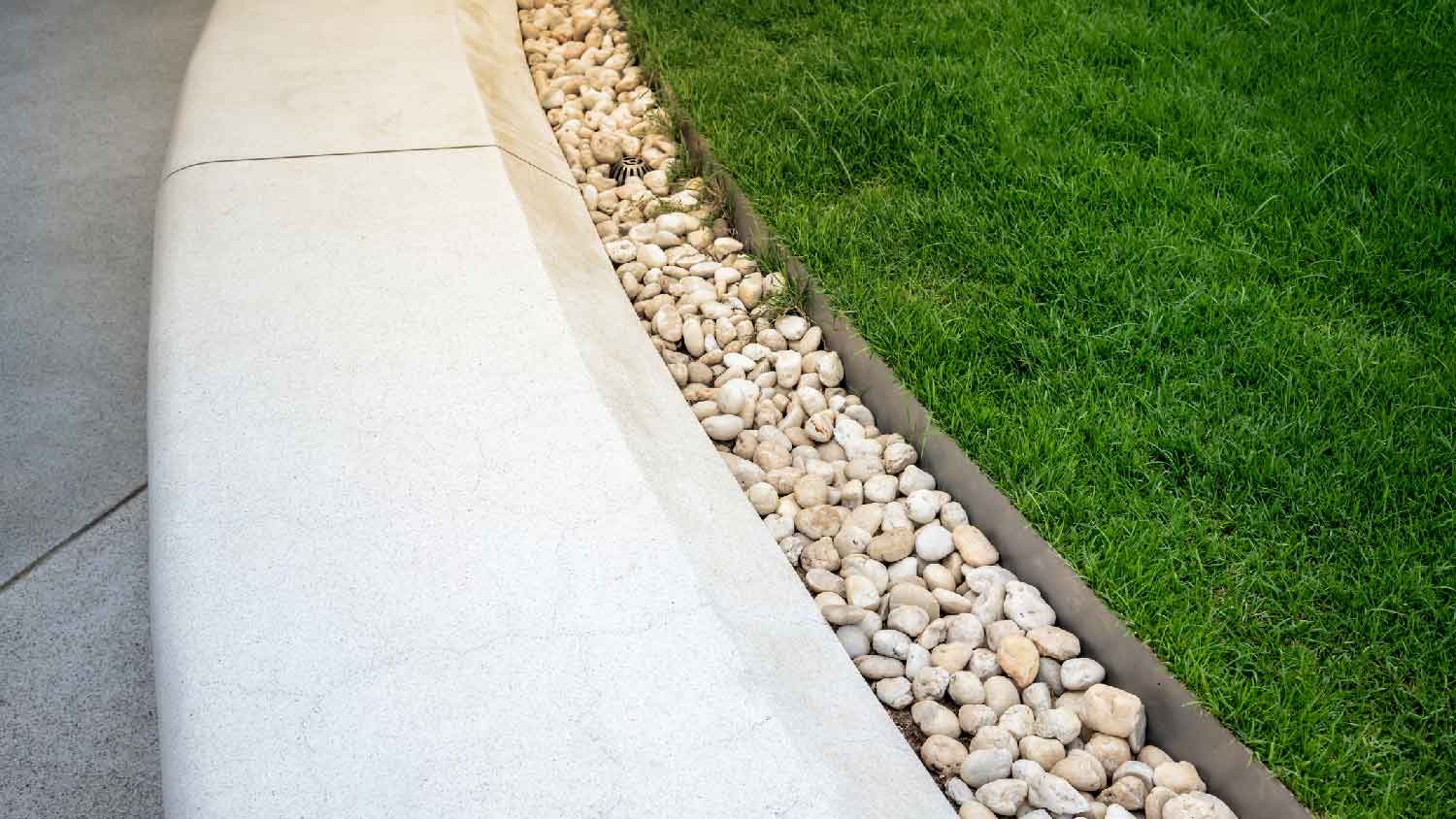
French drains can be an effective solution for pooling water and flooding. So, who installs French drains? Find out how to hire the ideal pro for the job.
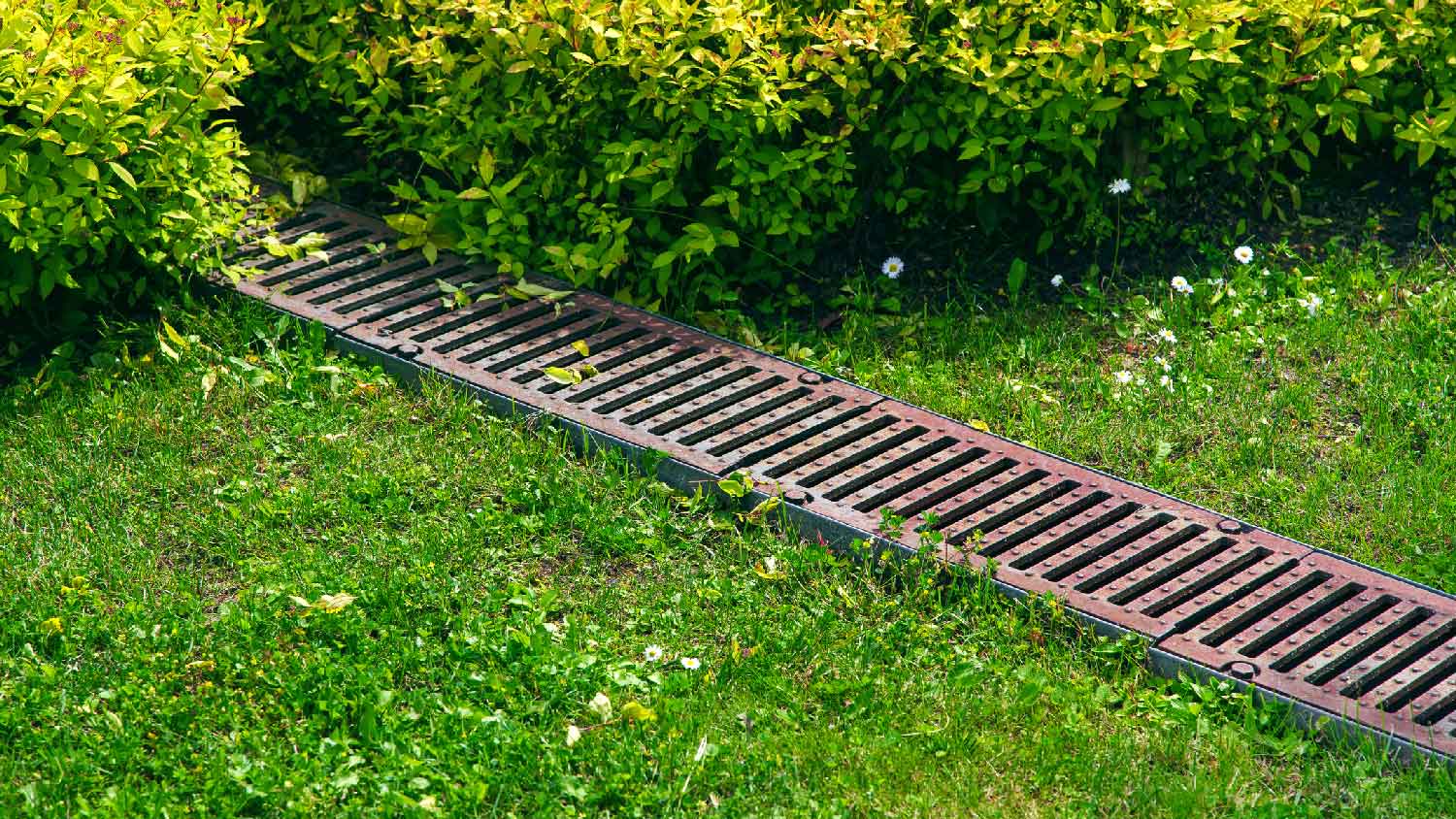
You’ve decided on a French drain system but need to determine whether the drain holes should face up or down. Our guide can point you in the right direction—literally.
Do you need a permit for a French drain installation? If you’re ready to try out a new yard drainage solution, here’s what you should know about the logistics.
Ground and basement drainage issues can be fixed with the right kind of drain pipe. French drains and drain tiles offer similar solutions, but different applications.
How deep is a french drain buried and how does it work? Learn how deep a french drain needs to be to work properly and other aspects to consider.