
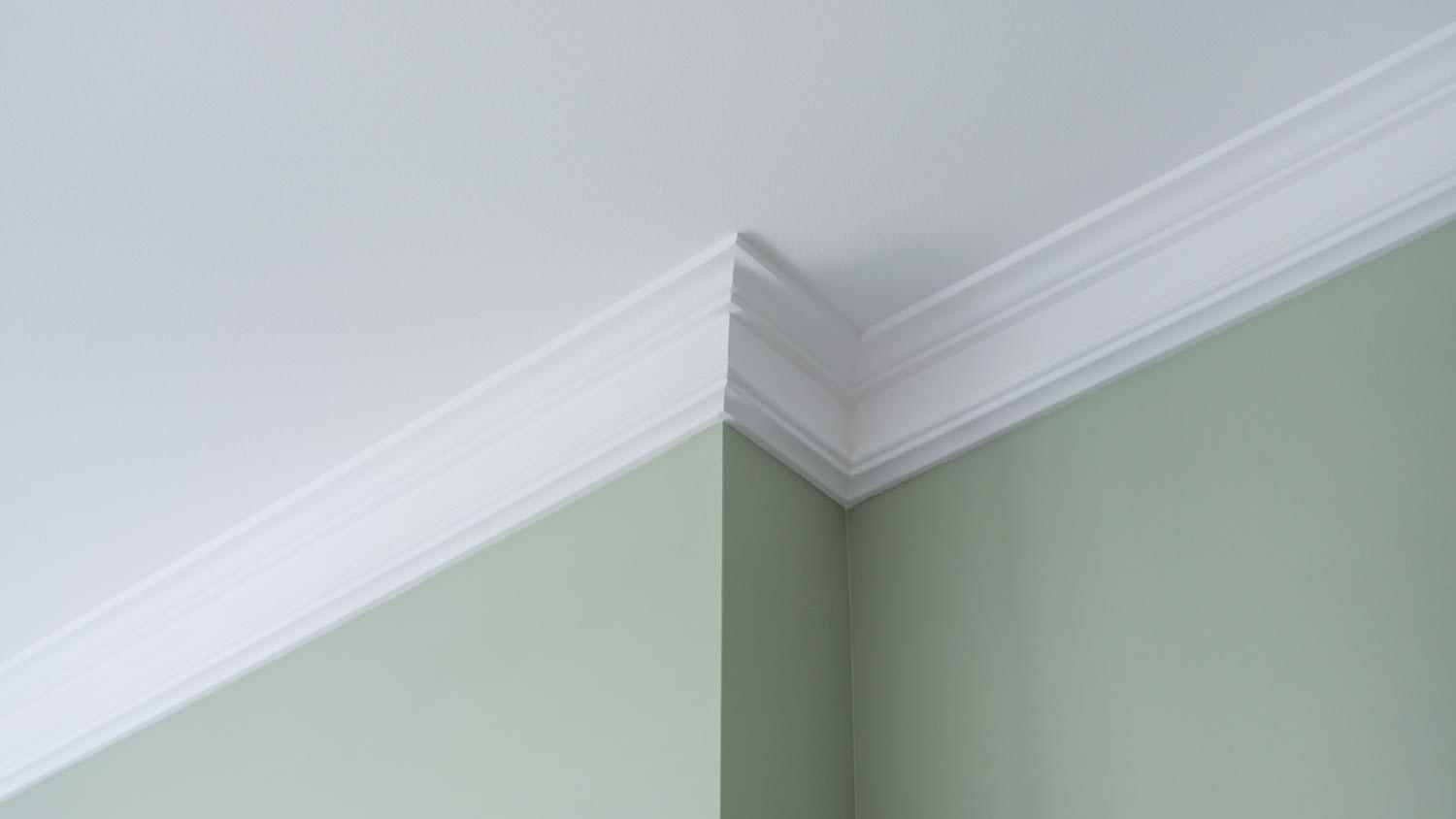
Find out how much it costs to install crown molding by type and size. Use our expert guide to figure out how much crown molding you need, how much crown molding costs near you, and whether you need to hire a pro.
How tall is too tall for this eye-catching trim?

Standard crown molding sizes for an 8 ft ceiling range from 2 1/2 to 6 inches tall, giving your room a polished look.
Crown molding for 9 ft ceilings ranges from 3 to 7 1/2 inches tall, while 10 ft ceilings accommodate 4 to 9 inches or more.
Your ceiling height, room formality, existing baseboards, room dimensions, and molding details all influence the crown molding size you should choose.
Hiring a local crown molding installation professional takes the guesswork out of measuring and cutting, ensuring your molding fits perfectly every time.
There’s no way around it—crown molding adds character to a room. In fact, there are so many different styles that it can suit just about any home, from modern or contemporary to Victorian, art deco, Georgian, and just about anything else. The key is choosing the proper size along with the right detailing. This guide covers the ideal crown molding sizes for your space.

Though there aren’t standard crown molding sizes, most crown molding has a height between 3 and 12 inches, though it can be even higher. For standard-height ceilings, you’ll want crown molding that’s 2 1/2 to 6 inches tall. Rooms with higher ceilings should have larger crown molding and rooms with standard-height ceilings should have a smaller crown molding.
These proportions relate back to the orders of classic architecture. Crown molding is an exceptionally old art form with roots in some of the earliest documented civilizations. In ancient Egypt, this type of molding adorned the outside of buildings and columns. In ancient Greece and Rome, it was used to hide gaps between the ceiling and wall.
Today, modern crown molding is a marriage between form and function. It still can hide unsightly gaps or uneven seams, but it’s mostly used for its aesthetic value. Nonetheless, most crown molding still maintains the same proportions as the molding of yesteryear (think: the detailed entablature above the famous columns in the Pantheon) but scaled down to a size that suits modern residential ceiling heights.

The height of your ceiling is the largest factor when determining crown molding sizes. Though the right size depends on your preference, there are some general rules you can follow.
| Ceiling Height (Feet) | Crown Molding Height (Inches) |
|---|---|
| 8 | 2 1/2–6 |
| 9 | 3–7 1/2 |
| 10+ | 4–9+ |
For the standard ceiling height of 8 inches, you’ll want your crown molding to be at least 2 1/2 inches tall. For more impact in a formal or large room, it’s a safe bet to choose a larger crown molding that's up to 6 inches in height.
Another common ceiling height is 9 feet. For smaller or less formal rooms, choose crown molding that’s a minimum of 3 inches tall. For more impact while maintaining the proper proportions, choose crown molding that’s a maximum of 7 1/2 inches tall.
Ten-foot ceilings have even more crown molding options. Bedrooms, offices, and more casual rooms should have crown molding that’s at least 4 inches tall. Dining rooms, living rooms, foyers, and other formal spaces should have crown molding that’s at least 9 inches tall.
For especially tall ceilings or those in particularly large, formal rooms, crown molding anywhere from 12 to 24 inches in height could be used, along with other types of molding like wall frame molding or chair rails.
If you’re unsure how high to go, a crown molding pro can suggest some sizes for your space.

Crown molding has varying heights, but most manufacturers sell standard lengths. You can choose from 8-foot and 12-foot lengths, though you may find alternative sizes like 6-, 10-, or 16-foot molding. For a 16-foot room, you’ll most likely need to put two 8-foot pieces of crown molding together.
You can cut crown molding down to size, so if you’re choosing between two sizes, go with the larger option to reduce the potential for visible seams.
Before installing crown molding, you’ll need to know how much to purchase. This means measuring the dimensions of your room and using that to figure out which crown molding length is right for the project. Luckily, measuring for crown molding is straightforward:
Get the room dimensions: Use a tape measure and measure your walls from corner to corner.
Use a diagram to visualize: Note down the dimensions of each wall. It can be helpful to draw a diagram of your room with the measurements so you can visualize how many pieces you’ll need.
Choose the sizes: Since crown molding comes in different lengths, look at what’s available from different manufacturers in your preferred style. Sometimes, you’ll be able to purchase a single piece of molding for each side (like an 8-foot piece for an 8-foot wall). Other times, you’ll need to purchase multiple pieces.
Account for extra: Make sure you purchase 15% to 20% more than you need to account for miscalculations and cutting errors.
Cutting crown molding can be complicated because it often requires a metered joint, which means you’ll have to cut pieces at a specific angle. If the cut is not exact, you may need to buy a whole new piece of molding and start again. For this reason, most homeowners skip the DIY and hire a local crown molding company. A pro will measure your space, order the molding, cut it to size, and install it for you.
A few different factors influence the ideal crown molding size. Though there is a range of accepted sizes, there are some instances where you may prefer a larger molding instead of a shorter molding.
Ceiling height is the largest factor that impacts the height of your crown molding. Taller ceilings warrant taller crown molding. Consider starting your crown molding height at 2 1/2 inches (minimum) for the standard 8-foot ceiling and adding around 1 inch for each extra foot of ceiling height.
Formal rooms warrant taller crown molding. For example, a crown molding that’s 2 1/2 to 3 1/2 inches in height works well for a bedroom or study with standard ceilings. On the other hand, you may want to choose a crown molding that’s 4 to 6 inches in height for a formal dining room.
Consider the details on the molding. Simple crown molding has less visual weight than ornate options. You may be able to go larger if you choose a basic design without making your room look cluttered.
Consider the dimensions of your room when choosing a crown molding size. Tall crown molding can make a small room look even smaller, while a larger room can accommodate taller crown molding.
You want your crown molding to strike a good visual balance with any baseboards, wainscotting, picture molding, or other types of trim in your home. As a rule, baseboards are 1 inch larger than your crown molding.
Take a look at the existing crown molding in different rooms around your house. For a cohesive look, you might want to keep the size uniform from room to room.
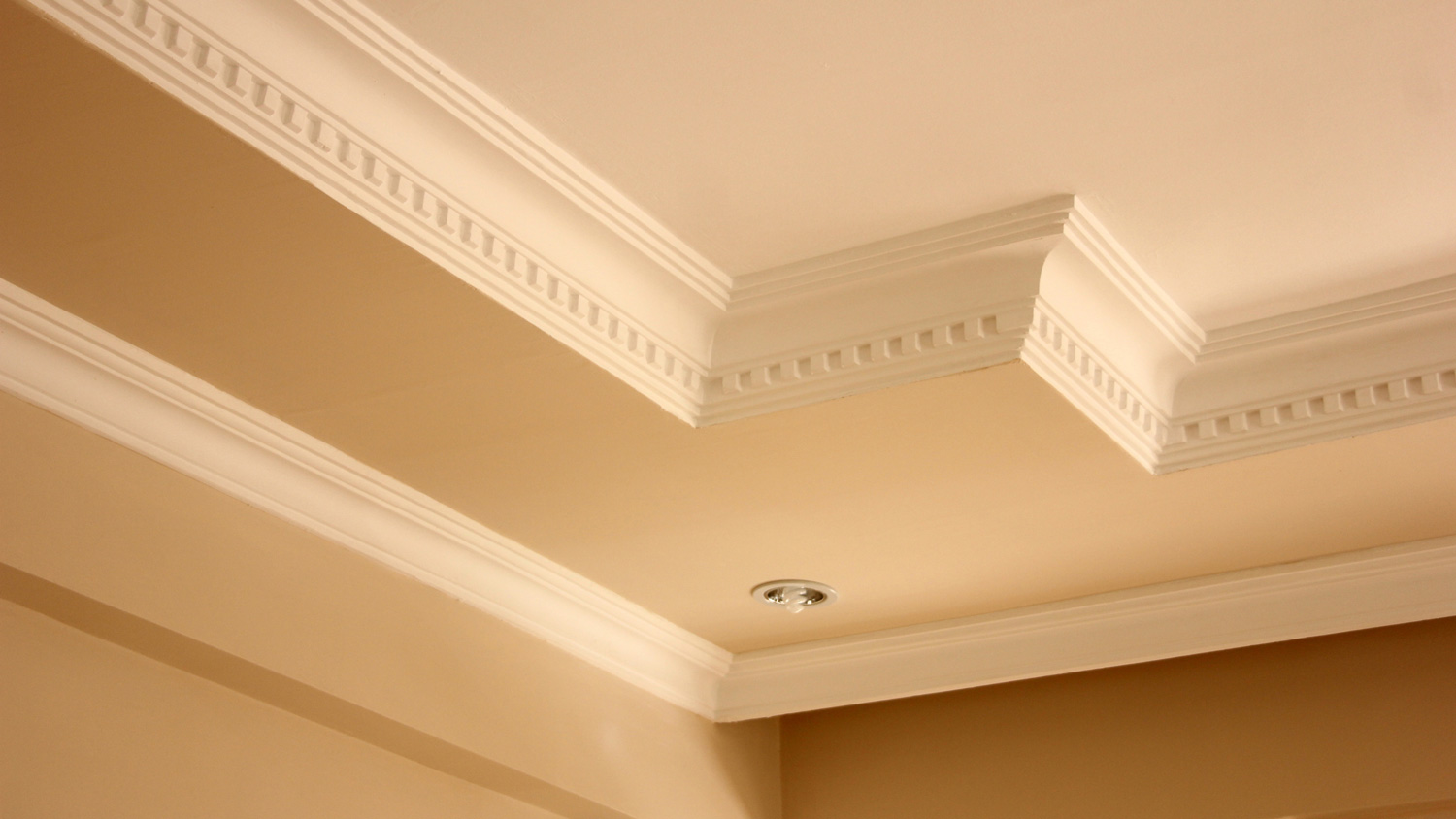
Certain design styles suit taller, more ornate types of crown molding. For example, mid-century modern homes feature shorter crown molding, while Colonial homes work well with ogee or dentil crown molding. Victorian homes are known for more prominent, highly ornate crown molding. In fact, you can add molding around your windows and light fixtures.
If your crown molding turns out to be the wrong size, don’t panic. There are a few ways to fix the issue without starting from scratch. See how the molding looks in the space. If it looks too small, you may be able to build it up by layering it with trim pieces like backer boards or additional decorative molding. This trick can give your molding a more substantial look without replacing it entirely. If the molding feels too bulky or overwhelming, your best option is to remove it and replace it with a more appropriately scaled option.
If you're unsure what's wrong with the trim or how to fix it, consult with a local crown molding expert. They can help you find the best approach, whether you choose to replace or add to the molding. If you are DIYing molding replacement, double-check measurements and test-fit any new pieces before nailing it down.
Incredible workers! Very skilled with the machinery, climbing, cutting, roping, and removal. Handled everything. Professionals!
 Hoffman Expert Tree Services
I m so impressed with Custom Paint Jobs LLC s craftsmanship. They truly care about quality.
 Custom Paint Jobs, LLC
Window Depot did an amazing job on my deck. I wasnt sure what I wanted to do, but their composite decking was affordable and will last a long time. I am excited to have family over, and I am no longer embarrassed by my backyard. Jeff and the ground crew were polite, respectful, and caring for...
 Window Depot USA of Central Ohio
Storms Mobile Welding was great to work with. They were prompt, professional and did an overall excellent job on the project. I highly recommend.
Great job...edging and pre clean up went well with a great job with seal coat. Friendly, efficient and professional.
 All Star Paving and Sealing
Great tree company, very professional and honest. Glad we found them, they had the best pricing
It was wonderful working with Yordy and his team. They were very professional and are experts in what they do. They have completed the work on time, with better quality and with in fairly reasonable price. We just started with backsplash work , but liking his work, we went on to provide...
 Flooring Solutions
The job went extremely well. Work was done as promised and the job came out better than expected due to Mr. Moyer's commitment to excellence and personal pride in providing the best work possible. He is one of those professionals who is not satisfied until the customer is completely happy...
 Pro Flooring
We needed to have a wall cabinet resized so that we could fit a larger refrigerator underneath. I removed the cabinet from the wall myself and brought it in, where Wally was able to resize it for me in his shop. The results were perfect: it's exactly the size that I asked for, and...
 Pioneer Woodworks
The work was almost completed when we gave the owner Tim Barton $400 as a downpayment to be put on his list for work in the future after we had new woodwork installed.The next day Mr. Barton had difficulty installing a door handle and took the position that it was broken before his employee...
 Above And Beyond Painting LLC
From average costs to expert advice, get all the answers you need to get your job done.
Find out how much it costs to install crown molding by type and size. Use our expert guide to figure out how much crown molding you need, how much crown molding costs near you, and whether you need to hire a pro.
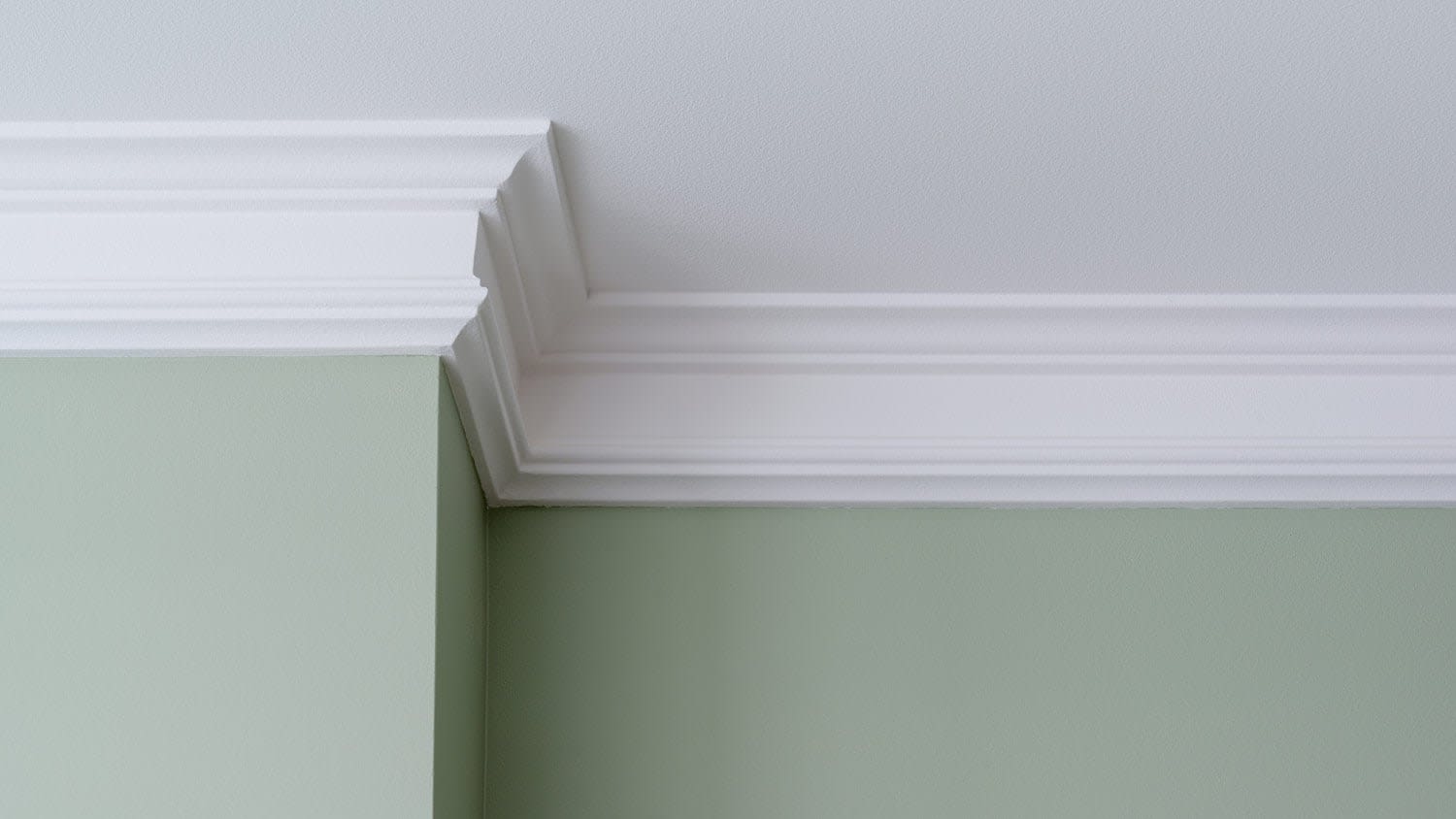
Installing foam crown molding is a cost-effective way to elevate your home. Costs can be kept low by matching molding to existing wall colors and doing some DIY work.

Discover how much it costs to remove crown molding based on factors like its size, location in your home, material, and more.
Does crown molding add value to your home? It adds aesthetic value to some designs, but you should install it less because of ROI and more because you love it.
Need crown molding installed? Learn who to hire, what it costs, and why a trim or finish carpenter is the best choice for a polished, professional look.

Crown molding is a type of decorative molding that sits in the corner between the wall and the ceiling. This guide will help you figure out exactly what crown molding looks like, plus when it makes sense to use it in your home.