
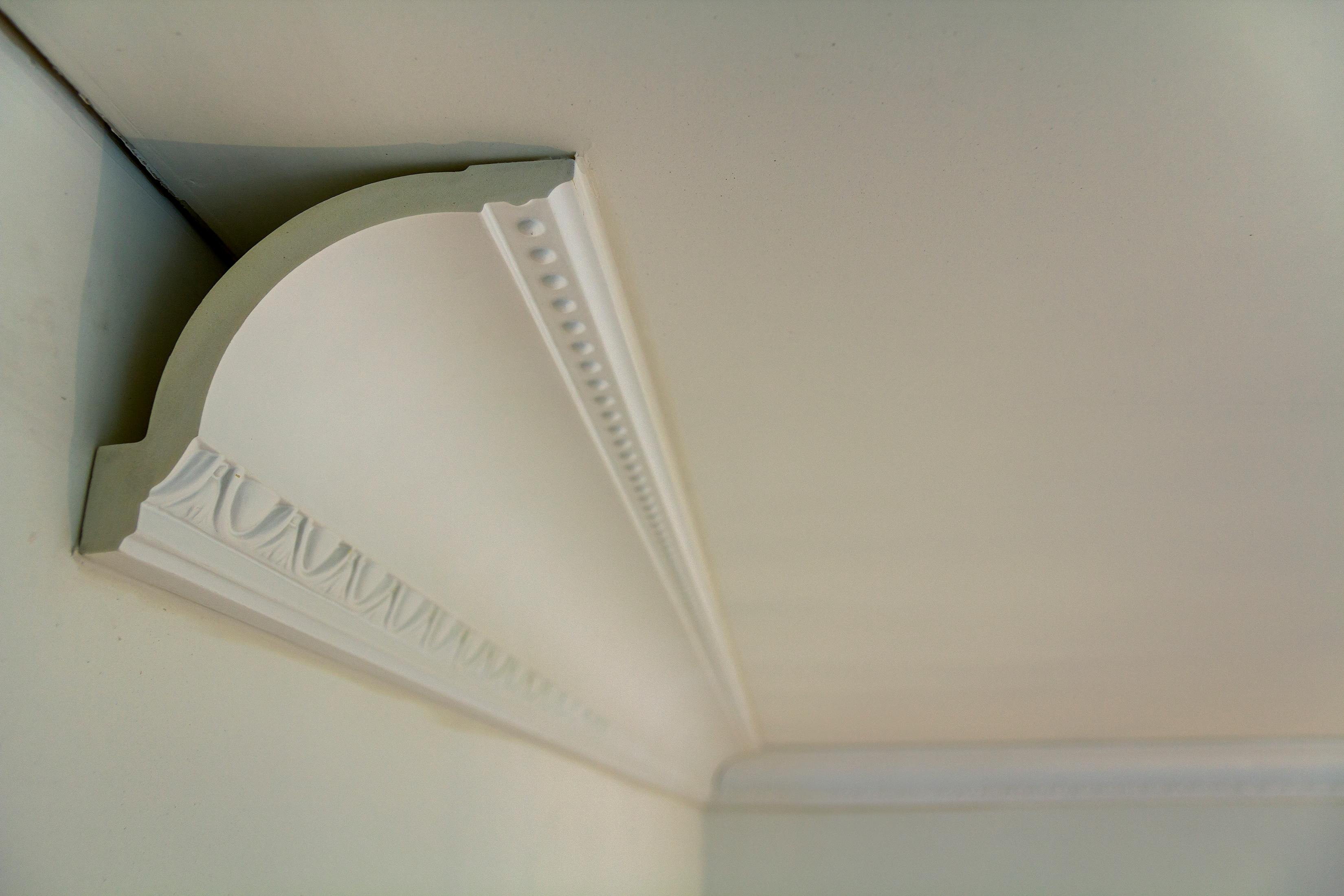
If your crown molding has edges or seams, you may want to caulk it. You can DIY this work or hire a pro—use this guide to learn the cost for both.
If you’ve got the right tools and a bit of patience, you can cut your own crown molding

Crown molding angles for a vaulted ceiling require setting your saw's bevel to one-half of the measured angle where your ceiling starts to rise.
Professional crown molding installation costs between $300 and $800 per room for materials and labor, helping you avoid costly mistakes from improper cuts.
Transition pieces work best for making the angle change from flat to vaulted ceiling, and you can trim the molding's back to eliminate gaps.
Hiring a local crown molding installation professional removes the guesswork from complex angle cuts and ensures your vaulted ceiling transitions look seamless and polished.
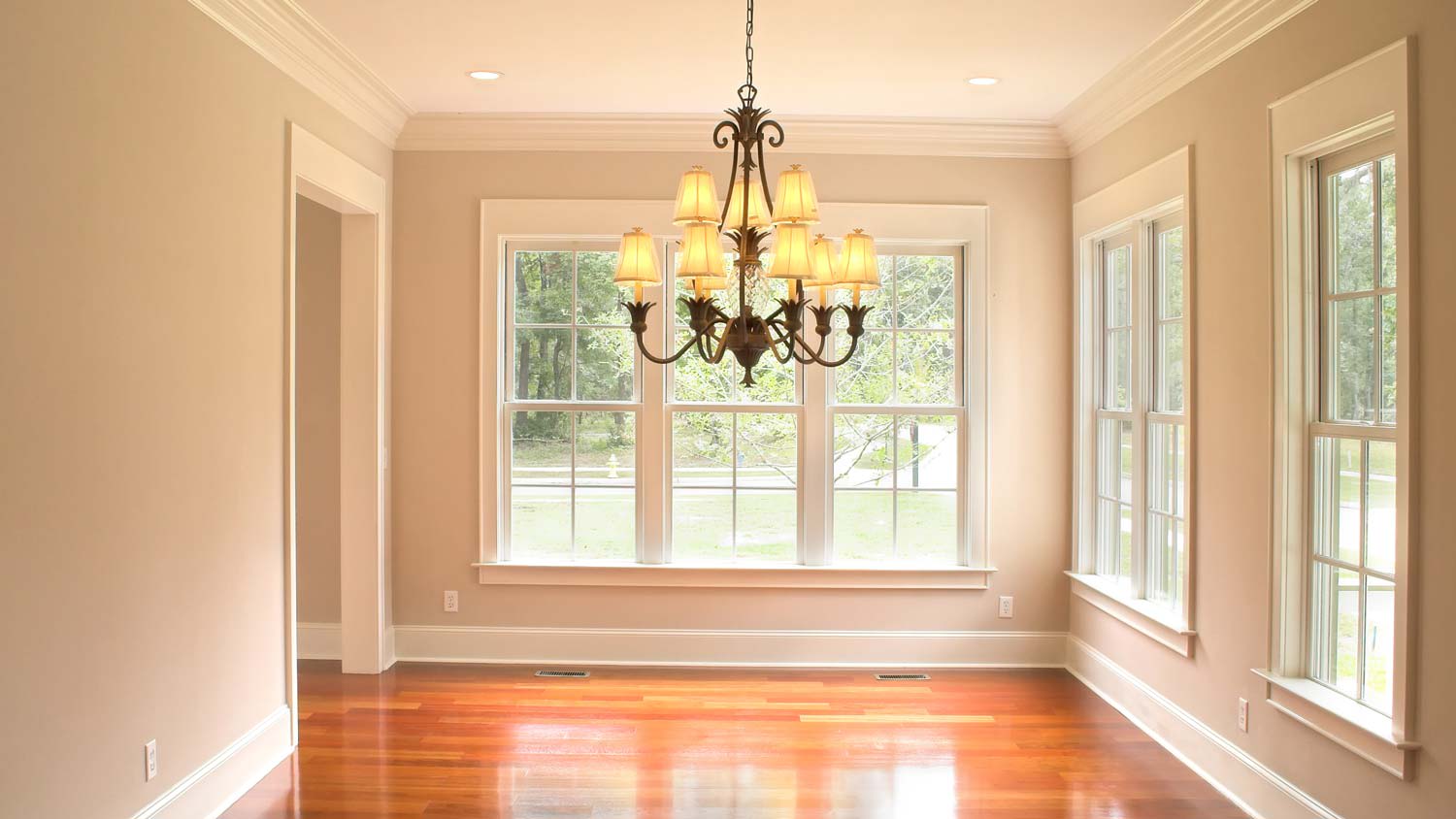
Crown molding sets a room apart from the ordinary. Whether it’s large, small, bright, or subdued, that little strip of trim between the ceiling and wall significantly impacts a home’s design.
But for a DIYer, it’s arguably the most challenging type of trim work to master. Luckily, you don’t have to have years of carpentry training to make excellent-looking crown molding cuts. Some knowledge and patience are all it takes to conquer the basics. By building a simple jig, you’re well on your way to giving your interior an excellent face-lift.
For crown molding, a jig helps make consistent cuts safely and efficiently. The jig works no matter what crown molding you choose, even if your chosen molding rests at angles other than 45 degrees to the wall.
Cut a 3- to 4-inch sample piece of your crown molding.
Hold the trim against the wall and ceiling, oriented the way you’ll install it.
Mark the sample’s edge on the ceiling.
Measure to the ceiling mark from the wall and note the measurement.
Use wood glue and screws to attach the two 1-by-4-inch pieces of wood to the two 1-by-6-inch pieces perpendicular to each other. This makes two corners.
Transfer the ceiling measurement to each end of the top sides of the 1-by-6-inch wood pieces.
Align the inside edge of the 3/4-by-3/4-inch wood on the markings. Use glue and screws to attach it. The top of the molding will rest here when cutting.
Before you start cutting, get familiar with some terms associated with trim work.
Square cut: Set your miter saw to zero degrees angle and bevel to make a square cut.
Butt joint: A butt joint is simply created by affixing two pieces together at flat ends. For trim work, this could mean a joint between two square-cut trim pieces or a square-cut trim piece butted against a flat wall surface.
Inside corner: An inside corner forms when two trim pieces create an internal angle. The trim pieces of an inside corner appear to tuck into the corner. When you’re working with trim, the left inside corner is on the viewer's left side.
Outside corner: An outside corner is a corner that forms an external angle. The trim pieces appear to make a point extending from the corner. A left outside corner refers to the part of the corner on the viewer’s left.
Mitered cut: A mitered cut can create an inside or outside corner. Make a mitered cut by setting your saw angle to 45-degrees.
Scarf joint: A scarf joint is a joint between two trim pieces that consists of opposing 45-degree-angle cuts meeting end-to-end. Usually used in trim work on long walls when you need two or more trim pieces to cover the wall’s length.
Coped joint: Create a coped joint by joining a square-cut trim piece with a trim piece cut to match the trim’s profile. They’re helpful for inside corners that don’t measure exactly 90-degrees.
Corner block: A corner block in trim work is a decorative piece with flat edges that accepts square-cut trim piece ends to form either an inside or outside corner.They’re handy items to have for crown-molding beginners and veterans alike.

Now that you have a jig and some terminology ammunition, let’s get down to business. You’ll only have to use the jig when you’re making mitered cuts.
Set the saw angle and bevel to zero.
Place the trim piece flat on the miter saw deck and cut.
Place your jig on the saw deck.
Set the saw angle to 45-degrees with the blade swung away from the cut piece you’ll use. For example, a left inside corner cut will use the piece to the right of the blade.
Rest the crown molding in the jig upside down and facing you. In other words, the exposed side will face outward, and the molding edge that will touch the ceiling will rest inside the lip of your jig.
Clamp the trim piece, jig, and the saw’s fence together on the side of the molding that you’re going to install
The side to keep and install is the clamped side.
Place your jig on the saw deck.
Set the saw angle to 45-degrees with the blade swung towards the cut piece you’ll use. For example, a left inside corner cut will use the piece to the left of the blade.
Rest the crown molding in the jig upside down and facing you as if you were cutting an inside corner.
Clamp the trim piece, jig, and the saw’s fence together on the side of the molding that you’re going to install.
The side to keep and install is the clamped side.
Place your jig on the saw deck.
Set the saw angle to 45-degrees with the blade swung towards the cut piece you’ll install first.
Rest the crown molding in the jig upside down and facing you as if you were cutting an inside corner.
Clamp the trim piece, jig, and the saw’s fence together on the side of the molding that will be installed
Swing the saw blade to 45-degrees in the other direction and repeat the steps for the second piece.
Make a square cut on the first trim piece.
Place another piece in the jig for the second cut and make a 45-degree cut that angles towards the molding’s exposed side.
Trace the edge of the profile on the molding with a pencil for clarity.
Using a coping saw, carefully cut the piece following your pencil line with the saw tilted away from the molding’s exposed face.
Refine the cut with sandpaper until it fits snugly against the first piece.
A quick note: Making a coped joint requires some skill that you can only get by practicing. Don’t worry if your first several tries are less than perfect.
If you’d like to install crown molding on a vaulted ceiling, there are a few things to consider.
When making corners, set the saw’s bevel to one-half of the measured angle where the ceiling starts to rise.
Transition pieces work best to make the change from one angle to another.
You can use a table saw to trim the back of the crown molding to eliminate the gap left by the ceiling slope.
Cutting and installing your crown molding is time-consuming but will save the labor cost of professional installation. With some knowledge and a little patience, DIYers can succeed with some practice.
Crown molding installation costs between $300 and $800 per room for materials and labor. Carpenters spend several years perfecting the art of advanced-level crown molding cutting and installation. If you’d rather avoid the possible frustrations that go along with it or simply don’t have the time, a professional crown molding installer near you can get it done in a timely manner.
Great job! Friendly, timely and thorough.
 Eco Plumbers, Electricians, and HVAC Technicians
Supreme Brick & Chimney did a great job with a cleaning and inspection of the fireplace! He was efficient, on time, and very pleasant. The space was kept very clean, and the fireplace was spotless when he was done. He also performed a thorough inspection, and did a great job talking us...
 Supreme brick & chimney
Custom Paint Jobs LLC is the go-to choice for all your painting needs. They painted both the interior and exterior of my house flawlessly. Their work speaks for itself!
 Custom Paint Jobs, LLC
They were very helpful with design, very quick to respond, good quality work, and competitive pricing!
 Cooks Cabinets
On time, clean and finished fast. Windows seem sturdy and the finish is good. Caulking was done with no smudges. Would recommend.
 Window Depot USA of Central Ohio
If I could give 10 stars for Kitchen Tune Up, I would. I cannot say enough good things about my experience with Kitchen Tune Up and the entire team involved in the process of my kitchen project. They went above and beyond as far as service and quality with my cabinets, paint, countertops, and...
Beginning with the estimate, Larry and Peyton were super helpful in getting my new condo's interior re-painted. Not only was the job well done, but also done in a super timely manner as promised.
 Five Star Painting of Plain City and Powell
Great job...edging and pre clean up went well with a great job with seal coat. Friendly, efficient and professional.
 All Star Paving and Sealing
We were having 2”x 2” tile installed . There was a small installation error and the new additional replacement tile was from a different lot and the colors didn’t match. Joe assured us that he would rectify everything , which he did without hesitation. We decided to go with the 18” x 36” tile...
 CarifaTile
We live in a condo and had space to add a tall cabinet. The problem was the space was already occupied by our catsâ litter box. We needed to still keep the litter box in that same corner. Beiler Custom Cabinets was able to work with our need and design request. What was created was an...
 Beiler Custom Cabinets, LTD
From average costs to expert advice, get all the answers you need to get your job done.
If your crown molding has edges or seams, you may want to caulk it. You can DIY this work or hire a pro—use this guide to learn the cost for both.

Discover how much it costs to remove crown molding based on factors like its size, location in your home, material, and more.
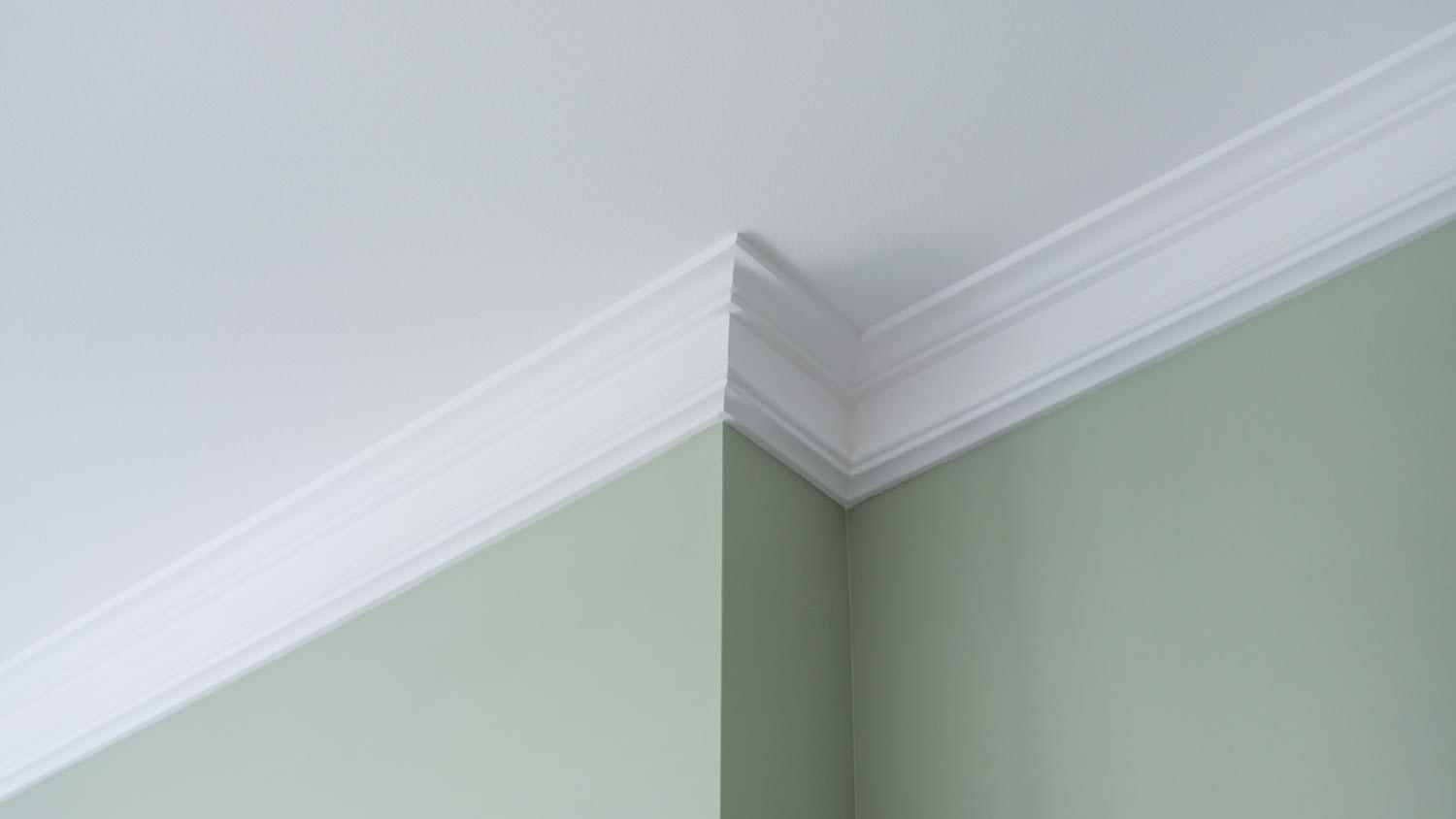
Find out how much it costs to install crown molding by type and size. Use our expert guide to figure out how much crown molding you need, how much crown molding costs near you, and whether you need to hire a pro.
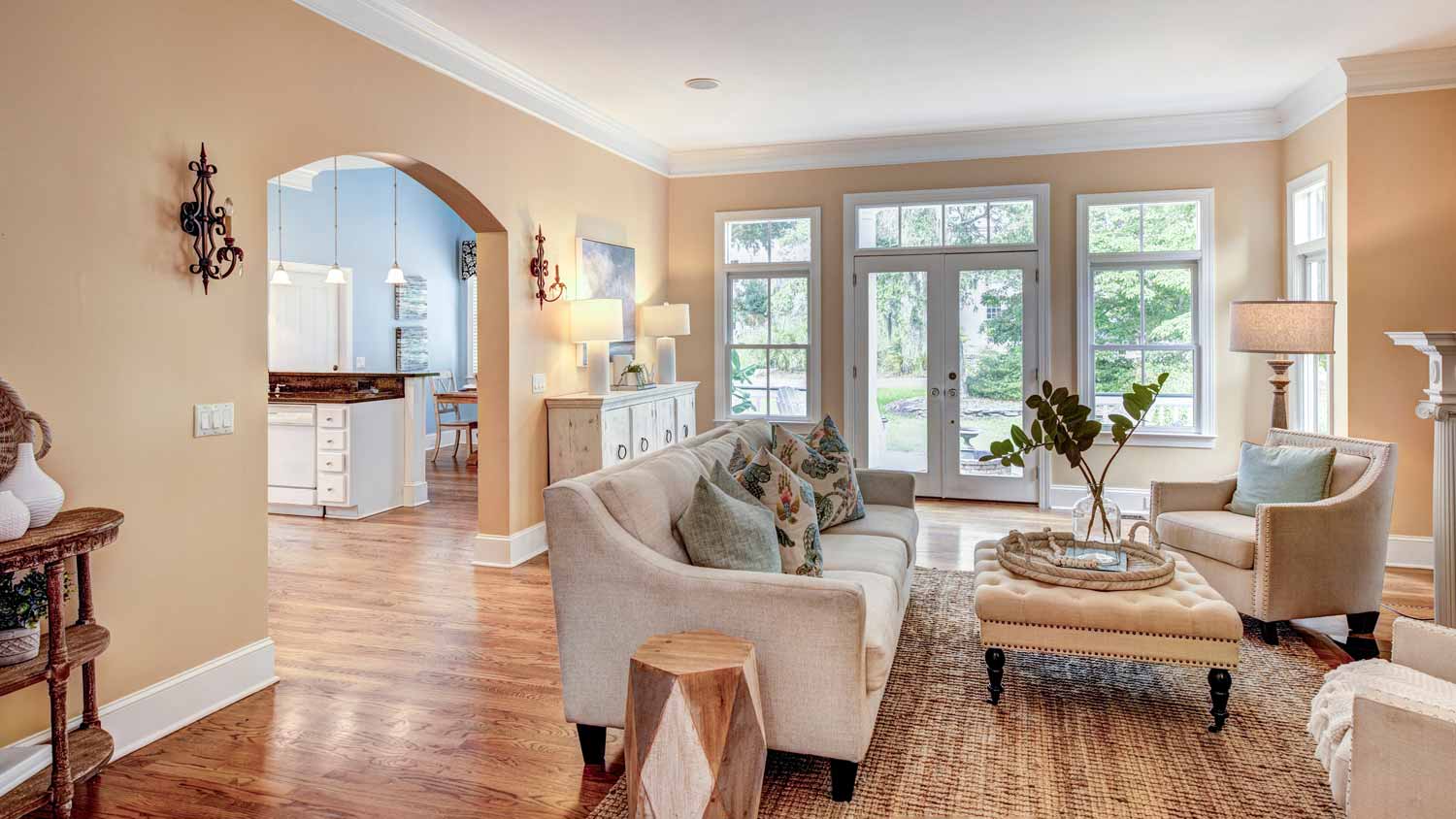
Need crown molding installed? Learn who to hire, what it costs, and why a trim or finish carpenter is the best choice for a polished, professional look.
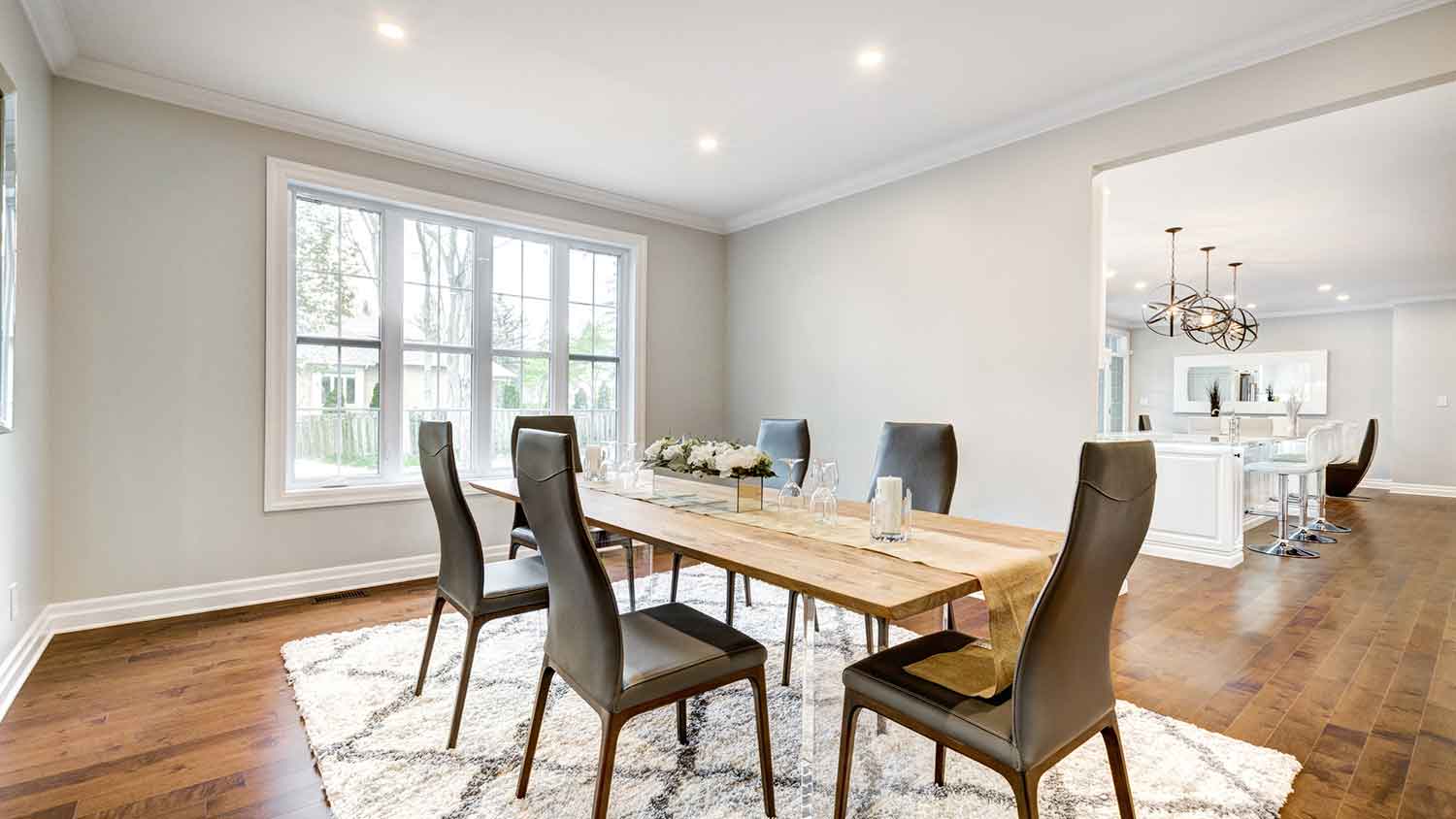
How do you cut crown molding inside corners? The answer requires practice with a coping saw and patience for detailed adjustments that create tight seams.
Coping, a common woodworking technique, is the secret to perfect inner corners with your trim. This guide will show you how to cope crown molding.