


Your budget for moving an electrical panel depends on the type, labor, and more. Find out the average cost to move an electrical panel.
To install a 220v outlet, expect to pay around $229 on average, but this could increase if you need additional electrical work done.


Large home appliances often require access to a 220v outlet, depending on the appliance and its power needs.
Be sure to confirm whether your appliance requires a 220v, 240v, or 250v outlet before making renovations.
Installing an outlet will take between one and four hours, and electricians charge an hourly fee.
Permits and rewiring can unexpectedly increase your overall price tag, particularly when adding a new 220v outlet.
Avoid DIY electrical projects, even when it comes to minor wiring alterations.
The average cost to install a 220v outlet is $229 on average. You can expect to pay anywhere from $138 to $320, depending on the installation location and whether your electrical panel can handle the upgrade.
Whether you’re looking to power an electric dryer, give an electric vehicle a quicker charge, or accommodate another high power-consuming device, you might need to install a 220v outlet in your home. Let’s review how to budget for the cost of this electrician-required installation.

Before planning this project, it’s important to ensure your appliance requires a 220v outlet, as there are many types of outlets for 220v, 240v, and 250v. Many newer appliances require a 240v outlet rather than 220v. You should ensure you pick up the right shape of outlet, depending on the reason for the installation.
| 220v Outlet Type | Cost Range |
|---|---|
| 3-Prong | $5–$15 |
| 4-Prong | $10–$20 |
| Locking | $15–$30 |
The cost of a 220v 4-prong outlet will range anywhere from $10 to $20. Four-prong outlets handle a large variety of appliances, ranging from a dryer to an EV charger.
3-prong 250v outlets will cost anywhere from $5 to $15. 3-prong outlets are also available for dryers and ranges, but you also can install these throughout the home if you need a 220v outlet for a window A/C unit.
Locking 220v outlets will average an extra $5 to $10. If the plug for the device or appliance is too heavy to stay in the outlet properly, you’ll need to install a locking 220v outlet.
The cost of hiring an electrician to install a 220v outlet will cost you anywhere from $50 to $150 per hour. More time-consuming jobs where access is limited may take three or more hours, while simpler jobs can be done in one to two hours. An electrician may also find additional requirements, such as:
Grounding an outlet: $100–$300
Adding a new circuit: $300–$800
Upgrading electrical panel: $500–$4,000
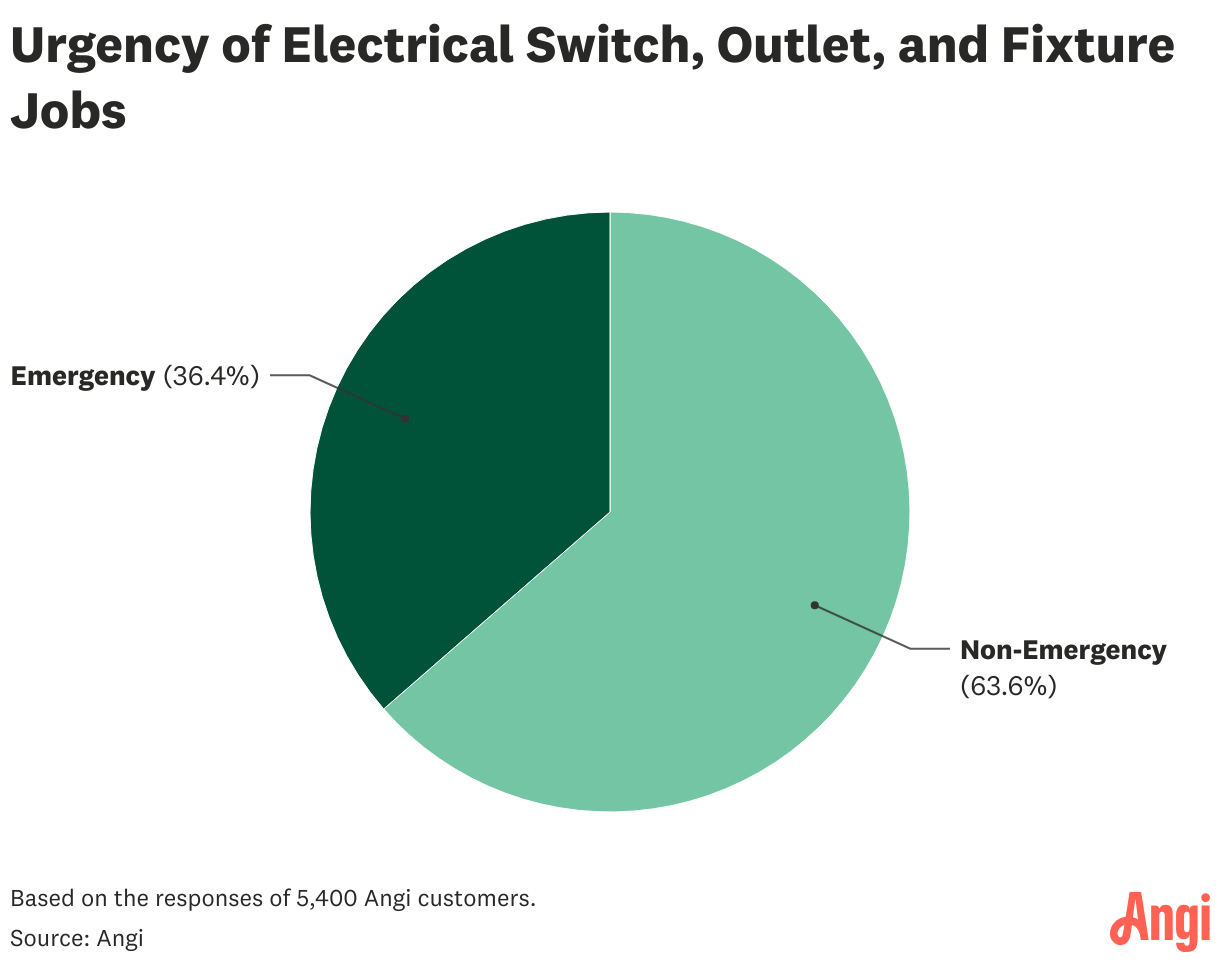
According to data from Angi customers, 36.4% of electrical switch, outlet, and fixture jobs are emergencies, which require immediate service and repair. On the flip side, 63.6% of jobs are non-emergency work. If you need emergency electrical service, you’ll pay more in labor—sometimes double the standard hourly rate in your area.

Consider these additional costs when making your final budget.
To add the necessary wiring for a 220v outlet, expect to pay around $6 to $8 per foot, plus the cost of the outlets. If the area you selected does not have the proper wiring in the walls to support a 220v outlet, this will incur additional costs for the wiring needed. The further away the electrical panel is from the area, the more wire you’ll need.
The average permit cost for electrical work ranges between $100 to $500. In most areas, adding a new electrical outlet requires a permit. The specific requirements may vary based on local building codes and regulations. A licensed electrician will know the specifications of your area.
Unless you have extensive electrical experience, all the necessary tools, and familiarity with local electrical codes, you’ll need to leave this job to the pros. Improper installation of a new outlet can damage your appliances and lead to short circuits and even electrical fires. A licensed electrician near you can install your new 220v outlet safely and in compliance with all regulations, which may require that a licensed pro perform the work.
Installing a 220v outlet isn’t a DIY project—here’s why you should hire a pro:
A licensed electrician has the tools and experience to safely install the outlet.
Pros know local codes inside and out and can ensure your outlet is in full compliance.
A pro will know if you need to pull a permit for this project—some locations require it for any new electrical work.
Pros can run the necessary wiring to cause minimal disruption and ensure there are no hidden hazards.
Labor costs to install a 220v outlet can vary significantly depending on whether your outlet location already has the property wiring. If the wiring for a 220v outlet is already in place and you simply need a replacement 220v outlet, you should expect to see a flat service fee of around $100 to $150. However, if rewiring is necessary, labor costs can jump to $150 to $450 or more.
While installing a 220v outlet might not have an exact ROI to consider, it can still make your home safer, more efficient, and more attractive to the right buyer. For example, if you already have a 220v outlet in your garage, this could be a plus for a potential buyer with an EV to charge. These outlets are standard for laundry rooms, so by having one, you can avoid questions as to whether the home can accommodate the electrical needs of the buyer.
Installing a 220v outlet is an affordable project, but there are still a few ways to save on your budget:
Obtain quotes from several electricians to find the best rate.
Consider booking multiple jobs from the electrician on the same day, such as installing a new light switch or lighting fixture.
Replace multiple outlets, or all the outlets in your home, to save on your cost per outlet.
Let the pro know where you need the outlet and how far from the electrical box it is.
Ask the electrician if you’ll need a permit for this project, and who will need to pull it.
Find out if you’ll need to provide the new outlet or if the pro will include it in the project quote.
Home is the most important place on earth, which is why Angi has helped more than 150 million homeowners transform their houses into homes they adore. To help homeowners with their next project, Angi provides readers with the most accurate cost data and upholds strict editorial standards. We’ve surveyed thousands of real Angi customers about their project costs to develop the pricing data you see, so you can make the best decisions for you and your home. We pair this data with research from reputable sources, including the U.S. Bureau of Labor Statistics, academic journals, market studies, and interviews with industry experts—all to ensure our prices reflect real-world projects.
Want to help us improve our cost data? Send us a recent project quote to [email protected]. Quotes and personal information will not be shared publicly.
From average costs to expert advice, get all the answers you need to get your job done.
Your budget for moving an electrical panel depends on the type, labor, and more. Find out the average cost to move an electrical panel.

How much does rewire house cost in Columbus? Learn the major factors that impact the price and how it can help increase your home's value.

The cost to move an electric meter depends on how far you’re moving it, whether it needs replacing, and the cost of labor near you.

Is it acceptable to have an electrical panel in a bathroom? Keep reading to find out the best location for this essential feature.

Wondering who to call for a fast and easy lamppost installation? Our guide covers who should install a lamppost and the general cost for this project.

Different types of switches can go beyond the basics of controlling lights. Learn the key differences between a single-pole vs. double-pole switch.