


•
Discover mahogany decking costs and learn about material, labor, and installation factors to budget your new deck project with confidence.
Deck and porch service costs depend on your project and location. Check with a local pro for your specific job.

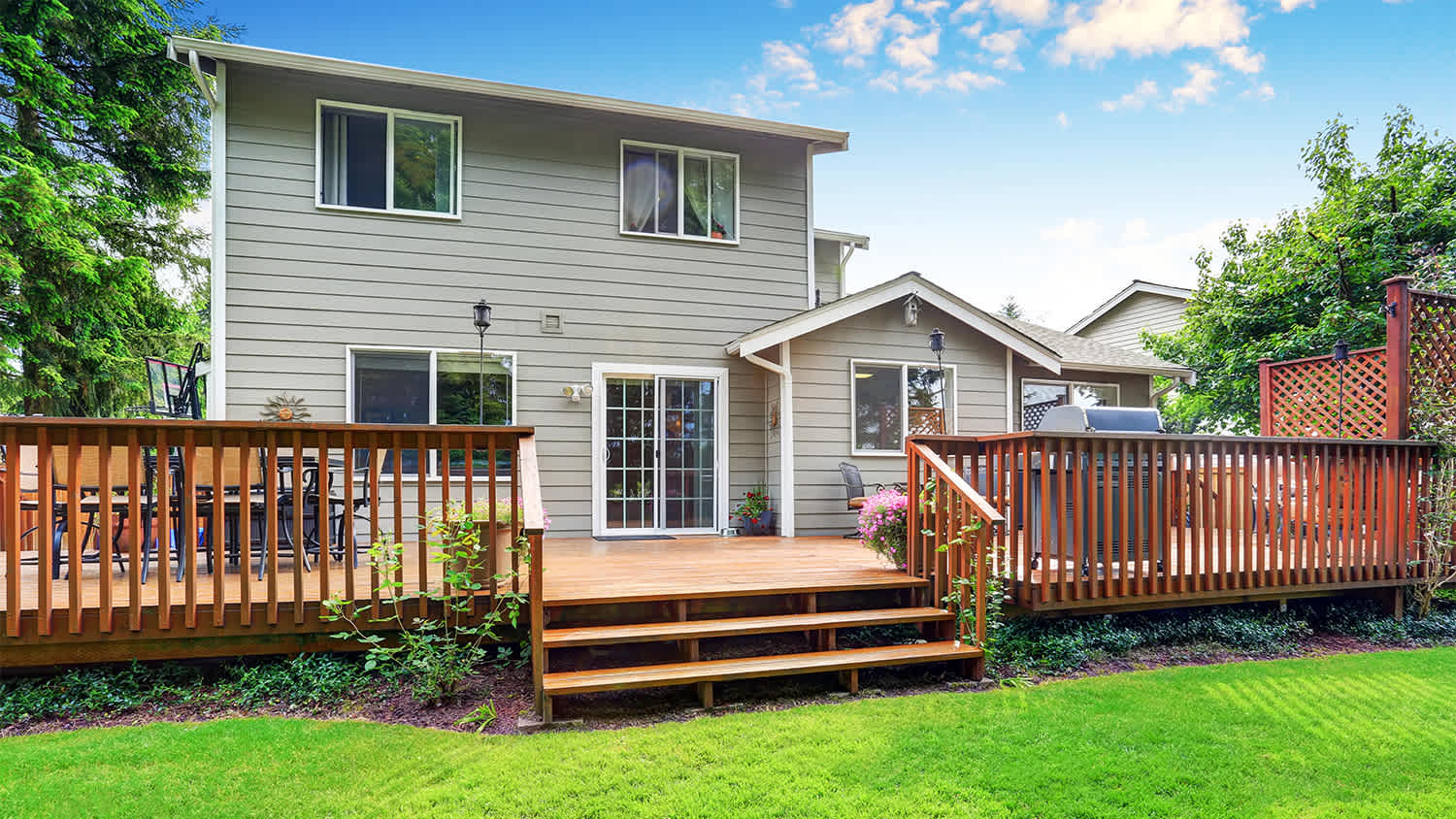
Cedar deck installation costs $3,600 to $9,000, so you can price materials and labor together.
Your cedar type affects lifespan and upkeep, with western red resisting rot longer while northern white cracks easier.
You should budget for staining or sealing, foundation work, permits up to $500, and potential deck removal.
Hiring a local deck building professional ensures your backyard project is done well and boosts the overall home value.
In 2026, the national average cost for cedar decking runs $6,500. Most homeowners pay between $3,600 and $9,000, with the spread driven by cedar species, deck size, and local labor rates. You should also set aside room in your budget for permits, which can run up to $500.
Several variables shape the total cost of a cedar deck, with lumber, deck size, and labor being the primary drivers. Speaking with a local deck builder early in the planning process is the most reliable way to get an accurate estimate for your specific project.
Cedar decking materials run $4 to $10 per square foot. Once installation is factored in, the total cost rises to $14 to $35 per square foot. While you certainly can build a deck with more budget-friendly materials, cedar is one of the most durable options.
The cedar variety you choose directly affects your material costs, and the right choice depends on your climate and performance priorities. See how the type of cedar affects your total decking cost in the table below:
| Type of Cedar | Average Cost per Square Foot in 2026 |
|---|---|
| Northern white | $4–$8 |
| Eastern red | $5–$8 |
| Western red | $5–$10 |
Northern white cedar is one of the most affordable options, ranging from $4 to $8 per square foot for materials. This wood is available in lighter colors than other cedar options and holds paint and stain well, making it highly customizable. However, this option is less dense than other varieties of cedar, and could be more susceptible to cracking and rotting.
If you live in an area with high humidity, an Eastern red cedar deck might be best for you. This variety of cedar costs $5 to $8 per square foot for materials. It is termite-resistant and a better option than northern white to reduce rot. However, because it’s a more dense variety, it doesn’t hold paint and stain well, limiting your customization.
Boasting a deep red color and a gingerlike scent, western red cedar is a top choice when building a cedar deck. This lumber choice ranges from $5 to $10 per square foot for materials, which places it in the higher-end range for cedar lumber. However, it is naturally resistant to decay and rot, with western red cedar decks lasting between 15 and 25 years.

Labor is the single largest line item in a cedar deck budget, costing $10 to $25 per square foot and accounting for roughly 60% to 70% of the total project cost. You can reduce that expense by handling simpler finishing tasks yourself, such as staining or painting the deck once construction is complete.
Deck size is one of the most direct cost drivers when building a cedar deck, since larger footprints require more materials and more labor hours. See how size affects your total cedar decking cost in the table below:
| Deck Size | Average Cost in 2026 |
|---|---|
| 12x12 | $2,100–$5,100 |
| 12x14 | $2,400–$5,900 |
| 14x14 | $2,800–$6,900 |
| 14x16 | $3,200–$7,900 |
| 16x16 | $3,900–$9,000 |
| 16x18 | $4,100–$10,100 |
A properly built foundation is essential to keeping your deck stable and safe, since a weak base can lead to shifting, movement, or collapse. Foundation options range from deck blocks to poured concrete, with costs falling between $75 and $600 depending on the type and complexity of the system you choose.
Staining or painting your cedar deck protects it from the elements and extends its lifespan, with staining a deck costs ranging from $550 to $1,250 and averaging $850. Ask your local deck building pro upfront whether this service is included in their overall quote or billed as a separate charge.
If you’re replacing an existing deck, plan to budget $5 to $15 per square foot for removal, with the final cost depending on the complexity of the original structure. Removing a deck by yourself can reduce that expense, though it is physically demanding and requires few specialized tools or materials.
First-time deck installations often require land preparation before any building can begin, with excavation costs ranging from $200 to $1,200 depending on the complexity of the site. If trees need to come down, removing trees costs an average of $750 per tree. Additional landscaping work such as dethatching, aerating, and basic plant removal adds $4 to $6 per square foot to the overall prep budget.
Your deck might not need a permit if it is under 200 square feet and less than 30 inches from the ground, but decks that exceed either threshold typically require one. A building permit for an outdoor structure costs up to $500, though the exact amount varies by municipality, so confirm requirements with your city or contractor before breaking ground.
Where you live has a meaningful impact on cedar deck costs, with elevated labor rates and higher material expenses raising prices in certain regions. The table below shows the average cost to build a cedar deck in various U.S. cities:
| City | Average Cost Range in 2026 |
|---|---|
| Austin, Texas | $3,200–$9,000 |
| Boston, Massachusetts | $4,500–$12,500 |
| Cincinnati, Ohio | $3,500–$9,500 |
| Denver, Colorado | $3,800–$10,500 |
| Los Angeles, California | $3,800–$10,500 |
| Las Vegas, Nevada | $3,500–$9,800 |
| Minneapolis, Minnesota | $3,700–$10,800 |
| New York, New York | $4,500–$12,000 |
| Orlando, Florida | $3,500–$10,000 |
| San Francisco, California | $4,200–$11,500 |
| Seattle, Washington | $4,000–$11,000 |
| Indianapolis, Indiana | $3,300–$9,200 |
| St. Louis, Missouri | $3,400–$9,500 |

Owning a cedar deck means budgeting $150 to $375 per year for routine maintenance, including pressure washing, refinishing, resealing, and repairs. Scheduling an annual inspection with a deck repair pro helps you catch common deck problems before they become costly, keeping your deck in good shape for years to come. Here are some expected maintenance costs for a cedar deck:
Pressure washing a deck: $100–$250
Refinishing: $980
Resealing a deck: $550–$1,400
Deck repair: $860–$3,500
Building a deck yourself is not exactly a DIY-friendly project. If you do it yourself, you’ll save money but not time. That said, if you have the lumber and the tools and are relatively confident regarding your experience level, this can be a rewarding task. You’ll need to budget about $500 for a power drill, power miter, table saw, circular saw, and reciprocating saw, if you don’t already have them. And, you can expect to spend about three weeks of quality time with at least one other person to build a 12-by-24-foot deck.
By tackling this project without professional help, you’ll save between $10 and $25 per square foot on labor costs. However, local deck builders have the know-how to build a deck efficiently and will handle logistics like material delivery. Plus, they can ensure that the project is done right the first time, without wasting precious time or materials.
Along with essential labor and material costs, these additional features can impact your total deck budget:
Planting flowers: $4–$6 per square foot
Extensive landscaping from a local landscaping pro: $6–$10 per square foot
Deck lighting: $450–$800
Stairs: $25–$50 per stair
Railings: $40–$60 per linear foot (note: railings are often required by law)
Awning: $1,500–$4,000
Building a new cedar deck can get pricey, but there are some ways to cut costs. Here are a few money-saving ideas to make your project more affordable.
Stick to a modest-sized deck with a simple design. The more straightforward your project is, the more you’ll save in labor and material costs.
Complete the project during a quieter time of year. Some deck builders increase their prices during periods of high demand (that’s spring and summer). Ask around and see if you can get a discount for installing your deck during winter.
Choose a lower-quality cedar. You can opt for a knottier cedar option that still gives you the great qualities of cedar wood but without the cost of “perfection”.
One of my old tall evergreen trees was suddenly leaning toward the busy street in front of my house. I submitted a request for an emergency tree inspection, and Alejandro, owner of Cajete Tree Service, contacted me immediately and arrived to look at it just 20 minutes later. We agreed the...
 Cajete Tree Service LLC
Mitchell and the crew were top tier i am so happy with my new roof
 Home Genius Exteriors
1 tree was cut down and 5 others including a large willow tree were trimmed. The Grant Tree Service men were professional and cleaned up afterwards. The cost of the 6 trees were affordable. I am very happy with the results. I would hire them again.
 Grants Tree Service
Archie did a good job cleaning up the driveway before he laid down the sealer. It looks good. He was gracious and even helped me bring up my groceries. His rate was comparable to another company who came out to give me a quote and he talked to me personally rather than just text me a quote...
 Pro Seal Roofing & Paving
We have bought and sold numerous times over the past 50 years. Sherman Hall and Top Line are top notch. Thorough and detailed, he explains every possibility, probability, and eventuality. High class and pleasant. The best.
 Top Line Home Inspections, LLC
D1 Roofing delivers outstanding service from beginning to end, backed by a strong warranty and expert teams. I highly recommend them for their excellence in meeting and surpassing expectations with unmatched communication. Choosing D1 Roofing was flawless decision
 Division 1 Roofing LLC
Supreme Brick & Chimney did an excellent job restoring the brick and mortar joints on my home. Their team was professional, knowledgeable, and completed the work on time. I highly recommend them and will hire them again in the future! Thanks!
 Supreme brick & chimney
Window Depot did an amazing job on my deck. I wasnt sure what I wanted to do, but their composite decking was affordable and will last a long time. I am excited to have family over, and I am no longer embarrassed by my backyard. Jeff and the ground crew were polite, respectful, and caring for...
 Window Depot USA of Central Ohio
We were having 2”x 2” tile installed . There was a small installation error and the new additional replacement tile was from a different lot and the colors didn’t match. Joe assured us that he would rectify everything , which he did without hesitation. We decided to go with the 18” x 36” tile...
 CarifaTile
Maple Tree Service should serve as a mentor for other business! Customer service was superior and beyond expectation. Response to request was prompt. The representative was very courteous and proud of the company. Quote was given during initial visit and work date established. A follow up...
 Maplewood Tree Service
From average costs to expert advice, get all the answers you need to get your job done.
Discover mahogany decking costs and learn about material, labor, and installation factors to budget your new deck project with confidence.

Trex decking can offer your home a beautiful, durable outdoor oasis. Learn all about the costs of Trex decking based on space, size, and style.
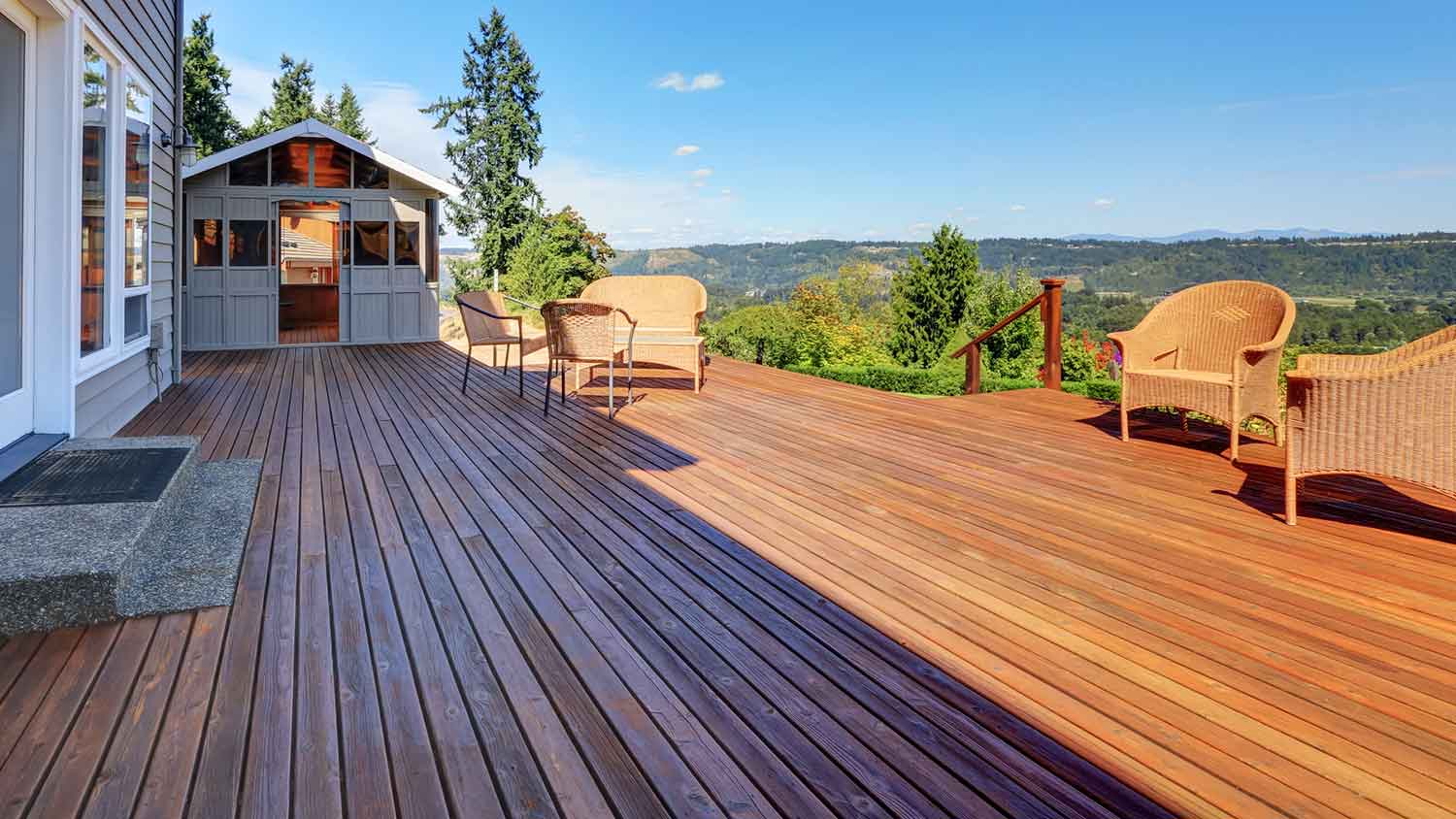
Discover redwood deck costs, including average prices, installation factors, labor rates, and tips to save on your new deck project.

Installing a new wooden deck? Explore this guide to learn about the best wood for decks, including the benefits, costs, and life expectancy of each type.

Many homeowners wonder why their cedar deck is turning black. This article explains the most common causes and how to fix them.

Deciding between using cedar vs pressure-treated wood for your outdoor project comes down to budget, appearance, durability, maintenance, and other factors.