
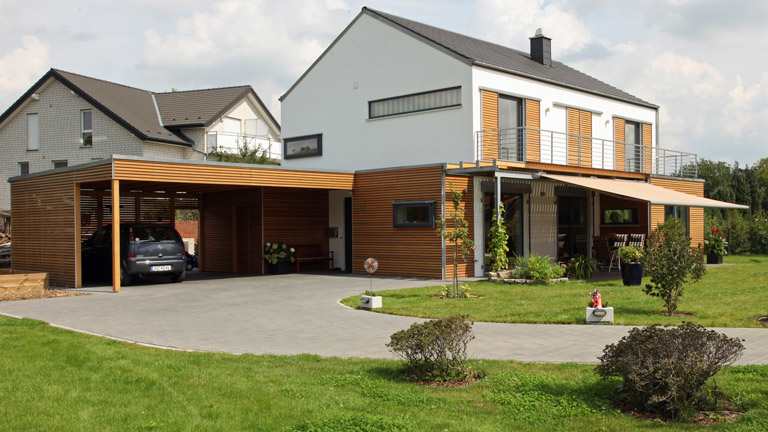
Considering enclosing your carport to turn it into a more protective garage? Find out about the cost to convert a carport into a garage in this handy guide.
Which structure is the better fit for your home?

Carports versus garages differ because carports offer open-sided shelter with just a roof, while garages provide fully enclosed protection with walls and doors.
Carports cost an average of $3,600, while garages average $28,660, making carports the more budget-friendly option for your vehicle shelter needs.
Garages offer better security and weather protection for your vehicles, while carports provide easier installation and less tendency to collect clutter over time.
Hiring a local garage building professional provides confident guidance on structure selection and handles permits, ensuring your vehicle shelter meets local requirements.
If you’re looking to protect your vehicle at home and better utilize space on your property, you’ll need to decide between a carport vs. a garage. Both a carport and a garage protect your car from the elements, but they’re quite different in how they appear and function, as well as the amount of protection they provide. Before you decide which is right for your home, learn all the differences between a garage and a carport.
The differences between a carport and a garage are rooted in their respective designs and functions. A carport is a partially covered structure that typically relies on posts and lacks fully enclosed walls. With its open-sided design, a carport offers ventilation and easy accessibility, making it a more cost-effective option for sheltering vehicles.
In contrast, a garage is a fully enclosed and secure structure that provides comprehensive protection against various external factors, including vandalism, theft, and harsh weather. Because garages require more materials and labor to build, they are typically more expensive. In addition to housing vehicles, garages can also function as versatile storage or workshop spaces.

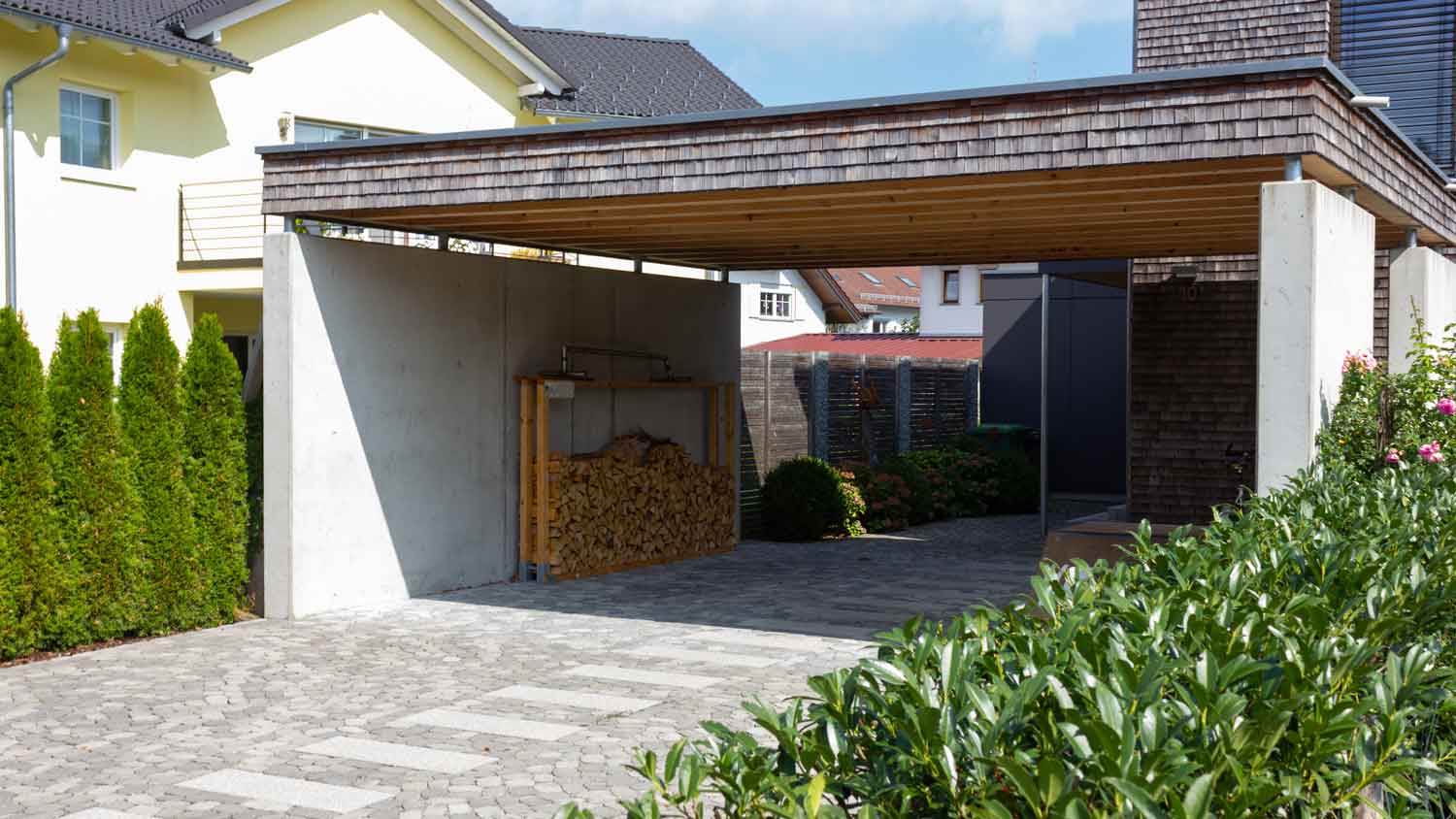
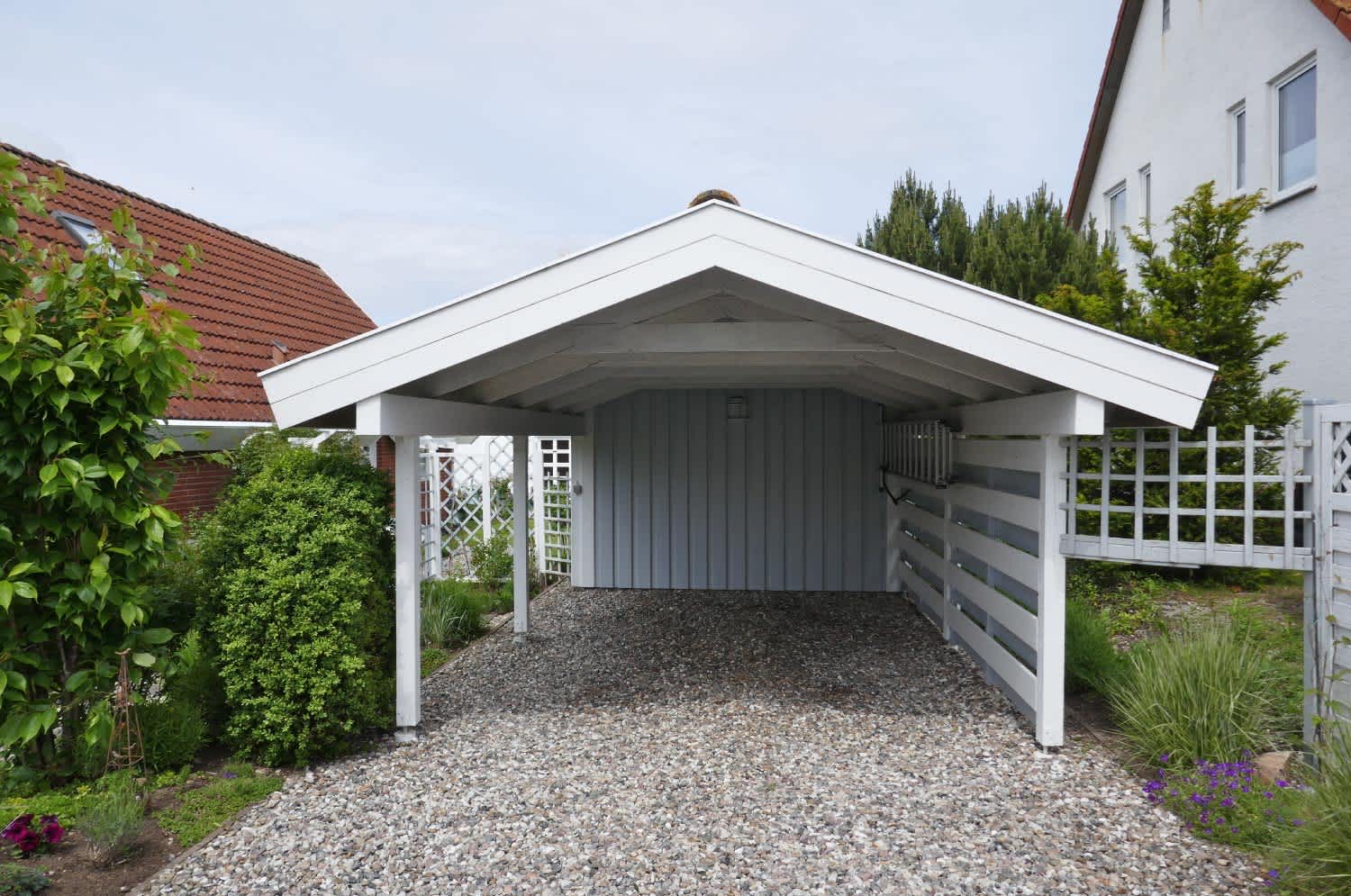
A carport is a semi-covered structure designed to shelter vehicles while maintaining an open and minimalist layout. Unlike a garage, most types of carports feature a roof supported by posts or columns, leaving one or more sides entirely open.
This style offers ample ventilation and easy accessibility, making it an ideal choice for homeowners seeking a cost-effective and quick shelter solution for their vehicles.
| Pros | Cons |
|---|---|
| Affordable | Adds less value to home |
| Protection from elements | Less secure |
| Less prone to clutter | Lacks visual appeal |
Best for:
Budget-conscious homeowners
Short-term or portable shelter needs
Homeowners prioritizing a swift and uncomplicated construction process
Carports offer a more economical solution for vehicle shelter due to using fewer building materials and a simplified construction process. Temporary carports, in particular, stand out as the most budget-friendly option. Beyond cost-effectiveness, carports excel in protecting various elements. Even temporary carports demonstrate considerable strength in withstanding rain, snow, falling branches, tree debris, and the damaging effects of UV light from the sun.
For the tidy-conscious homeowner, carports tend to be less prone to clutter than garages. While many homeowners often turn garages into storage spaces, carports encourage a cleaner and tidier environment, offering greater motivation to maintain an organized space. However, carport sizes can vary so homeowners can use the space to store items that don't need complete shelter in addition to vehicles.
One of the most notable drawbacks to carports over garages is that it doesn’t add as much value to your home as a garage does. If you sell your house, carports may deter potential buyers because they appear less attractive.
Also, carports tend to provide less comprehensive protection than garages. They don’t shield vehicles from extreme outdoor temperatures, whether high or low. There's also a security risk to consider as the structure style is more susceptible to theft or vandalism.

A garage is a fully enclosed and secure structure designed primarily for the shelter and protection of vehicles. Built with enclosed walls and a roof, a garage provides complete coverage against external elements, including adverse weather conditions, vandalism, and theft. The enclosed design of a garage not only offers heightened security but also regulates internal temperature, making it a more temperature-controlled environment to suit a variety of uses.
| Pros | Cons |
|---|---|
| Provides complete protection | More expensive |
| Greater utility | Challenging to DIY |
| Visually appealing | Requires permits |
| Adds value to home | Can promote clutter |
Best for:
Comprehensive vehicle protection
Homeowners looking for a long-term investment to increase property value
Diverse space needs including workshops, hobby spaces, or additional storage
Garages offer unparalleled protection for vehicles, shielding them from the elements, vandalism, and theft in a secure, enclosed space. Beyond their primary function, garages provide greater utility by serving as versatile spaces for workshops or storage. In some cases, they can even be converted to living spaces.
The visually appealing nature of garages is often preferred by homeowners, contributing to a more aesthetically pleasing property. The visual appeal can enhance the overall value of a home. Potential buyers tend to place a higher value on properties with an enclosed parking and storage feature, potentially influencing them to invest more in a home with a garage compared to one with a carport.
Garages require a higher upfront investment compared to carports. For DIY-savvy homeowners, constructing a garage is generally more challenging, especially when compared to the relatively straightforward assembly of carports, particularly temporary ones. Another required step in the construction process is obtaining permits, which extends your timeline.
Garages may also collect clutter, since it allows homeowners to discreetly store items. After a while, belongings can easily build up to become untidy, even in larger garage sizes. In some cases, homeowners may end up storing so much that there is little room left to store vehicles.
If you’re having trouble deciding between building a carport and a garage on your property—or wondering what a carport is—we suggest considering the following factors.
Garages are entirely closed off to the outside and generally look more appealing to homeowners. Carports supply just a roof, and while they don’t look particularly unappealing, they’re not the preferred aesthetic.
Garages offer a little more in the way of customization, too. You can match a garage door to your front door or exterior trim and paint the exterior walls of the garage to match your home for a more cohesive appearance from the outside.
Garages have four exterior walls and a roof, while carports only have a roof, usually supported by beams. Although attached garages share a wall with your home, which can help keep installation prices lower than a detached garage, the cost of a carport will always be lower than that of a garage. The average carport costs $3,600, whereas garages average $28,660
This is especially true if you install a temporary carport. These are not only thousands of dollars less than a garage, but they sometimes don’t require building permits, so you could also save on permitting fees. If you decide on a carport now, though, you could opt to convert your carport to a garage down the road.
Garages provide more utility, as you can park your car for safety while also potentially using the space for storage, woodworking, and more. You always have the opportunity to organize your garage and make it more useful for you and your family.
You can also use carports for storage, but stored items won’t be secure, and they can lead to unsightly clutter that’s visible from the front of your property.
One major benefit to garages is that they provide better security for your car. Garages have four walls and a lockable door, so they protect not only against the elements but also from theft and vandalism.
Additionally, you can opt to heat and/or cool your garage to provide climate control to protect your car even more. Carports have open sides and cannot be climate-controlled.
Carports usually require a permit, but it can depend on your municipality. In some cases, there are no restrictions on materials or size.
But garages pretty much always require one—plus a zoning review and other local legal stipulations. There are pretty specific electric, material, and building requirements you’ll have to take into account when building a garage, all of which come at their own cost.
A garage bump-out addition to your home will always be more expensive and more involved than installing a carport. Temporary carports, meanwhile, can be a great DIY project and require no experience.
Building a permanent carport is about as challenging as building a garage. It’s usually best to get help from a professional, but learning how to build a carport is more accessible than learning how to build a garage. The installation timeline for a carport is shorter even if you hire a professional since there are no walls to construct.
Both a carport and garage help protect your vehicle from weather like snow, rain, and hail. But, if the storm is extra strong or temperatures are consistently below zero, a carport won’t do much to keep your car or belongings safe.
Plus, you can always insulate your garage to add even more protection against the elements. So if you live somewhere that experiences a lot of cold weather or intense storms, a garage will be your best safeguard.
Since garages are the preferred parking option for most homeowners, they will also tend to have a better return on investment. Garages add more value overall to your home, even when you consider the cost of hiring a garage builder near you to handle the installation.
But, they’re more expensive to maintain and repair—which could potentially be a turn-off for some buyers. For example, if you have a damaged garage door, the cost of replacing the garage door could be the difference between buying your house and one without a garage. That being said, the ROI is almost always better with a garage vs. a carport.
Building a carport now can be a step in the right direction if your ultimate goal is to add a garage in the future. But there are a few carport ideas to keep in mind to make that conversion more effortless and affordable.
Size: The carport will need to be at least 20 feet deep and at least 8 feet high to meet most regulations, but usually bigger is better.
Electrical: Make sure the carport can easily be adapted to the electrical needs of your garage.
Material: Opt for sturdier ones like steel. While a metal carport costs less, you may end up spending more in the long run if you plan to convert to a garage.
Legal: Don’t plan for this conversion without checking first with your HOA and local regulators to make sure it’s even allowed.
On average, the cost to convert a carport to a garage ranges between $15,000 and $30,000. If planned correctly, you can convert a carport into a garage in the future with relative ease.
Taylor Sansano contributed to this piece.
Company came to look at my garage door that was off track. They also said I needed a brace on the other garage door. They put the door back on track, and I paid to install the brace. The technician told me I needed a new garage door opener, and it would cost $1000. Red flags went off in...
 Precision Overhead Garage Door Service
Replace garage doors: Fast response, competitive estimate, timely work done well.
 Village Garage Door
Called Mark on a Thursday morning. Not really knowing if he could help me or not. I was having driveway, flooding issues due to a clogged channel drain and I was trying to figure out what direction to take. Heavy rains had come on Monday and again on Thursday leading to flooding in my garage...
 Mark Rodgers Construction
Not well. I originally emailed Garage Gurus on 8/6, again on 8/9, and again on 8/11. In the meantime I left two voice messages with their answering service; both times I was told that an estimator would "get right back" to me. Not even the courtesy of a reply of any kind. Extremely...
This company is amazing! My garage door broke this afternoon and was stuck in the open position. I couldn't leave with the door open so I called Sanford and Sons because the company was recommended by the manufacture of my garage door motor. Nancy answered the company phone and problem...
The workers parked large trucks and trailers in the street that, on many occasions, over several months time precluded me from being able to get my car out of my garage. Additionally, it made for difficult movement of traffic on the street. Frequent request to the workers and to the property...
We had two outdoor fixtures swapped for motion sensing fixtures and a GFCI outlet added to the outside of the garage for the bird bath heater. <br /> He arrived at the agreed upon time and I was surprised and impressed at how quickly everything was completed. <br /> I would definitely...
 Powers Electric LLC
I received a glowing recommendation of RoofWise from my accountant & contacted them regarding a stubborn leak I've battled where the family room addition meets the original house. I also asked for a recommendation regarding ongoing garage leaks. Following a detailed inspection Roofwise...
 RoofWise Roofing Inc
Met with and received a detailed estimate from the owner who also answered all the questions I had about the work. Work was delayed by unusually rainy weather, but I did receive periodic scheduling updates by email. When the weather broke, the painting was completed in an extremely...
 Fresh Touch Custom Painting Inc.
Great. Serviceman checked the door thoroughly and let me know he saw no problems with it. Gave me some maintenance tips. Then he fixed the garage door opener and showed me how I could fix it myself in the future. Good customer service. <br />
 Sound Door Services LLC
From average costs to expert advice, get all the answers you need to get your job done.
Considering enclosing your carport to turn it into a more protective garage? Find out about the cost to convert a carport into a garage in this handy guide.
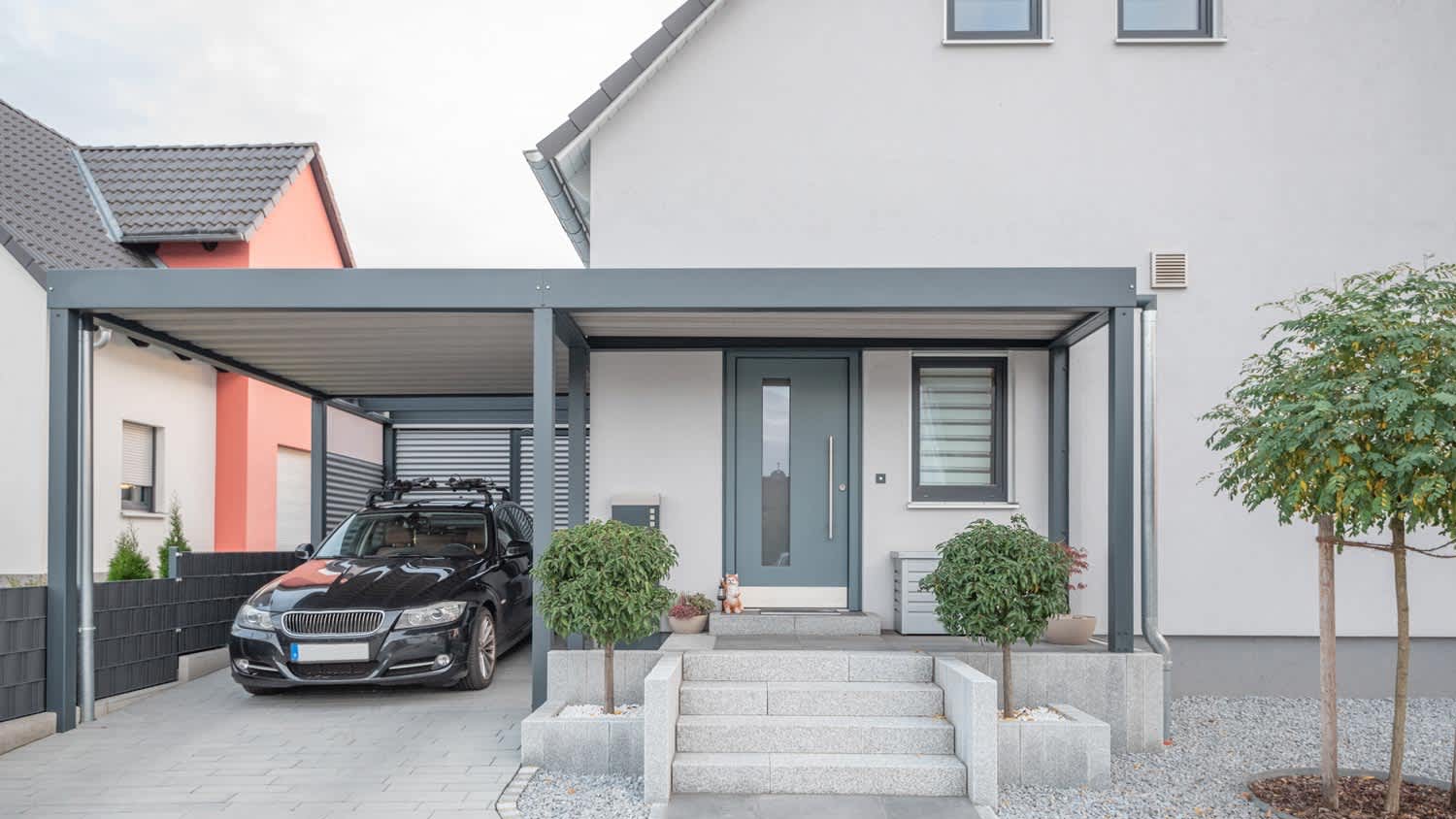
Find out metal carport installation costs, including labor, permits, and key factors. Get tips to save money and make the best choice for your home.
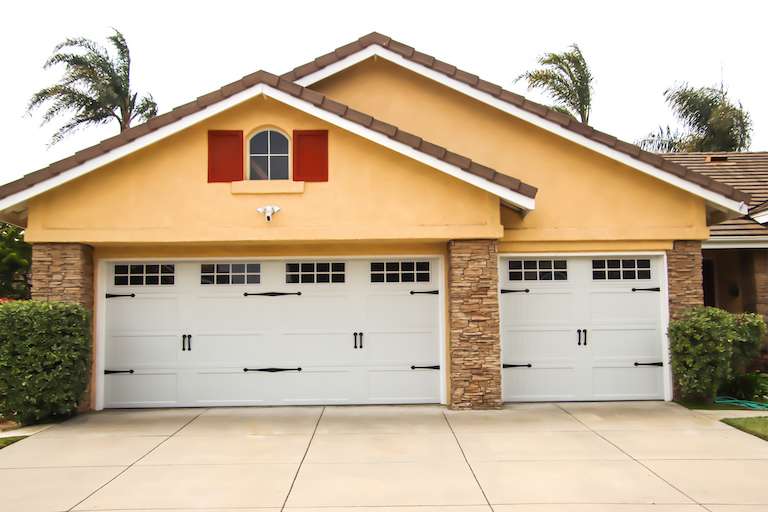
Garages increase curb appeal and have a high ROI. Use this guide to learn about the average cost to build a garage and budget for your project.
Transforming your carport into a garage may be easier than you think. This DIY guide will teach you how to enclose a carport and build the garage of your dreams.
If you’ve ever wondered: What is a carport? We’ve got you covered. Find out whether a carport is right for your home.
Protecting your vehicles from weather and sun without a garage is possible if you install a carport. Learn about the different types of carports in this guide.