
•
Find out metal carport installation costs, including labor, permits, and key factors. Get tips to save money and make the best choice for your home.
Sizing your carport properly means adequate room for vehicles plus storage

Standard two car carport dimensions are 24 feet wide by 20 feet deep, giving you enough room to park side by side comfortably.
Expect to pay $2,100 to $5,100 for carport installation, with average costs around $3,600 depending on size and features you choose.
Your carport size depends on vehicle type, storage needs, building code limits, budget, and whether you plan to enclose it later.
Hiring a local carport building professional keeps your project on track with custom sizing and permits, so your new structure fits perfectly.
If you’re planning on building a carport on your property, one of the most important decisions you’ll need to make is the carport size you need. Getting the right size is crucial for maximizing the utility and convenience provided by the structure while also keeping installation costs down. In this guide, we’ll explain everything you need to know about installing the right size carport for your needs and property.

If you’re building your own carport or plan on hiring a professional carport builder near you to install one for you, you can choose custom sizes to suit your preferences. However, it’s important to maintain at least the minimum size carport for your intended use. Doing so will ensure you have ample space to park your vehicle, open the doors, and maneuver around it comfortably.
The standard size of a 1-car carport is 12 feet wide by 20 feet deep. If you want to use your carport for storage as well, we recommend going with a carport sized for one-and-a-half cars. The dimensions would then be 18 feet wide by 20 feet deep.
The standard carport size for two cars next to one another is 24 feet wide by 20 feet deep. You can upsize the width to 30 feet for some additional room for storage. If you plan on parking your cars front to back instead, the standard carport size would be 12 feet wide by 40 feet deep, with the width bumped up to 18 feet for additional storage being an option.
A carport for three cars parked side to side is usually 36 feet wide and 20 feet deep. You can increase the width to 42 feet, making it a three-and-a-half-car carport to include additional room for storage or a workspace.
A carport for four cars parked side by side typically has a footprint that is 48 feet wide—or 54 feet wide to include room for storage—and 20 feet deep. A less common layout that allows for two rows of two cars each would be 24 feet wide by 40 feet deep.
If you have limited space on your property to build a carport or you just want to minimize the footprint, you can choose to downsize based on the number of cars you want to be able to park underneath.
Minimum size for 1-car carport: The minimum size carport recommended for a single car is 10 feet wide by 18 feet deep.
Minimum size for 2-car carport: The smallest carport size to park two cars side by side is 20 feet wide by 18 feet deep. A carport made for parking two cars end to end could be as small as 36 feet deep and 10 feet wide.
Minimum size for 3-car carport: The smallest footprint that would work for a 3-car carport would be 30 feet wide and 18 feet deep.
Minimum size for 4-car carport: A 4-car carport could be as small as 40 feet wide and 18 feet deep if you plan to park side to side or 20 feet wide and 36 feet deep if you plan to park in two rows.

You should plan to optimize the size of your carport for your specific needs. To that end, there are a few things we recommend you consider when deciding on the size carport you want on your property.
First, think about the specific vehicles you plan to store. If you drive a car or SUV, you’ll likely find that the standard carport sizes work just fine. If you own larger vehicles, like pickup trucks or RVs, you might want to upsize a little to ensure they fit. Plus, RVs could demand a higher ceiling in your carport for adequate clearance.
If you just want to use your carport for storing a vehicle, then the minimum or standard sizes should work. We recommend upsizing to the next half-car size if you also want storage or room to set up a workspace. This delivers additional utility you more often find from a garage bump-out addition.
Most building departments have requirements that dictate not only the size of a carport but also how close to your property lines they can extend. The building code and property size will limit your carport size.
Larger carports built with equivalent materials will always cost more. The materials contributing to your carport costs will be higher the larger you build, as will your labor costs if you hire a professional. If you’re on a tight budget, you might be limited to smaller carport sizes.
If you ever decide you prefer a garage over a carport in the future, you can always enclose your carport. However, minimum carport dimensions may not be possible if you plan to enclose it, as they could prevent you from opening your car door or maneuvering around your vehicle once you close the sides off. Keep your future carport ideas and alterations in mind when deciding on dimensions.

On average, a carport costs about $3,600, though most homeowners will pay between $2,100 and $5,100. However, the smallest, most basic type of carport—enough to cover a single car— can cost as little as $400. On the other hand, a larger carport for two midsize sedans can cost $9,000 or more, depending on any special features like vertical roofs, gabling, walls, or a new concrete foundation.
For most homeowners, carport installation is a job best left to a professional. But for particularly handy DIYers who have the necessary skills and tools, you can do the project yourself and save between $300 to $900 in labor fees or about $10 per square foot in materials.
To decide what size carport to build, you should first consider how many vehicles will need to be parked there. Standard sizing can allow for up to four cars; if you have more than four vehicles, you will need to hire a professional carport builder to design a custom carport. Keep in mind that many cities have specific laws that dictate how large of a carport you can build, so it’s possible that you won’t be able to go much beyond the standard sizing.
In addition to considering your vehicles, you should also consider the future: even if you only have one car now, is it possible you will have two sometime down the road? Perhaps your tween daughter is just starting driving lessons, and once she’s 16, she’ll need her own set of wheels—calculate while taking into account potential scenarios such as this one.
Finally, if you have special vehicles—such as an oversized truck or farm equipment—you might need more space, either in height or width.
Company came to look at my garage door that was off track. They also said I needed a brace on the other garage door. They put the door back on track, and I paid to install the brace. The technician told me I needed a new garage door opener, and it would cost $1000. Red flags went off in...
 Precision Overhead Garage Door Service
I highly recommend KTM construction! I will look no where else for anything that needs to be done, in or out side of our property. The level of craftsmanship is 5 star service across the board! The level of detail, knowledge and professionalism is 5 star service across the board! Ken is a...
 KTM Construction, LLC
Replace garage doors: Fast response, competitive estimate, timely work done well.
 Village Garage Door
Called Mark on a Thursday morning. Not really knowing if he could help me or not. I was having driveway, flooding issues due to a clogged channel drain and I was trying to figure out what direction to take. Heavy rains had come on Monday and again on Thursday leading to flooding in my garage...
 Mark Rodgers Construction
Not well. I originally emailed Garage Gurus on 8/6, again on 8/9, and again on 8/11. In the meantime I left two voice messages with their answering service; both times I was told that an estimator would "get right back" to me. Not even the courtesy of a reply of any kind. Extremely...
This company is amazing! My garage door broke this afternoon and was stuck in the open position. I couldn't leave with the door open so I called Sanford and Sons because the company was recommended by the manufacture of my garage door motor. Nancy answered the company phone and problem...
The workers parked large trucks and trailers in the street that, on many occasions, over several months time precluded me from being able to get my car out of my garage. Additionally, it made for difficult movement of traffic on the street. Frequent request to the workers and to the property...
We had two outdoor fixtures swapped for motion sensing fixtures and a GFCI outlet added to the outside of the garage for the bird bath heater. <br /> He arrived at the agreed upon time and I was surprised and impressed at how quickly everything was completed. <br /> I would definitely...
 Powers Electric LLC
I received a glowing recommendation of RoofWise from my accountant & contacted them regarding a stubborn leak I've battled where the family room addition meets the original house. I also asked for a recommendation regarding ongoing garage leaks. Following a detailed inspection Roofwise...
 RoofWise Roofing Inc
Met with and received a detailed estimate from the owner who also answered all the questions I had about the work. Work was delayed by unusually rainy weather, but I did receive periodic scheduling updates by email. When the weather broke, the painting was completed in an extremely...
 Fresh Touch Custom Painting Inc.
From average costs to expert advice, get all the answers you need to get your job done.
Find out metal carport installation costs, including labor, permits, and key factors. Get tips to save money and make the best choice for your home.
The cost to build a carport can range from $3,072 to $9,435, depending on the size, materials, and type of carport. Keep reading to learn about carport costs.
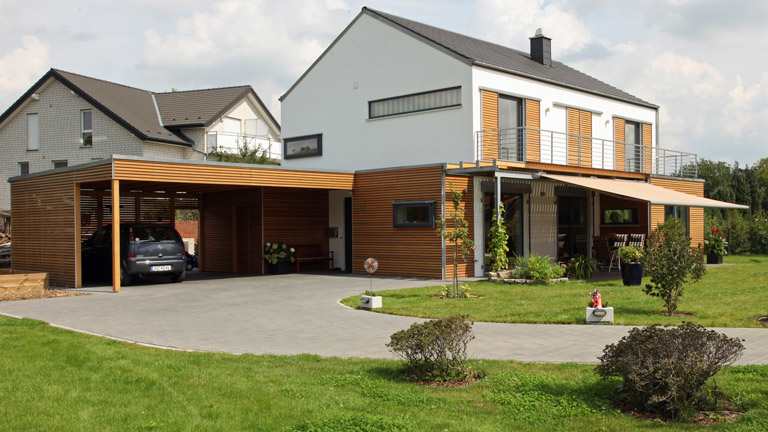
Considering enclosing your carport to turn it into a more protective garage? Find out about the cost to convert a carport into a garage in this handy guide.
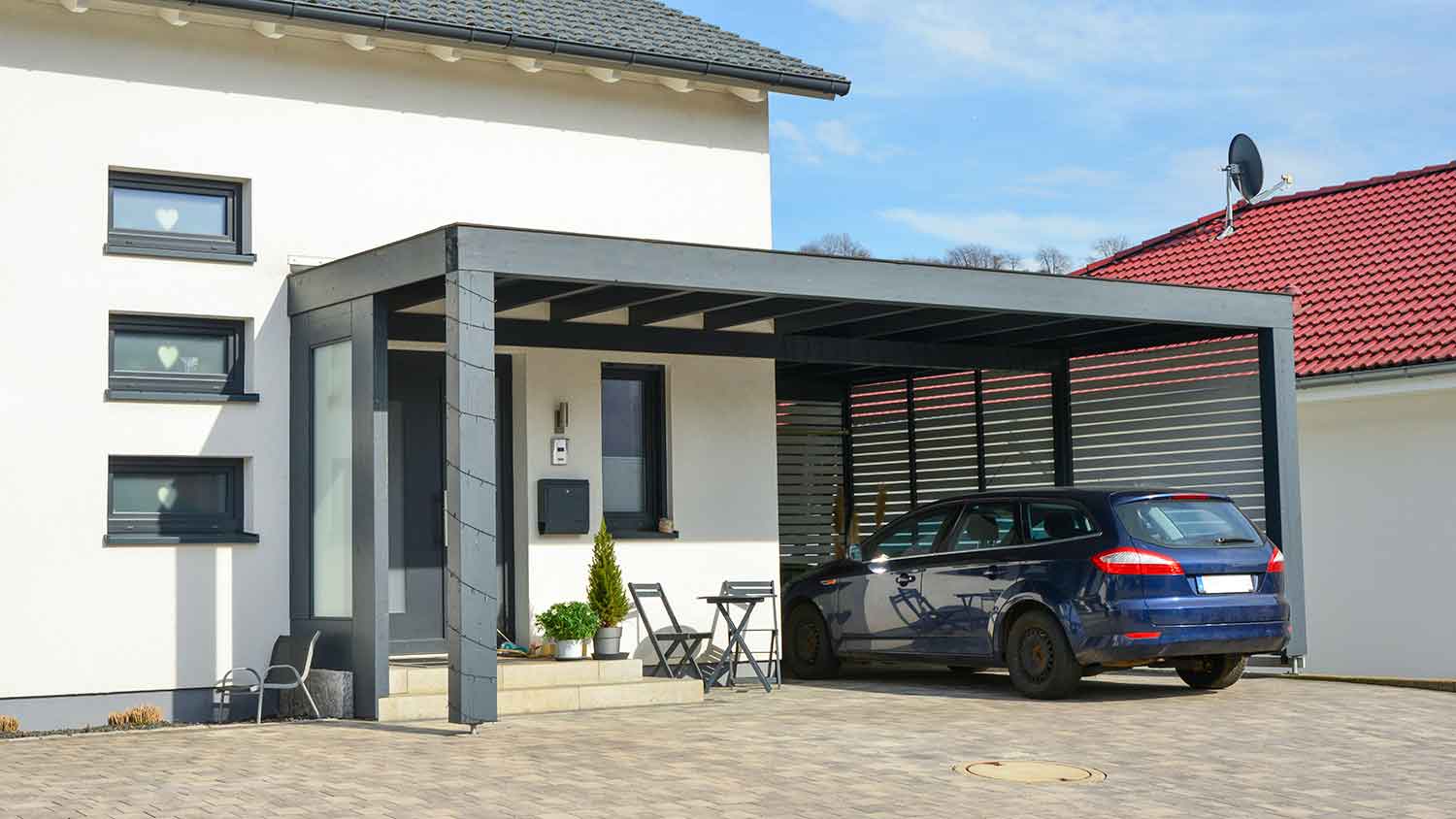
If you’ve ever wondered, “Who can I get to build a carport?” you’re in the right place. Read on to learn about professional carport builders.
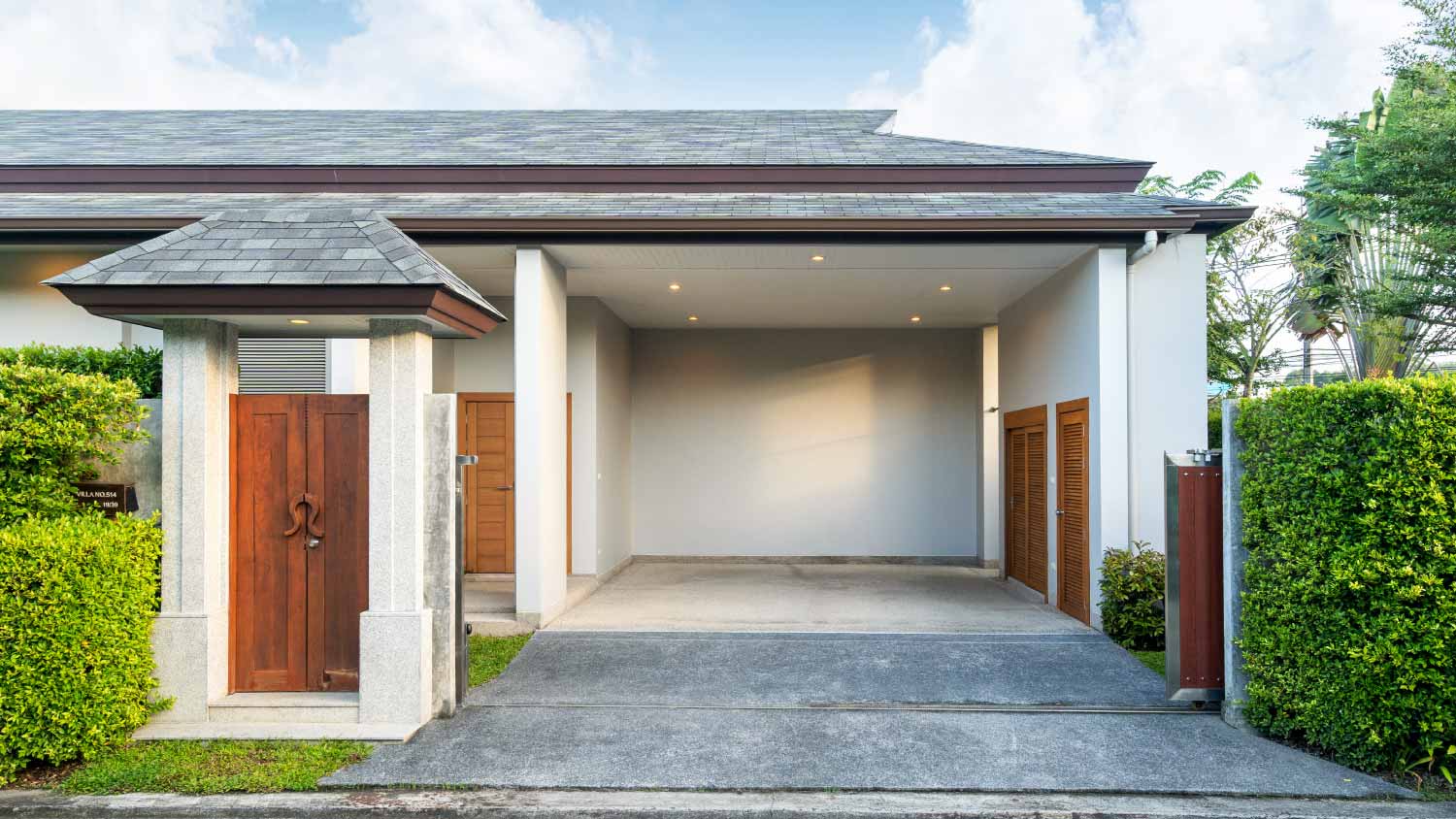
Protecting your vehicles from weather and sun without a garage is possible if you install a carport. Learn about the different types of carports in this guide.
Planning a wood carport building project? Learn about design options, material costs, and how to hire the right local pro to protect your vehicles.