
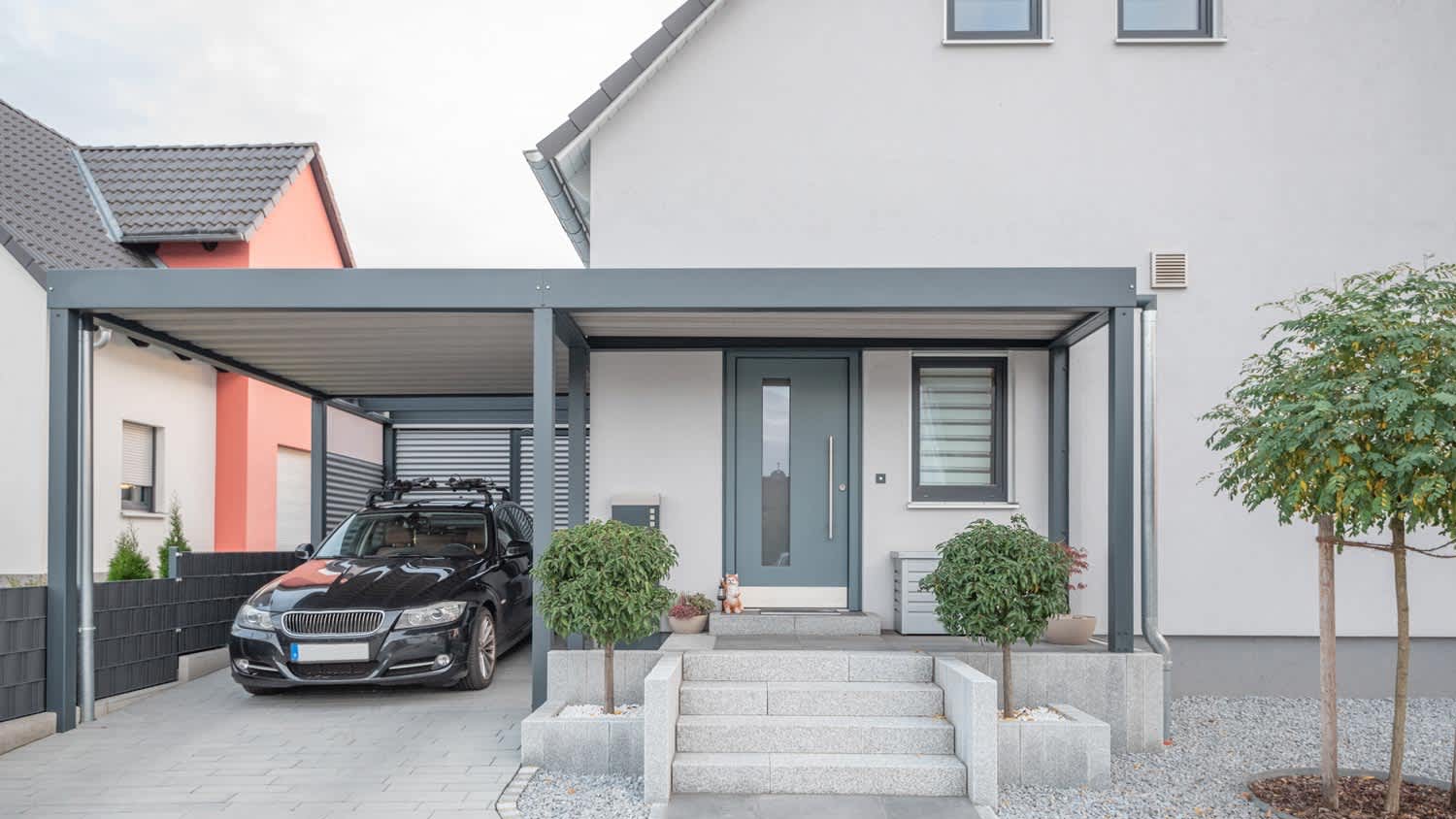
The cost to build a carport can range from $3,072 to $9,435, depending on the size, materials, and type of carport. Keep reading to learn about carport costs.
Building a carport is a big project, but it’s doable with some preparation

Carports can add value to your home while protecting your car and items in storage from the elements. Not only do they take less time to build than a full garage, but carports are also more affordable because they require fewer building materials. In this DIY guide, we’ll explain how to build a carport using three different methods for the various types of carports. Constructing a carport can be challenging, but with the information in this guide, you’ll be all set to tackle the project with confidence.

A carport is similar to a garage in that it protects your vehicle on your property, but it lacks the finished walls of a garage. Carports typically consist of support beams and a constructed roof, and they can stand on their own or attach to the side of your home. You can make carports out of metal or wood and can sometimes match them to the exterior aesthetic of your home for a more cohesive appearance.
While carports are similar to garages, they don’t provide the same security for your vehicle. The roof will protect your car from rain, snow, and damaging UV light. However, since carports don’t have solid walls and lockable doors, they won’t keep your car safe from theft or vandalism. Carports are much more affordable to install than garages, so that’s a point in their favor, even if they’re less secure.
The average metal carport costs between $2,000 and $4,900 to build. Constructing your carport out of wood and asphalt roofing material will push your cost to between $3,000 and $9,600.
There are a few crucial things to consider before installing your carport, both for maintaining your safety and for ensuring your carport is up to code.
Find a location with enough clearance around the carport so you have room to work. If your home has a garage, consider adding the carport to the front or side of the garage area. Driveways or other home entry points are also great options for your carport. You want a flat surface to work on, so you might need to grade the ground before you can start building.
The most important thing you’ll need to do before beginning your carport installation is to confirm if and where there are any utility lines on your property. If you plan to dig post holes to permanently affix your carport to the ground, make sure you call 811 before you dig.
The utility line locating service will mark utility lines on your property to help you avoid cutting through buried electrical or water lines or, worse, cutting into a natural gas line.
Failing to call before you dig could be dangerous and even deadly.
In many municipalities, you’ll need a building permit for your carport. You can usually file for these yourself, but there might be restrictions depending on where you live. You can contact your local building department for more details.
The three types of carports we’ll discuss below vary in complexity from super simple and suitable for any DIYer to advanced. We suggest you think about your skills and your comfort level when deciding what type of carport is right for you.

There are three main ways to build a carport, depending on the kind you want, your skill level, and your property layout.
Premade carports are the simplest and most affordable option. It takes much less time to build and can be easily installed by someone without previous construction experience. However, premade carports rarely match your home’s aesthetic and often add the least value to your property.
Gather all your tools and check the carport. Look at the manual and check to see if all components are present. Premade carports are easy to install, and you only need to follow the instructions.
Proper anchoring is crucial for keeping your new carport steady and safe. You can use metal wire to attach ground anchors and hammer them into the soil. If installed on concrete, you can use masonry bolts to tighten the carport down.
One of the benefits of a standalone carport is that you can build it to your exact specifications. This is more challenging than a premade carport, but you can handle the project even if you have little construction experience. Wood and asphalt roof shingles will usually be easier to work with, but metal is an option as well if you have metalworking tools.
A standalone carport requires more tools and supplies than a premade carport, including detailed blueprints or building plans for the structure. Beginning construction without blueprints or building plans for your home addition is not advisable. Depending on the materials you are working with, you may also need metalworking or other specialty tools.
After marking your utilities, you can start digging. Dig your post holes with a post digger at least two feet away from any marked utility lines. The holes should be three to four feet deep and around a foot in diameter.
Place cylindrical concrete molds into the post holes and fill the bottom with about six inches of crushed gravel or paver base.
You have two options for setting your posts in the concrete. You can fill the entire mold with concrete and then push a base anchor into the top. If you do this, make sure the anchor is level in multiple directions. Alternatively, you can place the post into the unfilled concrete mold, ensure that it’s plumb, and then fill around the post with concrete. In either case, make sure the posts are plumb, and let the concrete cure fully before proceeding.
Connect the front and rear beams with primary rafters. Then, install rafters that run the length of the carport down the sides. Attach additional rafters using construction screws and a drill according to your building plans. Install any additional pieces to produce a roof pitch, making sure to follow your building plans.
Lay down sheets of plywood, which will serve as the roof decking. These typically extend beyond the framing of your roof on all four sides. Caulk the seams between sheets of plywood. Install your roofing material according to the manufacturer’s guidelines.
An attached carport is the most cohesive when it comes to exterior appearance. It also provides larger coverage as it creates a covered walkway from your car to your home, keeping you dry until you’re inside.
Keep in mind, though, that an attached carport is the most challenging to install, as it requires cutting into the side of your home for an anchor point. If installed improperly, it can also promote leaking at the joint between your carport roof and your exterior wall.
Measure out and mark where you want your posts to sit, and then dig three to four feet down and about a foot across using a post hole digger. Be careful to stay at least two feet from any marked utility lines.
Place cylindrical cardboard molds for your concrete into the post holes. Fill the bottom of each mold with about six inches of crushed gravel or paver base.
You have two options to set your posts. First, you can fill the molds with concrete and set a post anchor into the top, making sure it’s level and situated at the exact spot you want your post to sit. Let the concrete cure. Alternatively, you can place your post into the mold, letting it sit on the crushed gravel. Have a family member or friend hold the post perfectly plumb and fill around it with concrete. Let the concrete cure.
Install a rafter connecting the two end posts, again ensuring that they’re plumb and the rafter is level. Figure out the pitch of your roof and mark on your siding where you plan on anchoring the angled rafters to your exterior wall. Cut into the siding along the entire length of your carport using a utility knife or a rotary tool. The piece you remove should be the length of your carport and the height of the entire carport roof, including the rafters and roofing material. Remove the piece of siding.
Install a two-by piece of material to fill the hole in your siding. This will serve as the anchor point for your angled rafters. Screw this into the studs of your exterior wall. Connect the horizontal rafter connecting your posts to the anchor two-by material using slopable U-joist hangers and additional rafters.
Install plywood sheets over the entire structure, allowing for overhang on the three non-attached sides according to your building plans. Caulk the seams between the plywood.
Install your roofing material according to the manufacturer’s instructions. Finally, install flashing to ensure any water running down your siding is directed out onto your carport roof rather than into your exterior wall.
Level the ground where you plan to install your posts, if necessary.
Gather tools and materials based on your blueprints.
Measure out and mark where you want your posts to sit, and then dig three to four feet down and about a foot across using a post hole digger. Be careful to stay at least two feet from any marked utility lines.
Place cylindrical cardboard molds for your concrete into the post holes.
Fill the bottom of each mold with about six inches of crushed gravel or paver base.
You have two options to set your posts. First, you can fill the molds with concrete and set a post anchor into the top, making sure it’s level and situated at the exact spot you want your post to sit. Let the concrete cure. Alternatively, you can place your post into the mold, letting it sit on the crushed gravel. Have a family member or friend hold the post perfectly plumb and fill around it with concrete. Let the concrete cure.
Install a rafter connecting the two end posts, again ensuring that they’re plumb and the rafter is level.
Figure out the pitch of your roof and mark on your siding where you plan on anchoring the angled rafters to your exterior wall.
Cut into the siding along the entire length of your carport using a utility knife or a rotary tool. The piece you remove should be the length of your carport and the height of the entire carport roof, including the rafters and roofing material. Remove the piece of siding.
Install a two-by piece of material to fill the hole in your siding. This will serve as the anchor point for your angled rafters. Screw this into the studs of your exterior wall.
Connect the horizontal rafter connecting your posts to the anchor two-by material using slopable U-joist hangers and additional rafters.
Install plywood sheets over the entire structure, allowing for overhang on the three non-attached sides according to your building plans.
Caulk the seams between the plywood.
Install your roofing material according to the manufacturer’s instructions.
Install flashing to ensure any water running down your siding is directed out onto your carport roof rather than into your exterior wall.

The three types of carports mentioned above all come with different benefits and installation challenges. Choosing the right one for your needs and skill level is critical for avoiding damage to your home and providing the kind of protection you need for your vehicle.
One of the most important things to consider when building a carport is your skill level. If you have no DIY construction experience, you might want to consider a premade carport. You can install one of these with minimal time investment, even if you’ve never built anything before, and they pose no risk of damage to your home.
A standalone carport is more involved, but you can still tackle this project if you have minimal experience with DIYing similar projects.
An attached carport is the most challenging, and while it can be a suitable DIY project for some, we only recommend it for those with a significant amount of experience. Improper installation can put your home at risk of leaking, which can lead to expensive water damage repairs.
Most homeowners prefer a wood carport with a roof that matches their home’s roofing material. This provides a more cohesive appearance and typically serves as a more permanent structure than a metal carport. It also tends to boost your home value more than a premade metal carport, in part because of how it looks.
Attached and standalone carports made out of wood are also generally more customizable, so if you have some carport decorating ideas in mind, you might want to stay away from a premade or temporary carport.
We recommend considering the longevity you’re looking for and the level of protection you want from the elements as you travel between your home and the carport. Attached carports provide the most protection if you have an exterior door leading to the covered area. They also provide one side with a solid wall that will remain entirely protected from the elements for storage.
Finally, it’s helpful to consider your plans for your carport—if any—in the future. If you ever want to enclose your carport to convert it to a garage, a premade carport likely isn’t the best option. You can only install permanent walls on standalone and attached carports.

Installing a carport can range from super simple to quite challenging, depending on the type you want to install. If you’re looking to install a premade carport, we’d suggest a DIY installation if you have the time to commit to the project. If you want a detached carport and have some construction experience, a DIY installation is a great way to save some money.
If you don’t have experience with construction, we strongly recommend hiring a carport installation contractor near you to handle a standalone or attached carport. Especially with an attached carport, the money you’ll pay for labor can often pale in comparison to the repairs you’ll have to carry out if a DIY job leads to leaking and water damage in your home.
Additionally, we suggest hiring a professional to make your home addition idea a reality if you’re uncomfortable with filing for building permits, as these are often required for standalone and attached carports.
Company came to look at my garage door that was off track. They also said I needed a brace on the other garage door. They put the door back on track, and I paid to install the brace. The technician told me I needed a new garage door opener, and it would cost $1000. Red flags went off in...
 Precision Overhead Garage Door Service
I highly recommend KTM construction! I will look no where else for anything that needs to be done, in or out side of our property. The level of craftsmanship is 5 star service across the board! The level of detail, knowledge and professionalism is 5 star service across the board! Ken is a...
 KTM Construction, LLC
Replace garage doors: Fast response, competitive estimate, timely work done well.
 Village Garage Door
Called Mark on a Thursday morning. Not really knowing if he could help me or not. I was having driveway, flooding issues due to a clogged channel drain and I was trying to figure out what direction to take. Heavy rains had come on Monday and again on Thursday leading to flooding in my garage...
 Mark Rodgers Construction
Not well. I originally emailed Garage Gurus on 8/6, again on 8/9, and again on 8/11. In the meantime I left two voice messages with their answering service; both times I was told that an estimator would "get right back" to me. Not even the courtesy of a reply of any kind. Extremely...
This company is amazing! My garage door broke this afternoon and was stuck in the open position. I couldn't leave with the door open so I called Sanford and Sons because the company was recommended by the manufacture of my garage door motor. Nancy answered the company phone and problem...
The workers parked large trucks and trailers in the street that, on many occasions, over several months time precluded me from being able to get my car out of my garage. Additionally, it made for difficult movement of traffic on the street. Frequent request to the workers and to the property...
We had two outdoor fixtures swapped for motion sensing fixtures and a GFCI outlet added to the outside of the garage for the bird bath heater. <br /> He arrived at the agreed upon time and I was surprised and impressed at how quickly everything was completed. <br /> I would definitely...
 Powers Electric LLC
I received a glowing recommendation of RoofWise from my accountant & contacted them regarding a stubborn leak I've battled where the family room addition meets the original house. I also asked for a recommendation regarding ongoing garage leaks. Following a detailed inspection Roofwise...
 RoofWise Roofing Inc
Met with and received a detailed estimate from the owner who also answered all the questions I had about the work. Work was delayed by unusually rainy weather, but I did receive periodic scheduling updates by email. When the weather broke, the painting was completed in an extremely...
 Fresh Touch Custom Painting Inc.
From average costs to expert advice, get all the answers you need to get your job done.
The cost to build a carport can range from $3,072 to $9,435, depending on the size, materials, and type of carport. Keep reading to learn about carport costs.
Find out metal carport installation costs, including labor, permits, and key factors. Get tips to save money and make the best choice for your home.
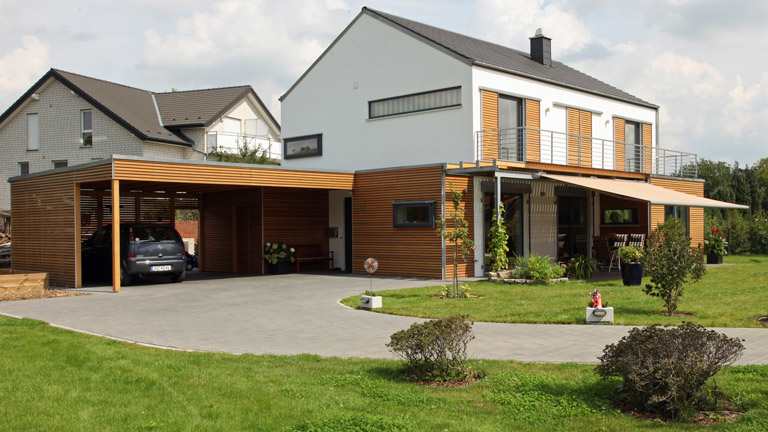
Considering enclosing your carport to turn it into a more protective garage? Find out about the cost to convert a carport into a garage in this handy guide.
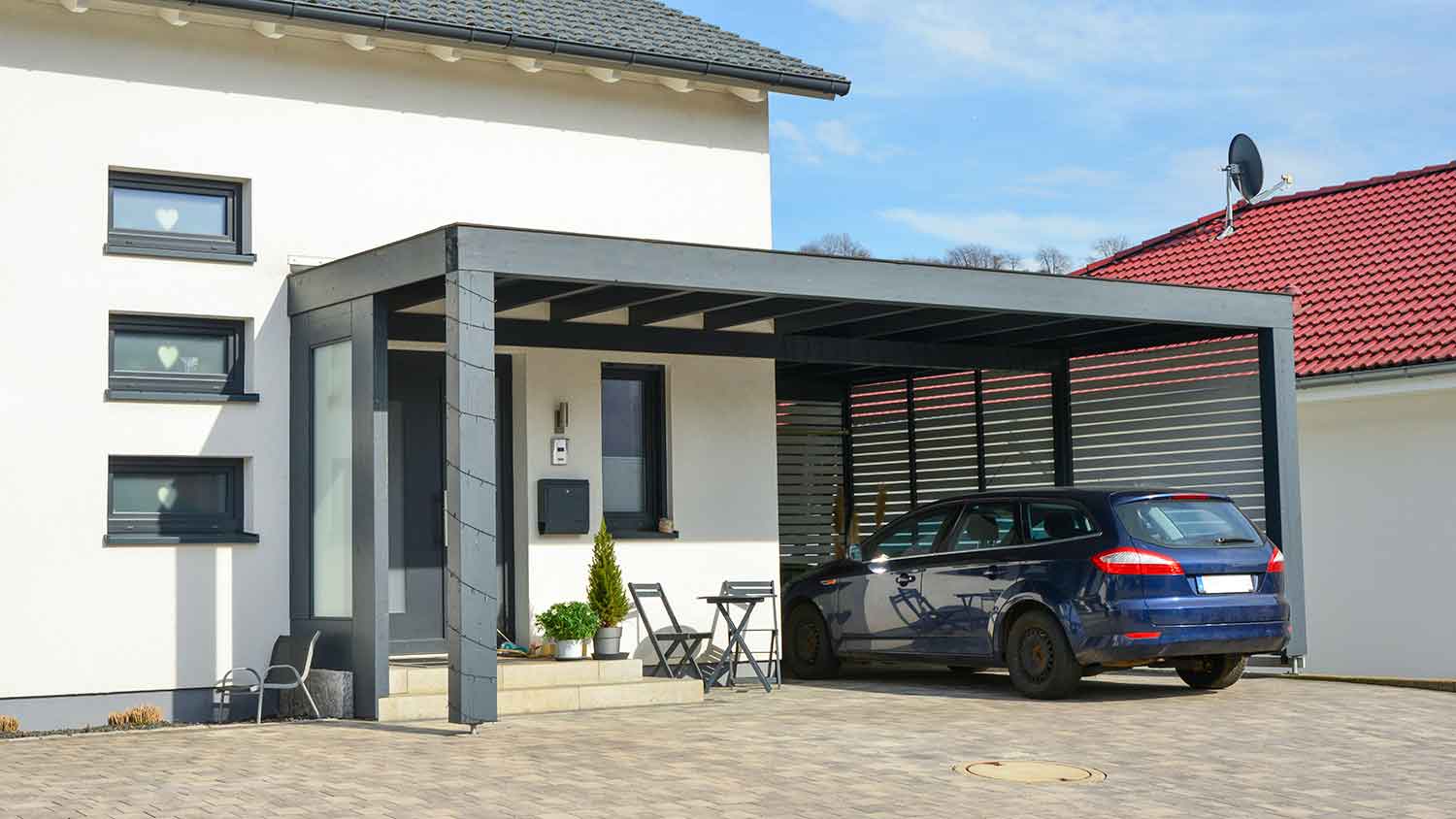
If you’ve ever wondered, “Who can I get to build a carport?” you’re in the right place. Read on to learn about professional carport builders.
Learn how to hire a qualified carport builder. Find tips on vetting contractors, questions to ask, and what to look for in a reputable pro.
Planning a wood carport building project? Learn about design options, material costs, and how to hire the right local pro to protect your vehicles.