

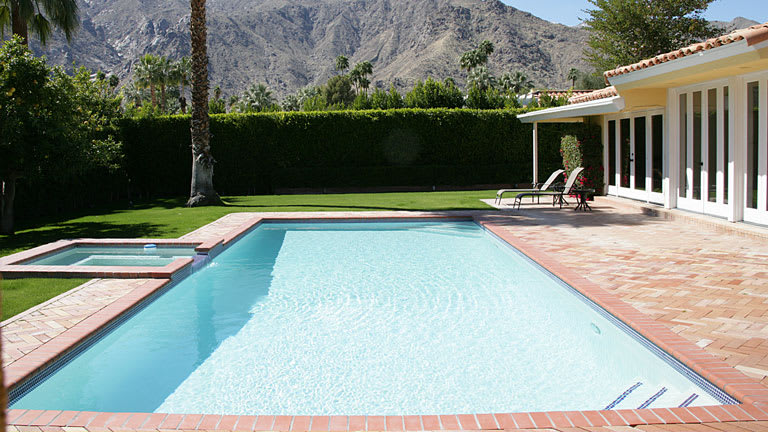
From small leaks to broken pool pumps, how much do pool repairs cost? We'll break down what to expect from your pool repair bill no matter the size of the fix.
Pool construction and installation costs depend on your project and location. Check with a local pro for your specific job.

Pool heater repair ranges from $166 to $798, depending on heater type and the problem.
Your heater type and pool water, saltwater or chlorine, drive corrosion risk, parts needed, and repair complexity.
Set aside $150 to $1,000 for add-ons like filter replacement, draining, or pool light fixes during repairs.
Hiring a local pool heater repair professional prevents gas or electrical connection hazards and helps protect your warranty coverage.
In 2026, homeowners across the country pay a national average of $476 for pool heater repair, based on data from 1,403 verified projects reported by Angi Pros. Most homeowners spend between $166 and $798, with the spread driven by heater type, the nature of the problem, and local labor rates.

Several factors influence the overall cost of repairing a pool heater, including the heater type, water chemistry, and necessary parts and labor.
The type of pool heater greatly affects the costs of repair. Electric pool heater costs are the highest at $200 to $1,200. In general, you can expect to pay the most for electric pool heater repairs and the least for solar, with natural gas heaters falling somewhere in between.
The following table breaks down repair cost ranges by pool heater type:
| Pool Heater Type | Repair Cost Range in 2026 | Description |
|---|---|---|
| Electric | $200–$1,200 | Great for consistent heating, slow to come to temp |
| Natural gas | $150–$750 | Faster heating, less costly repair |
| Solar | $50–$400 | Easiest maintenance and repair, slower heating |
Maintaining and repairing saltwater pool heaters can cost up to 50 percent more than chlorine pool heaters. A saltwater pool requires a saltwater-specific heater with corrosion-resistant parts. A non-saltwater heater installed in a saltwater pool will break down more often and may require replacement fairly quickly because of accumulated damage.
The following table compares repair costs by pool type:
| Pool Type | Repair Costs in 2026 |
|---|---|
| Saltwater | $500–$1,500 |
| Chlorine | $165–$790 |
Hiring a professional to handle pool heater repairs can cost an average of $80 to $120 per hour. Diagnosing issues on your own can be tricky, so it's often worthwhile to seek out the knowledge of a pro.
Replacement parts can cost anywhere from $20 to $600. The necessary parts (and prices) will vary based on the type of pool heater, as well as its make and model.
Read through the heater's warranty because the services and labor covered can vary. The following table shows average warranty lengths by heater type:
| Heater Type | Average Warranty in Years |
|---|---|
| Electric | 1–10 |
| Solar | 5–12 |
| Gas | 2–5 |
On average, it costs $2,800 to replace a pool heater. However, the heater type, pool size, and climate all impact the final price. Installation expenses are lower for electric and gas heaters versus heat pumps and solar panels, which can cost several thousand dollars. You may also need to factor in the pool heater's predicted life span, as outlined below:
Gas heaters: 5 years
Electric heaters: 5–10 years
Solar heaters: 20–25 years
Consider replacing the heater when yearly maintenance and repairs reach 50% of the cost of installing a new unit.
Your electric heat pump will often display error codes to tell you what's failing. You can also troubleshoot certain problems with your electric heat pump yourself. Here's what to do first:
Ensure all valves are open and the water flow is sufficient
Make sure the filter is clean
Check electrical connections and see if the breaker got tripped
Look around the heat pump for blockages around the coil, such as dirt, leaves, and debris
For other issues, replacement parts may be necessary. Keep in mind that these prices are for parts alone—hiring a professional to install them will cost around $80 to $120 per hour.
If your heat pump won't turn on, you may need to replace the capacitor for around $20 to $75 . This could also be a tripped circuit breaker, so be sure to check this before purchasing a new capacitor.
A replacement water pressure switch could run you $20 to $50 . This part is often to blame if you get a "low water flow" error code when you know the pump receives enough water.
Your pool’s heat pump refrigeration components are one thing that you shouldn’t attempt to DIY. If you encounter an error code suggesting refrigerant issues, call a local pool heater repair technician.
If you're having issues with your natural gas pool heater, start with some basic troubleshooting:
Ensure the unit's power switch is on
Check that the thermostat is set to the proper temperature
Make sure the gas valves aren't shut off
Clean out the skimmer baskets and pump pot if needed
If everything checks out, below are the costs to replace the most common faulty parts. Having a professional diagnose the problem and install the part will add an extra $80 to $120 per hour.
Replacing your gas pool heater's flame sensor will cost an average of $20 to $200 . If your pool heater turns on and shuts back off in a few seconds, this usually points to a bad flame sensor.
Replacing a faulty gas valve could cost $175 to $600 or more. If your heater doesn't shut off once it reaches the target temperature, it could mean there's an issue with the gas valve. This can result in dangerously high water temperatures, so it's important to address it ASAP.
Getting a new pilot generator costs $60 to $140 on average. When this part fails, the whole circuit (including the pilot light) will go dark.
A new pressure switch for your gas pool heater could cost around $40 to $60 . If you know there's proper water flow in the system, but the heater still isn't working, this may point to an issue with the pressure switch.
One of the most important things you can do for your solar pool heater is to perform routine inspections. Debris and dirt tend to build up over time, which will inevitably cause problems with the heater. Aside from that, here's what to look for if you're experiencing issues:
Leaking panels or plumbing
Dirty or blocked solar collectors
Dirty filters
Worn seals or collector glazing
Unplugged wires or tripped breakers
Panel valves that aren't fully opened
Be sure to clean your collectors out regularly with warm, soapy water. For other issues, you may need these parts.
A new pump for your solar heater could cost anywhere from $200 to $500 . If you spot small bubbles in the pool when your solar heater isn't working, there might be an issue with the pump.
A new check valve typically costs $20 to $30. You may need to replace the check valve if you can hear water going through the system when it’s shut off.
For most structural issues with solar panels, you can purchase a repair kit for around $50 to $60. These contain a variety of plugs that can repair leaking riser tubes for a variety of models.
If you hire a pool heater repair pro near you , you'll spend between $80 and $120 per hour on labor and between $20 and $600 on materials. While labor rates may seem like a major investment, incorrectly repairing your pool heater can lead to extra costs and can also be dangerous.
Pool heater repairs can be complex, depending on the type of repair, so here’s why you should hire a pro:
Some issues require expert-level troubleshooting to identify and repair.
A pro can determine if you need to repair or replace the pool heater.
It can take several days to repair complex pool heater problems.
Pool heaters require electricity, which can be dangerous to work with if you’re not an experienced electrician.
Other pool heaters use gas connections, which should also be left in the hands of a skilled gas plumber.
Your pro can ensure a long-lasting repair that doesn’t void any warranties.
DIY mistakes can cause your pool heater to break beyond repair, leading to costly replacement parts.
If you want to help with the repair process, focus on easier tasks, like:
Removing pool furniture and other obstructions
Clearing debris and overgrown landscaping from the work area
Checking the compatibility of any replacement parts
Replacing the cartridge filter
Cleaning the pump
The pool heater might not be the only issue with the pool. Other pool repair costs you might undertake at the same time could include repairing or replacing filters, adjusting water chemistry, or replacing pool tiles.
The following table breaks down common pool heater repair add-on costs:
| Add-On | Cost in 2026 |
|---|---|
| Pool inspection | $125–$250 |
| Pool testing kits | $15–$20 |
| Replacement filter | $150–$1,000 |
| Drain pool | $180–$230 |
| Drain repair | $400–$700 |
| Refill pool | $55 |
| Leak fix | $10–$3,500 |
| Skimmer repair | $50–$300 |
| Pool light replacement | $160–$730 |
| Tile replacement | $20–$30 |
Some issues, like a clogged strainer basket, require little more than cleaning the basket with a hose, which costs you nothing except some time and energy.
Other pool repairs can include everything from detecting leaks and refilling the pool to beam repair and tile replacement. The price range is wide, so contacting a local pool repair service can be helpful if you’re unsure where the problem lies.
One of the best ways to avoid costly repairs is to keep up with monthly pool cleaning and maintenance. The average pool costs $230 per year to maintain, with $110 to $350 being within the normal range. Costs rise during high-use months in the spring and summer and go down when not using the pool. You may also need to factor in occasional pool inspection costs to identify problems lurking where inexperienced eyes may not see them.
However, how often you get the pool cleaned and the level of service you get can increase the price of yearly maintenance. Larger pools with more expensive heaters can also increase the yearly maintenance price. Of course, if you take a DIY approach, you may only need a professional cleaning or maintenance visit once a year.
Be ready to explain the issues you’re having with your pool heater to help your pro troubleshoot the problem.
Let your pro know which type of pool heater you have so that they can give you an accurate quote.
Determine if your pool heater still has an active warranty.
Consider conducting a pool inspection, investing in a pool testing kit, and replacing other parts of your pool for a more comprehensive maintenance routine.
Home is the most important place on earth, which is why Angi has helped more than 150 million homeowners transform their houses into homes they adore. To help homeowners with their next project, Angi provides readers with the most accurate cost data and upholds strict editorial standards. We’ve surveyed thousands of real Angi customers about their project costs to develop the pricing data you see, so you can make the best decisions for you and your home. We pair this data with research from reputable sources, including the U.S. Bureau of Labor Statistics, academic journals, market studies, and interviews with industry experts—all to ensure our prices reflect real-world projects.
Want to help us improve our cost data? Send us a recent project quote to [email protected]. Quotes and personal information will not be shared publicly.
If you’re good people wanting to do business with good people, hire Matt. He is a consummate professional and utterly competent. He installed a water heater in my home at a price that beat competitors by hundreds of dollars with a promise to support the unit for its life (even after its 6 yr...
 Greene's Plumbing Services
Joseph did a great job with the staircase and trim. Timely and efficient, clear communication about the work, very fair pricing. For the stairs in particular, done very skillfully in an old house (1893) in a tight spiral, and very creative with how to do the handrail. Did a nice job with...
 Vouis Trim Carpentry L.L.C.
This company does it right. Firstly, I want to say that Landan was a joy to work with. He was so kind, transparent, and had everything under control. His entire team showed up ready to work and they were all very respectful of the fact that we were in an office space. A little backstory – we...
 Krumlauf Floors
Professional Team, smooth to communication chain and schedule flexibility. Follows proper construction procedure and completes task on time.
 Pegasus Concrete
Very professional, knowledgeable and helpful! Completed the install on time and as expected.
 Ward's Services
Cole has been handling plumbing and general contracting for our four properties over the past three years, and he’s always done a great job. Most recently, he installed a sink and countertop in our retail store where none existed before, and it turned out exactly how we needed. He’s...
 ANB Renovations LLC
Excellent, Prompt, Courteous Service!!! They were super friendly and quite personable. I felt very comfortable with the gentlemen that did the installation. They installed it exactly where I asked them to and they did an excellent job!! I loved their service so much.
 Tether House
I hired windows depot USA of central to install new windows in house in Oshawa. Ilya was very professional from the start, not only did he offered a great price, he also made sure the installation was on time. I am very satisfied with final outcome. The windows look great and the overall...
 Window Depot USA of Central Ohio
The guys did an outstanding job and we had a great experience with CarifaTile. I appreciated that Joe reviewed the quotes with me and set expectations prior to the install. The crews showed up as scheduled and always left the areas clean upon leaving the house. We will definitely use...
 CarifaTile
Did an amazing job transforming my yard. Also installed sod in places, would recommend to everyone.
 Cardinal Landscaping & Construction LLC
From average costs to expert advice, get all the answers you need to get your job done.
From small leaks to broken pool pumps, how much do pool repairs cost? We'll break down what to expect from your pool repair bill no matter the size of the fix.
Discover the cost to install a solar pool heater, including average prices, key cost factors, and tips to save on your project.
Installing a pool heater ensures that your pool gets used as much as possible, but is the pool heater cost worth it? Let’s find out.
Is your pool water suddenly freezing cold? Learn about pool heater repair costs, warning signs, and how to hire the right local pro.

If your pool heater seems to be on the fritz, check out this guide to find out if you're better off with a repair or a pool heater replacement.

While the fall is usually the most popular time for homeowners to get a pool heater, here’s why you should consider doing it in the spring instead.