
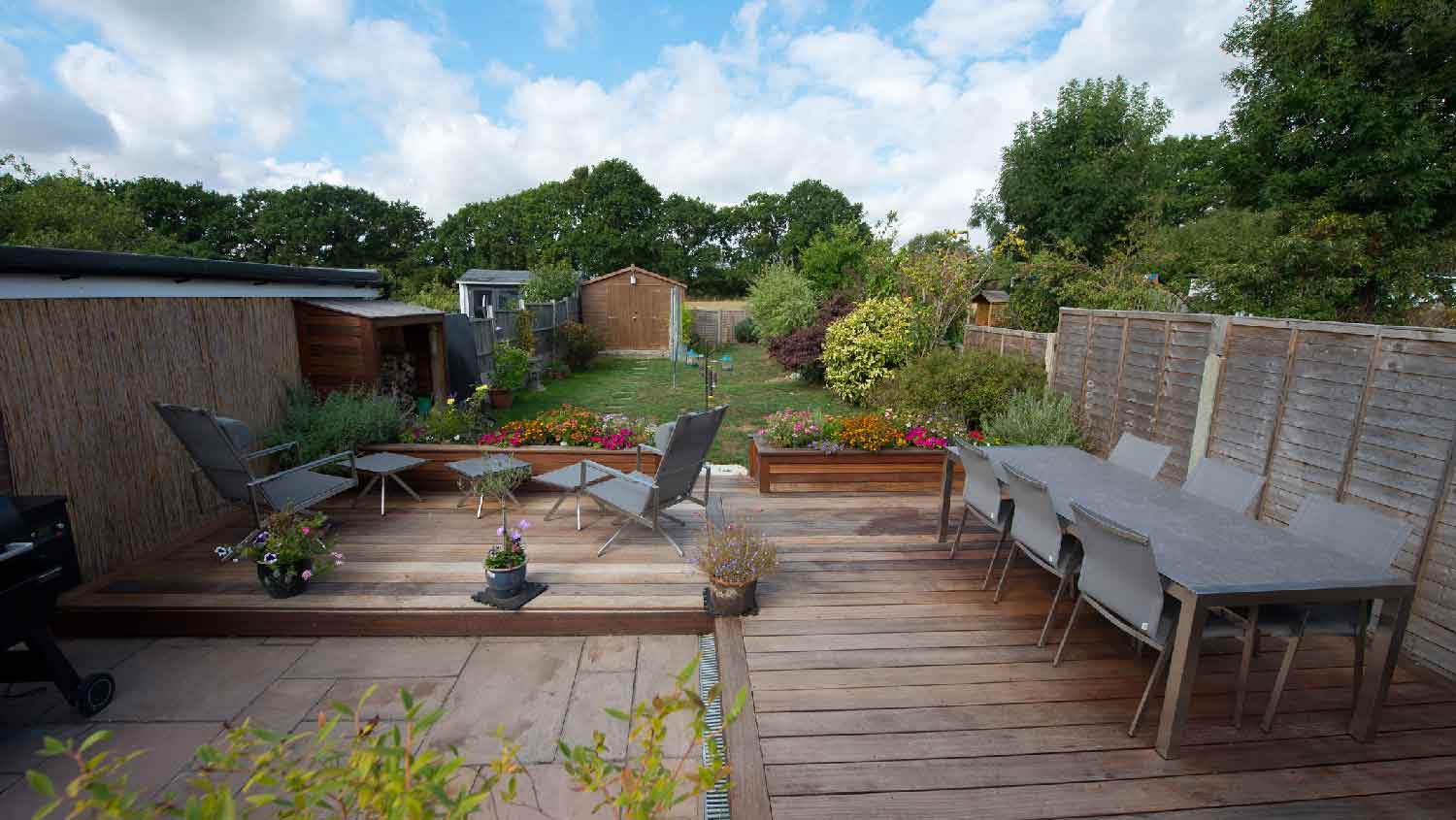
Thinking about adding a deck to your home? Explore this guide to learn about the average cost to build a deck based on factors like size, material, and labor.
Deck and porch service costs depend on your project and location. Check with a local pro for your specific job.


Professional balcony construction ranges from $8,000 to $25,000 and covers your materials, labor, permits, site prep, and finishing work.
The type of balcony you choose affects your final project total, including size, materials, railing style, and support structure.
Account for demolition costs between $500 and $2,500, plus structural reinforcement that raises your overall budget.
Hiring a local deck building professional ensures your balcony meets code and protects your household during construction.
This article was created using automation technology and thoroughly fact-checked and edited by an Angi Editor in accordance with our AI policy.
In 2026, the national average cost to build a balcony is $14,000. Most homeowners pay between $8,000 and $25,000 for the full project, with per-square-foot costs running $30 to $90 depending on materials, design complexity, and labor. Demolition, if needed, adds another $500 to $2,500 on top of your base budget.
Building a balcony costs between $8,000 to $25,000 or more, with most homeowners paying around $14,000 for a mid-sized structure—a figure that includes materials, labor, permits, site prep, and finishing work.
Basic wood balconies sit at the lower end of that range, while steel, glass, or custom design details push costs higher. The type of balcony you choose—cantilevered, supported, Juliet, or freestanding—also plays a significant role in where your project lands within that range. Here’s what you’ll pay based on balcony type:
| Balcony Type | Description | Average Total Cost in 2026 |
|---|---|---|
| Cantilevered | Projects from building with no visible supports below | $10,000–$20,000 |
| Supported | Supported by columns or posts | $12,000–$25,000 |
| Juliet | Shallow, decorative railings at a window or door | $2,000–$7,000 |
| Freestanding | Separate structure, often with stairs and supports | $15,000–$30,000 |
Several factors contribute to higher costs, including difficult access, high-end materials, and complex designs. Simpler layouts, basic materials, and easy-access sites keep costs lower.
Balcony size is one of the biggest cost drivers, since larger structures require more materials, longer labor hours, and sometimes additional engineering (costing up to $30,000). Most home balconies fall into three categories: small (under 40 square feet), medium (40 to 80 square feet), and large (over 80 square feet). Multi-story or wraparound designs add further complexity and cost beyond what size alone would suggest.
Here’s what you’ll pay for a balcony based on its size:
| Size (Sq. Ft.) | Description | Average Cost in 2026 |
|---|---|---|
| 20–40 | Small (bistro or Juliet) | $2,000–$9,000 |
| 40–80 | Medium (seating area) | $8,000–$17,000 |
| 80–150+ | Large (entertainment, dining) | $15,000–$30,000+ |
Building a balcony safely and to code always requires professional help, with labor rates ranging from $50 to $150 per hour depending on your location and the contractor's experience. For a standard project, total labor can reach $4,000 to $10,000 or more. Regional rates vary, with urban areas and high cost-of-living markets consistently landing at the higher end of that range.
Professional labor covers design, framing, waterproofing, railing installation, and finishing work. Regional rates vary, with higher costs in urban areas or regions with a high cost of living.
The main pros you'll work with include:
General contractor: Manages the entire project, coordinates subs, and ensures code compliance. Expect to pay $5,000 to $12,000 for general contractor fees in a balcony project.
Structural engineer: Essential if you're adding a balcony to an existing home or need custom supports. Structural engineer fees range from $500 to $2,500, depending on complexity.
Carpenter or balcony specialist: Handles framing, decking, and railing installation. The costs range from $2,000 to $7,000.
Hiring experienced pros ensures your balcony is safe, durable, and built to last.
Depending on your design and the complexity of your project, you may need to bring in additional specialists beyond your general contractor. Costs vary widely by trade and scope, so budgeting for these roles early helps you avoid surprises later:
Architect or designer fees: For custom plans or complex layouts, budget $2,000 to $6,000.
Electrician costs: Adding lighting or electrical outlets can cost $300 to $1,200.
Mason or welder: For stone, steel, or glass work, expect $1,000 to $5,000.
Painter or finisher: Painting, staining, or sealing costs $300 to $2,000, depending on balcony size and finish choices.
Roofer: If your balcony is located above a living space or requires roof modification, roofing professionals may charge between $1,000 and $5,000.
These pros help ensure every element of your balcony meets your vision and functional needs.
Where you live has a direct impact on what you'll pay to build a balcony, since labor rates, material availability, and permit fees all vary by region. Urban areas carry higher costs due to increased demand and stricter building codes, while rural areas may offer lower prices but with fewer contractors to choose from.
Getting quotes from multiple local pros is the most reliable way to understand what your specific market will cost. Local permit fees and complexity of access can also affect your final price, so it's smart to get quotes from nearby pros.
Beyond size, type, and materials, several additional factors can affect your total balcony budget. Sales tax, insurance premium increases, and extended warranties—which can run between $200 to $1,000—are easy to overlook but worth accounting for early.
Accessories like built-in seating, planters, or privacy screens add to the total, as do ADA features such as ramps or non-slip surfaces. Site accessibility, pre-construction repairs, and post-construction cleanup services cost between $200 to $500 can also push your final number higher.
If you're replacing an existing deck or balcony, demolition and site prep are essential first steps, covering removal of the old structure, debris hauling, and site readiness—at a cost of $500 to $2,500 depending on size and complexity. When structural reinforcement or foundation work is also required before construction begins, expect to add another $1,000 to $5,000 to your budget. That additional investment is critical for the long-term safety and durability of your new balcony.
Most balcony projects require permits, with permit costs ranging from $300 to $1,500 depending on your municipality and project scope. Common permit types include building and zoning approvals, and some neighborhoods also require HOA sign-off.
Your contractor often manages the permit process, but confirm responsibility up front since building without proper permits can result in fines, forced removal, or complications when selling your home.
While you could, in theory, save between $4,000 and $10,000 in labor costs by building your own balcony, there are significant safety, code compliance, and other concerns. Your personal safety tops the list, as balcony construction can be dangerous. Working from heights and with high-powered tools carries risks. Hiring a local deck builder eliminates your risk and ensures your new balcony meets building code regulations. Hiring a pro also prevents potentially costly mistakes and includes warranty protections.
Balcony construction involves addressing safety and structural components that require the experience of a professional. Here's why you should hire a pro:
Deck-building contractors can handle the entire process from planning to construction to final inspection.
They ensure your balcony meets all local building codes and safety requirements.
Contractors understand structural loads and can create designs that combine both strength and aesthetics.
Experts can identify and correct existing structural issues before they become safety hazards or incur additional costs down the road.
Contractors have access to tools, equipment, materials, and suppliers that may not be readily available to homeowners.
DIY errors can lead to costly home damage and safety issues during and after the construction.
Reputable contractors offer workmanship warranties for added peace of mind.
Hiring a pro is your best option, but here are ways you can contribute to the process:
Research and select the type, style, and materials you wish to include in your new balcony.
Clear the installation area of furniture, plants, décor, debris, and any other obstacles.
Handle basic prep tasks, such as trimming trees, bushes, and weeds, or cleaning the siding where the balcony will attach.
With your contractor's consent, you may be able to assist with demolition, cleanup, and disposal tasks.
Consider painting or staining your new balcony after it’s built.
Perform regular maintenance tasks after construction, as recommended by your contractor.
A balcony remodel changes the structure, size, or layout and costs between $8,000 to $25,000 or more depending on scope, while a renovation—focused on updating finishes or repairing existing elements—runs between $2,000 to $7,000.
Common repairs such as replacing railings or waterproofing fall in the $500 to $3,000 range and are best suited for cosmetic updates or minor damage. Remodels deliver longer lifespans and greater home value increases but may also trigger new permit requirements and insurance updates.
To keep costs down when building a balcony, consider the following tips:
Choose standard sizes and designs to minimize custom work.
Opt for cost-effective materials that strike a balance between durability and price.
Source materials locally to reduce shipping costs.
Schedule construction during off-peak seasons for better rates.
Get multiple quotes from qualified pros to compare pricing.
Handle demolition or cleanup yourself if safe and feasible.
Limit add-ons and specialty features to essentials.
Maintain your balcony regularly to avoid costly repairs.
Adding a balcony can increase your home’s value and curb appeal, especially in markets where outdoor living is prized. Homeowners often see a return on investment (ROI) of 50% to 80%, depending on location, design, and quality. While this is slightly lower than major kitchen or bathroom remodels, a well-placed balcony can set your home apart and attract more buyers.
Factors impacting value include your region, the quality of materials, the size and placement of the balcony, and whether it offers a great view or privacy. To maximize ROI, select a design that seamlessly integrates with your home’s architecture and opt for durable, attractive materials. Be aware that an increase in home value may result in higher property taxes or insurance premiums.
Describe to your pro whether this project involves replacing or repairing an existing balcony or is a new build.
Provide information about your home, including its age, exterior material type, and layout, if applicable.
Be ready to discuss your wishes for your new balcony, including size, use, and material options.
Ask about long-term maintenance needs to protect your investment and maximize your new balcony's lifespan.
Home is the most important place on earth, which is why Angi has helped more than 150 million homeowners transform their houses into homes they adore. To help homeowners with their next project, Angi provides readers with the most accurate cost data and upholds strict editorial standards. We extensively research project costs to develop the pricing data you see, so you can make the best decisions for you and your home. We rely on reputable sources, including the U.S. Bureau of Labor Statistics, academic journals, market studies, and interviews with industry experts—all to ensure our prices reflect real-world projects.
Want to help us improve our cost data? Send us a recent project quote to [email protected]. Quotes and personal information will not be shared publicly.
I recently moved to another state and chose United Trust Van Lines after comparing several companies. Their team was punctual, professional, and extremely careful with my belongings. I was especially impressed with how they handled my home office setup and fragile items. Everything arrived on...
 United Trust Van Lines, LLC
Archie did a good job cleaning up the driveway before he laid down the sealer. It looks good. He was gracious and even helped me bring up my groceries. His rate was comparable to another company who came out to give me a quote and he talked to me personally rather than just text me a quote...
 Pro Seal Roofing & Paving
Very professional, knowledgeable and helpful! Completed the install on time and as expected.
 Ward's Services
Cole has been handling plumbing and general contracting for our four properties over the past three years, and he’s always done a great job. Most recently, he installed a sink and countertop in our retail store where none existed before, and it turned out exactly how we needed. He’s...
 ANB Renovations LLC
We have bought and sold numerous times over the past 50 years. Sherman Hall and Top Line are top notch. Thorough and detailed, he explains every possibility, probability, and eventuality. High class and pleasant. The best.
 Top Line Home Inspections, LLC
Very easy to talk to, helped me enormously and will be back for more projects I have. Quick and knowledgeable, very professional and a high quality personality!
 Elwood's Mobile Welding
Couldn't ask for a better company. Josh and Dee were Very professional, efficient, courteous and takes major pride in their work. They will travel to come to your home and will still give you a fair price. They are honest and trust worthy. Their focus is on their work and their work is...
 Supreme brick & chimney
I had a tight deadline for a commercial painting project, and Custom Paint Jobs LLC delivered on time and within budget. Their efficiency and quality are top-notch.
 Custom Paint Jobs, LLC
Window Depot did an amazing job on my deck. I wasnt sure what I wanted to do, but their composite decking was affordable and will last a long time. I am excited to have family over, and I am no longer embarrassed by my backyard. Jeff and the ground crew were polite, respectful, and caring for...
 Window Depot USA of Central Ohio
Koby and Kyle are amazing!! They were super fast and friendly, highly recommen!
 All My Sons Moving & Storage
From average costs to expert advice, get all the answers you need to get your job done.
Thinking about adding a deck to your home? Explore this guide to learn about the average cost to build a deck based on factors like size, material, and labor.
Discover the cost to paint a commercial building exterior, including average prices, key cost factors, and tips to help you budget your next project.
A villa can be a single-story house or a luxury home with a pool. Here’s a full breakdown of how much it costs to build a villa based on size and style.
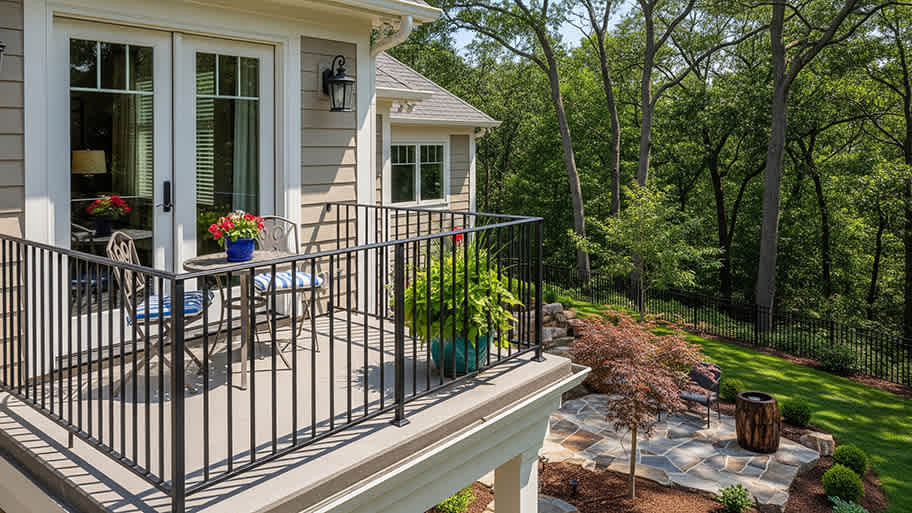
Dreaming of a second-floor outdoor living space? Learn how to build a balcony yourself in this step-by-step how-to guide.

Your outdoor living space gives you extra room to breathe and enjoy the weather. Learn the differences between a balcony vs. deck to see which one suits you best.

Still deciding between a terrace or a balcony for your home? Learn the pros, cons, and key differences to pick the perfect fit for your space.