
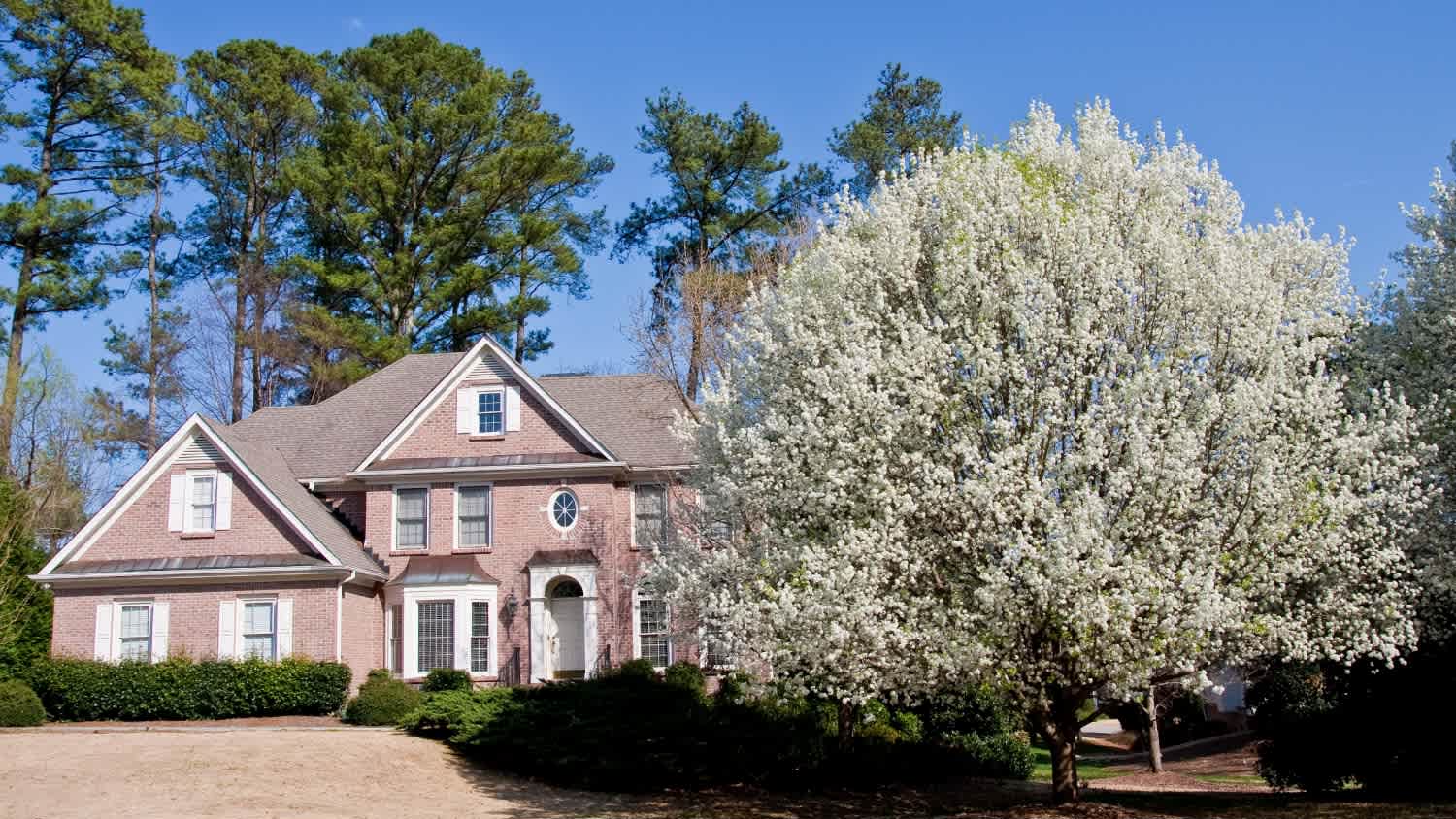
Beware of the smelly, white-flowering Bradford pear trees. Learn why you should avoid these trees—and what you should plant in your yard instead.
These showy spring trees differ in significant ways

Dogwood versus Bradford pear trees both produce white spring blossoms, but dogwoods have larger three-inch flowers while Bradford pears have smaller half-inch blooms.
Flowering dogwood trees live around 80 years and support native wildlife, while Bradford pears last only 20 years and spread invasively when cross-pollinating.
Your choice between dogwoods and Bradford pears depends on growth speed needs, storm resistance priorities, maintenance preferences, and whether you want native or fast-growing trees.
Hiring a local tree maintenance professional provides helpful guidance on selecting the right tree for your yard and keeping it healthy through proper care.
If you’re looking for an ornamental tree to add to your yard, Bradford pears and flowering dogwoods are both medium-sized trees with delicate white blossoms. Although they have some similarities, the two trees also have some key differences, including how quickly they grow and how long they last. Here’s everything you need to know to decide between a Bradford pear tree vs. dogwood.
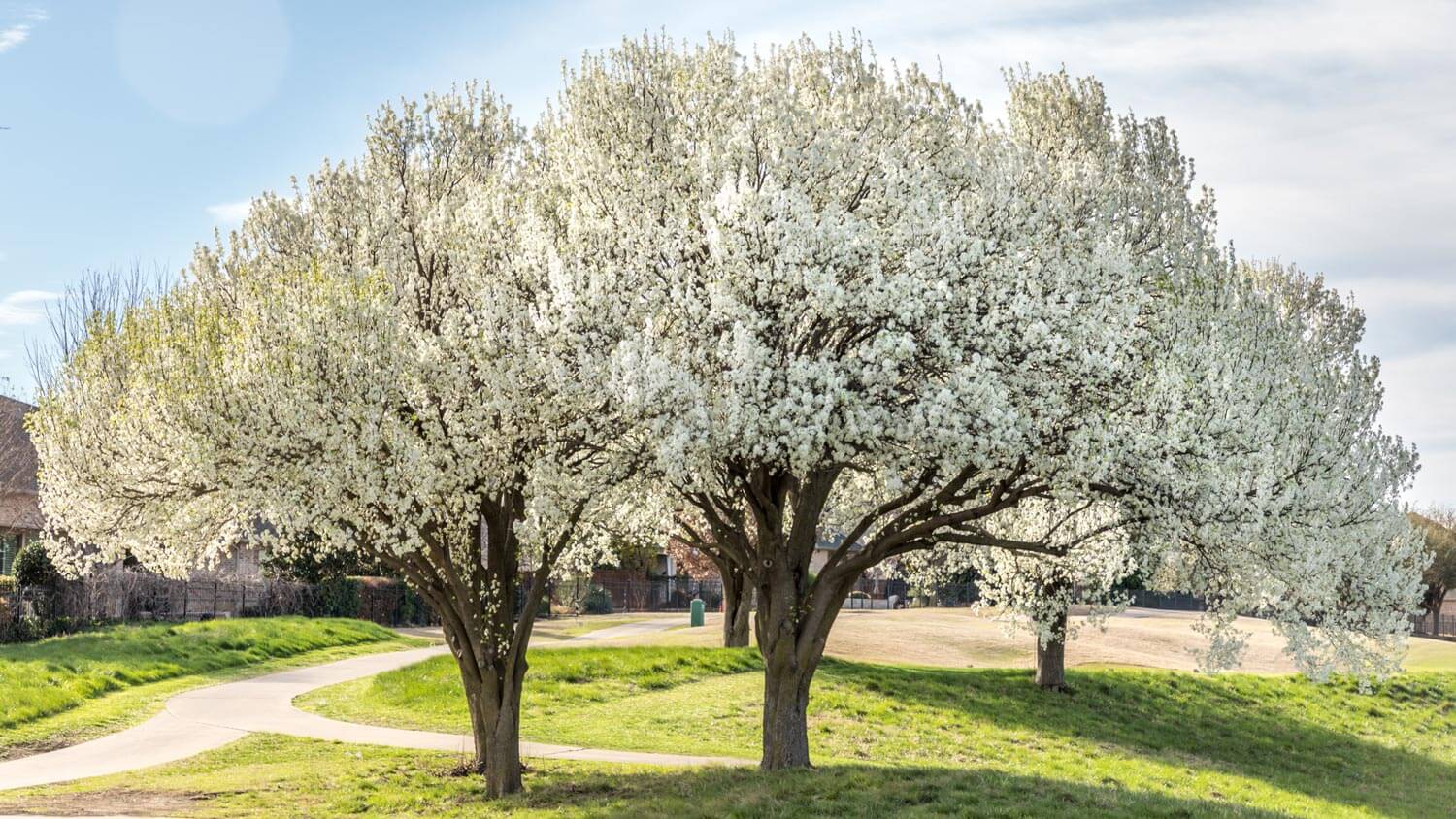
Bradford pear and flowering dogwood trees are both medium-sized ornamental trees favored by landscapers for their pretty white clusters of flowers in spring. The size of their blooms varies, with flowering dogwoods having three-inch-wide blossoms and Bradford pear trees having smaller, half-inch to one-inch blossoms. The appearance of the leaves also varies between the two, with flowering dogwood leaves being more fuzzy and Bradford pear leaves being more shiny. The Bradford pear also is not native to the U.S. and has a tendency to spread, while the flowering dogwood is a native species that is much more likely to be contained to where it’s planted. The dogwood tends to be a stronger tree, capable of withstanding gusts of wind, while the Bradford pear is more likely to be damaged in severe weather.

The ancestors of Bradford pear trees, a variety of Callery pear, were brought to North America from Asia in the early 19th century and were originally experimentally cultivated by the USDA. It became a popular ornamental tree in the 1950s because of its flowers, and the modern-day Bradford pear was introduced as a landscaping plant in 1961. These trees, when planted on their own, are sterile, making them a good choice for landscaping if you don’t want them to spread. They can, however, cross-pollinate with other varieties of Callery pear and spread quickly if not kept in check. While the flowers are pretty, they smell a little bit offensive, with people comparing the odor to wet gym socks or fish.
| Pros | Cons |
|---|---|
| Pretty white flowers | Smell like fish when in bloom |
| Simple to care for | Can split when allowed to grow too large |
| Resists disease and pests | Considered an invasive species |
Best For:
Bare yards that need fast-growing plants
Low-maintenance landscaping
Lawns that need a statement tree
Bradford pear trees grow quickly to a manageable height of 15-25 feet. In spring, they produce beautiful white flowers that grow in clusters, and in the fall, their leaves turn bright red. Resistant to diseases and pests, the Bradford pear is sterile, which means it can’t self-pollinate.
Bradford pear tree blossoms tend to have an undesirable odor. Additionally, the trees—which have a lifespan of about 20 years—have a tendency to split apart, especially if they grow to more than 30 feet tall, and their weak branches are vulnerable to storms. The Bradford pear was meant to be sterile but is now considered an invasive species because it can cross-pollinate with other types of Callery pear trees. Because they can spread and choke out native trees and shrubs, Bradford pear trees have been banned by some municipalities.

Native to eastern North America, the flowering dogwood is prized for its graceful branches and long-lasting white or pink flowers. It attracts songbirds and pollinators like honey bees. Flowering dogwoods usually reach a height of about 20-40 feet and have an average lifespan of about 80 years.
| Pros | Cons |
|---|---|
| Beautiful flowers | More specific soil requirements |
| Strong and sturdy | Need to be watered more |
| Attract native birds and pollinators | Slower growth |
Best For:
Adding elegant beauty to a landscape
Homeowners who want long-lived trees
Native gardens that support local insects and wildlife
Since flowering dogwood trees are native to North America, they tend to be well adapted to the local environment. They produce beautiful, fragrant flowers in early spring as well as bright red fruit in the fall that’s a food source for native bird species.
Flowering dogwoods need to be watered more often than Bradford pears, and they have more specific soil requirements, so they’re slightly more difficult to grow. You may want to hire a local tree maintenance pro to keep your flowering dogwood healthy. Dogwoods are also slow to medium rate growers, so if you’re looking for quick shade, these aren’t the trees for you.

Dogwoods and Bradford pears are neck-in-neck for showy spring blooms, and they both have vibrant fall foliage as well.
Bradford pears are more drought tolerant and can grow in a wider range of soil conditions. Their adaptability gives them an edge over the flowering dogwood here.
Bradford pear trees are slightly smaller than flowering dogwoods, but both types of trees are manageably-sized, growing to an average of 20 feet or so.
Flowering dogwood trees have wood that is dense and shock-resistant, making them stronger and more tenacious in storms as well as more stable as they grow.
Bradford pears will grow quickly–over a foot per year–making them a very rapid grower. Since they grow so quickly, they’re a popular choice for homeowners who need extra shade in a hurry.
Flowering dogwood trees live an estimated 80 years, outlasting Bradford pears by decades.
This service was great. My air conditioner went out during the heat spell that we had. My husband has health issues and they came out that night and at 9:30pm the air conditioner was fixed and running. We are sooo very thankful, this is the company I will be using from now on and would...
 Mr. Mechanical Ohio
One of my old tall evergreen trees was suddenly leaning toward the busy street in front of my house. I submitted a request for an emergency tree inspection, and Alejandro, owner of Cajete Tree Service, contacted me immediately and arrived to look at it just 20 minutes later. We agreed the...
 Cajete Tree Service LLC
1 tree was cut down and 5 others including a large willow tree were trimmed. The Grant Tree Service men were professional and cleaned up afterwards. The cost of the 6 trees were affordable. I am very happy with the results. I would hire them again.
 Grants Tree Service
D1 Roofing delivers outstanding service from beginning to end, backed by a strong warranty and expert teams. I highly recommend them for their excellence in meeting and surpassing expectations with unmatched communication. Choosing D1 Roofing was flawless decision
 Division 1 Roofing LLC
Promptly arrived for quoting! Demonstrated superb customer service, affordable pricing, and completed service swiftly! Looking forward to the spring for our service!
 All Star Paving and Sealing
Seth was very professional, prompt in responding to queries about the work required , gave sincere advice as to what would be best for tree trimming and did the job timely.
Ace Fireplace Services' chimney sweep service is truly exceptional. They used advanced technology to ensure a thorough cleaning process, and my chimney has never looked better. I highly recommend their services.
 Ace Fireplace Services
I definitely recommend Ramonaâ s cleaning service! I have booked services with her many times and she arrives on time, ready to work and provides a great service.
 Your Cleaning Solutions LLC
Webb â s was priced well, flexible on scheduling, great with communication, and detailed in their work. Iâ ll definitely use their services again.
 Webbs Pressure and Paint LLC
Great tree company, very professional and honest. Glad we found them, they had the best pricing
From average costs to expert advice, get all the answers you need to get your job done.
Beware of the smelly, white-flowering Bradford pear trees. Learn why you should avoid these trees—and what you should plant in your yard instead.
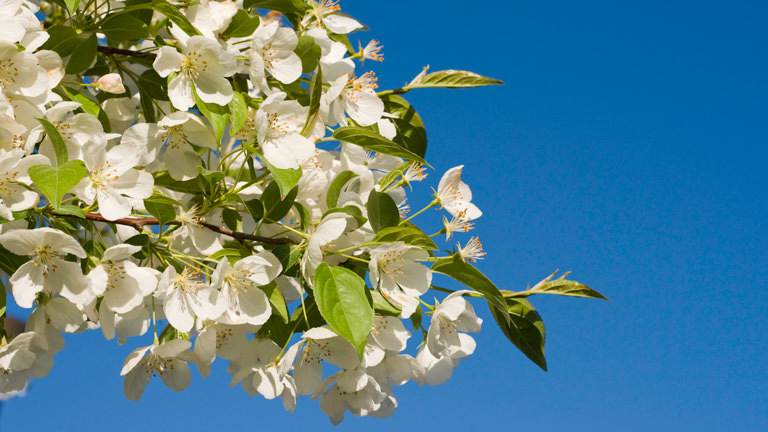
Planting trees in your yard can have aesthetic, environmental, and practical benefits. But some trees are messy, invasive, or weak-wooded, and you should steer clear of them altogether. Find out about 10 trees to avoid planting in your yard and why.

From the magnolia’s stunning flowers to the red cedar’s flashy fall foiliage, check out these ten trees for upping your front yard’s curb appeal.
Before you plant any trees on your property, make sure to check against this list of invasive trees and learn which trees are the most problematic species.
They say to plant a tree, but not all trees are alike. Check out these seven reasons why you should not plant a tree before you make a costly mistake.
Would you pick and eat fresh, homegrown fruits? Learn about the best fruit-bearing trees that can add value to your yard with tips to grow them.