
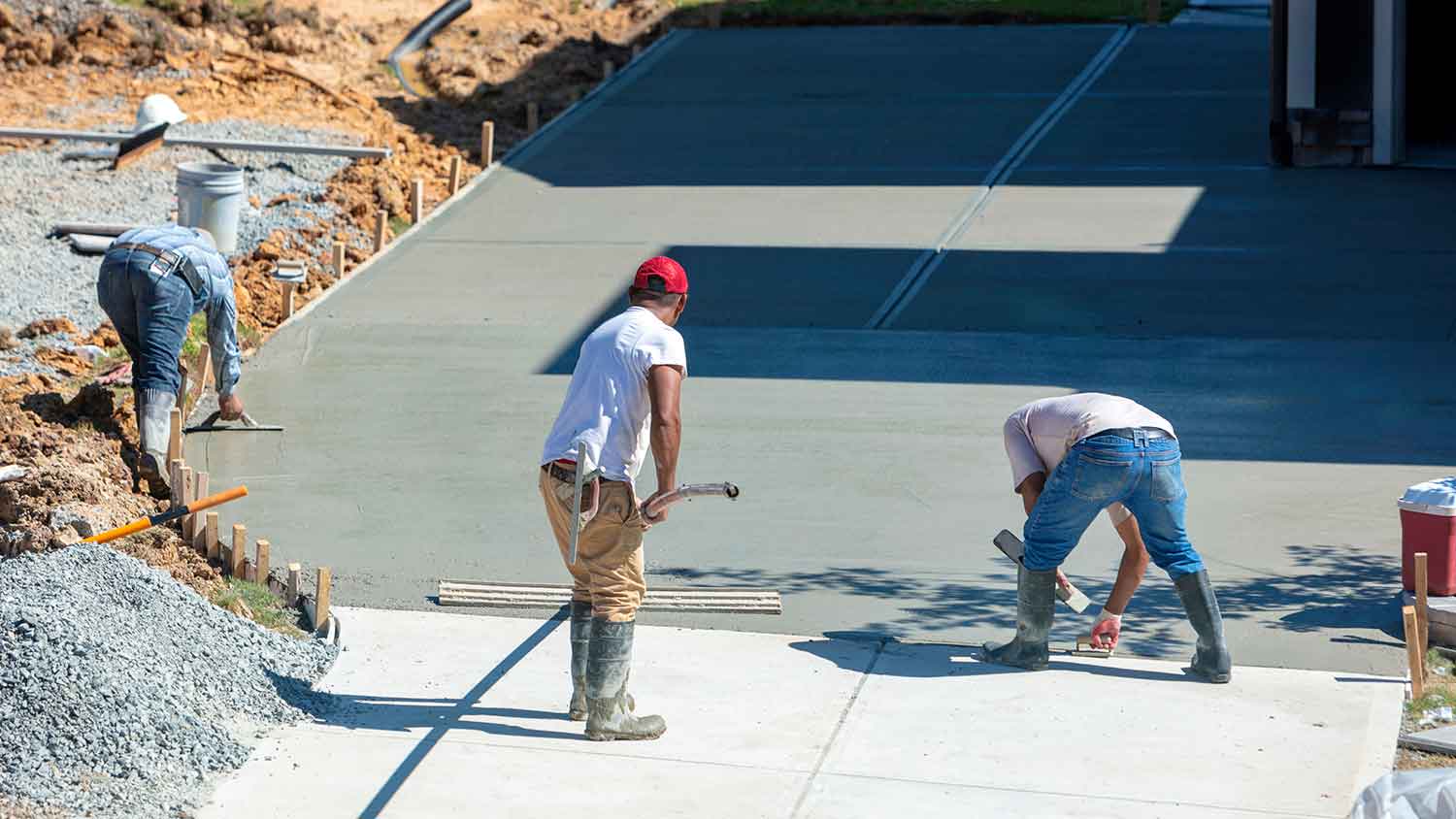
•
Discover the average concrete pumping cost, including key price factors and tips to help you budget for your next concrete project.
Pour concrete at the right time to avoid pouring your money down the drain

The best temperature for pouring concrete is between 50 and 60 degrees Fahrenheit, keeping your project strong and preventing curing problems that weaken the slab.
Expect to pay $4 to $15 per square foot for professional concrete installation, while repair costs range from $500 to $1,100 when you pour at the wrong time.
Pour your concrete in late spring or early fall when temperatures stay consistent, and avoid direct sunlight by scheduling work for early morning or late afternoon.
Hiring a local concrete driveway professional keeps your project on schedule with proper site preparation, form building, and finishing techniques that ensure long-lasting results.
Mixing and pouring concrete are simple tasks that just about any DIYer can tackle, but there are a few important things to keep in mind regarding when you pour, which can affect the strength and longevity of your concrete slab. In this guide, we’ll discuss the best time to pour concrete and the risks of pouring in the wrong conditions.
The best time to pour concrete is when the temperature will remain between 50 and 60 degrees Fahrenheit for most of the day and won’t dip below 40 or rise above 90 degrees Fahrenheit. You should also choose a time of day when the sun won’t be directly beating on the fresh concrete and increasing evaporation and a day when there’s no rain or snow in the forecast for at least 48 hours.
There are a few key things to consider when choosing the best time to pour concrete for the best results.
First, think about the time of year and the climate in your area. For most homeowners, the late spring or early fall will most consistently have the right temperatures. For those in hotter climates, early spring, late fall, or even winter might be ideal. In colder climates, pouring concrete in the summer might be the only option.
Your location mostly matters because of the temperature in your area. You want to choose a week with no risk of temperatures dipping below 40 degrees or rising above 90 degrees. Ideally, you’re looking for a window of 50 to 60 degrees.
You also need to consider the climate in your area. Avoid pouring concrete in the rainy season, as adding water to curing concrete can slow the curing process and create weaknesses in the slab.

Pouring concrete in warm weather under direct sunlight will increase your mixture's evaporation rate. If the concrete loses moisture too quickly, it won’t cure properly and will be much more likely to crack and crumble prematurely. Aim for the early morning or late afternoon to avoid exposure to intense sunlight.
The worst time for most homeowners to pour concrete is in the dead of winter or the peak of summer. Pouring concrete in freezing temperatures will leave you with weaknesses in the slab and possible surface defects if the mixture freezes. Pouring concrete in the summer means a high potential for too-high temperatures and direct sunlight that speeds up evaporation and weakens the concrete.
On a smaller time scale, it’s also not a good idea to pour concrete in the rain or when rain is expected within the following 48 to 72 hours.
Pouring concrete at the wrong time may not seem like a big deal, but it can lead to structural weaknesses that cause your concrete to crack and crumble long before its expected lifespan—even if you choose the right type of concrete for the job. For structural concrete, like home or shed foundations, pouring at the wrong time could increase the risk of instability and major issues with the structures above.
The table below includes some concrete problems you’re more likely to see if you pour at the wrong time and average costs to fix them on a standard one-car driveway. This should put into perspective how important timing is for your concrete project.
| Concrete Issue | Repair Cost |
|---|---|
| Hairline cracks | $100–$200 |
| Structural crack | $660–$1,100 |
| Crumbling | $660–$1,100 |
| Segregation | $500–$1,000 |
| Scaling | $660–$1,100 |
It costs between $4 and $15 per square foot to hire a concrete contractor to pour concrete for you, which includes site preparation, installing rebar, building forms, mixing and pouring the concrete, and creating your desired finish. You’ll pay closer to the lower end of the range if you want a standard rectangular slab with an exposed aggregate finish. Polishing, broom finishing, or trowel finishing will push your total to between $3 and $7 per square foot. Installing stained or stamped concrete can cost as much as $15 per square foot.
If you’re comfortable building concrete forms out of wood, have some experience working with concrete, and have access to at least an on-site concrete mixer, you can mix and pour your own concrete to save between $1.50 and $7 per square foot on labor costs. As long as you pour concrete at the right temperature and in the right weather conditions, DIYing small projects like sidewalks and walkway squares isn’t too difficult.
Keep the weather in mind when pouring concrete. If it's too hot or cold outside, it can make the process more difficult. Try to pour concrete in 50 to 60 degree weather.

For larger projects like concrete patios, more intricate jobs like home foundations, and more decorative finishes like stamped concrete, always hire a concrete driveway professional near you with access to a concrete mixer for the fastest installation and best results.
Archie did a good job cleaning up the driveway before he laid down the sealer. It looks good. He was gracious and even helped me bring up my groceries. His rate was comparable to another company who came out to give me a quote and he talked to me personally rather than just text me a quote...
 Pro Seal Roofing & Paving
Wonderful. I am going to have them remove and replace my driveway in the spring.
 All Star Paving and Sealing
Working with Peter and his crew was a breeze. They were exceptionally polite and did a neat job to repair and seal our driveway. I will definitely talk to them first for additional work.
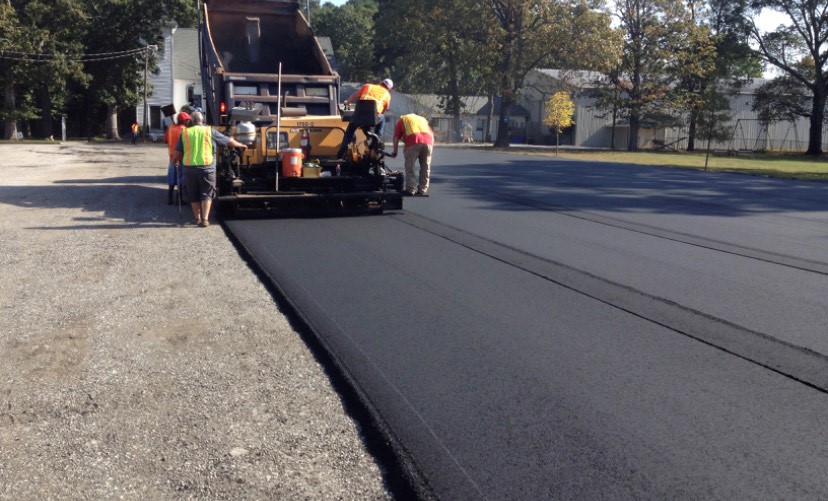 Central Paving
The preformed a really good job the staff is incredible never been so happy with my home, A brand new driveway is like a face lift!!
 Pristine Paving
We recently had our office sidewalk repaired and CT Concrete did an "Outstanding" job. They were quick, friendly and the job is "flawless". I would highly recommend CT Concrete for any of your concrete/sidewalk needs.
Called Mark on a Thursday morning. Not really knowing if he could help me or not. I was having driveway, flooding issues due to a clogged channel drain and I was trying to figure out what direction to take. Heavy rains had come on Monday and again on Thursday leading to flooding in my garage...
 Mark Rodgers Construction
It went really well! The concrete looks, they even did some patch work on my buildings parking lot. That was such a plus! <br />
 AmeriCoat Asphalt & Concrete
Jand J has provided services for clients of mine for 15 years or maybe longer. They are always honest with their recommendations, providing good advice to my clients and competitive pricing. All three of the structural engineers whom I have dealt with in recent years have Jand J on their...
We first had Mark fix the back patio and liked his work so much we had him make a brick patio on the side of the house. When we decided to change our concrete walkway to brick, we wanted Mark to do the job because his prices were fair and he did such good work on t he other two projects.
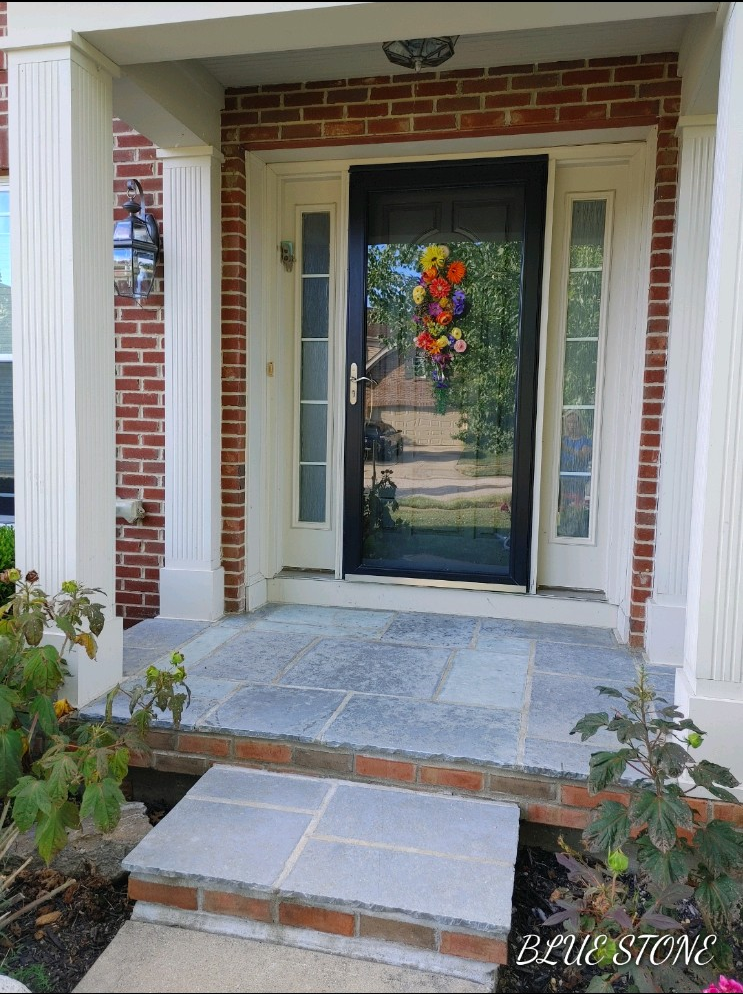 Mark Monnette Masonry
Mr. Lewis was extraordinarily responsive. At the time we realized that the concrete could not be repaired, we had intended to put our house on the market. We were anxious to get the work complete so that we wouldn't delay marketing the house. Mr. Lewis promptly returned our calls, provided...
From average costs to expert advice, get all the answers you need to get your job done.
Discover the average concrete pumping cost, including key price factors and tips to help you budget for your next concrete project.

Discover how much concrete walls cost based on factors like their size, material, location, design, and local labor rates.

Pouring a new concrete floor can create new usable space for your home and raise its value. This guide breaks down what affects project costs.
Concrete is a durable material, but how you install it affects longevity. Learn about dry pour concrete vs. wet pour and which is best for your project.
Concrete may be strong, but it's surprisingly sensitive to extreme temperatures. Here's what to know about pouring concrete in cold weather.
Wondering if pouring concrete in the rain is possible? Learn how rain affects the strength of the concrete and why it’s a good idea to wait for better weather.