
•
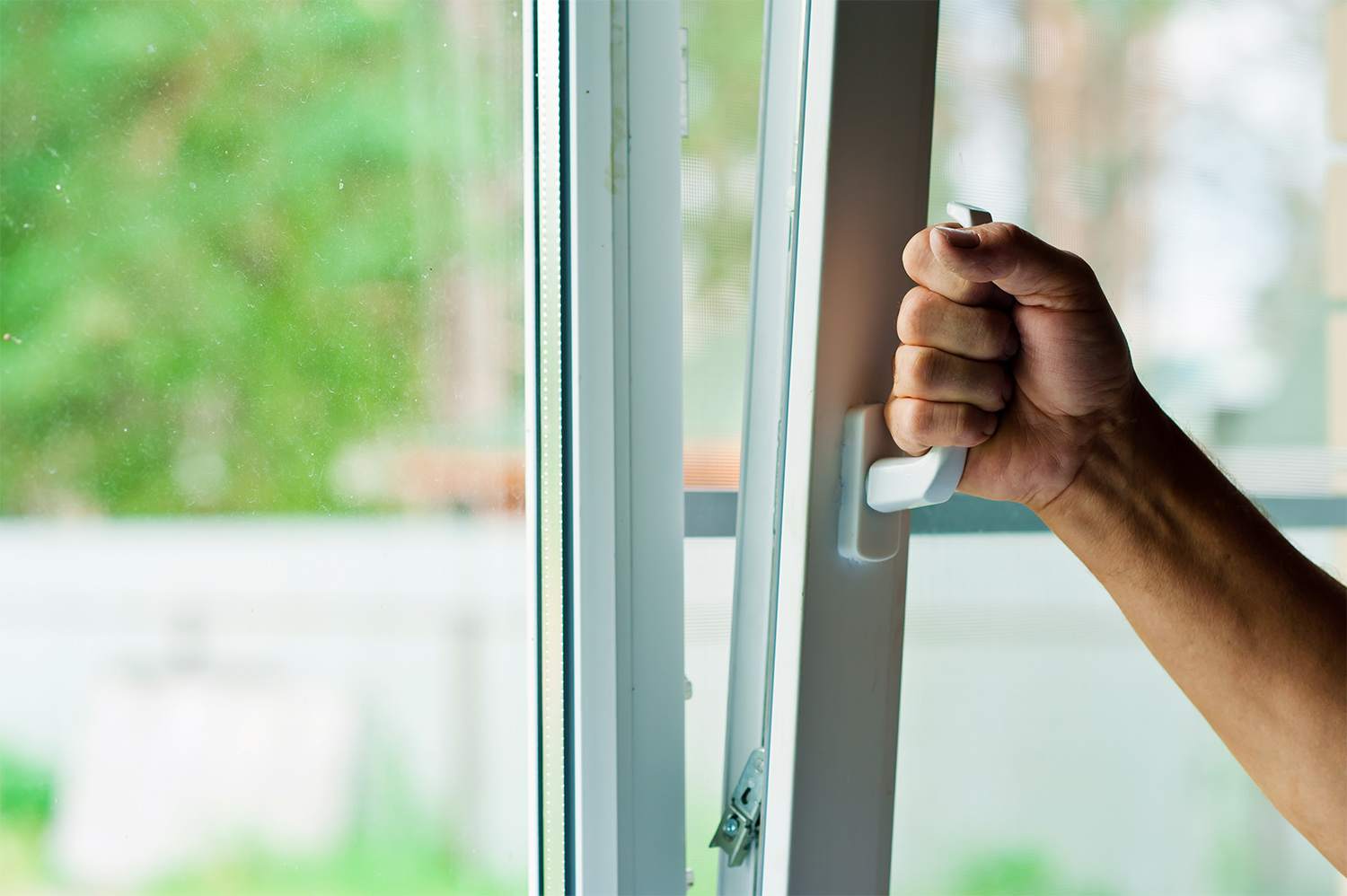
Discover the cost to replace window locks. Learn about price factors, labor rates, and tips to save on your window lock replacement project.
Choose from 12 types of household door locks designed for exterior and interior doors

Different types of locks serve specific purposes, from entry doorknobs and deadbolts for exterior doors to cam locks for cabinets and sliding door locks for patio access.
Lock replacement costs range from $60 to $350, and locksmith services cost $50 to $400, so addressing your lock needs promptly helps you avoid emergency fees.
Your door type, accessibility needs, and security requirements determine the best lock choice, whether you need a simple hand lever or a smart electronic lock.
Hiring a local door repair professional ensures proper installation and helps you select the right lock type for your home's security and accessibility needs.
Your home is your castle, and there are various locks to keep it safe. There are various door locks to choose from, and sometimes it’s not immediately obvious which is right for each type of door. This guide covers 12 types of door locks, including cylinder, hand levers, dead bolts, sliding door, barrel, mortise, and smart locks.

A doorknob lock is one of the most common ones you'll find. As the name implies, it's simply the knob that attaches to the door with a keyhole in the middle. You insert the key into this keyhole and turn to unlock the door. You'll often see them used in combination with a dead bolt or chain lock for extra layers of security.
Best for: Exterior doors or any other primary point of entry
Easy to operate
Can fit in with almost any design aesthetic
Takes valuable time to unlock during an emergency
Keys can become worn out or bent
A cylinder lock is the basic locking mechanism for a dead bolt lock. It contains a series of pins that have to align just right for the door to lock or unlock. The proper key will move the pins into the correct position, allowing it to turn and move the dead bolt.
Best for: Added security for exterior doors
Will help secure the door even if the doorknob lock isn’t engaged
Difficult to pick
Doesn’t provide complete protection from break-ins
Door must be aligned correctly for the dead bolt to slide into place

A hand lever functions in a similar way as a doorknob, but with a lever that you push down instead of a knob that you turn. Similarly, it has a keyhole in the middle. However, you won't see this type of lock on exterior doors as much because they aren't as secure as knobs. It's better for interior rooms where you want quick and easy entry.
Best for: Interior rooms you want to keep secure, like a manager's office in an office building
Offers easier access to entry
Simple enough for most household members to operate
Doesn’t offer as much security as some other locks
Objects or clothing can accidentally catch on it

Lever handlesets are a common choice for exterior front doors because of their elegant style and security. They feature a long handle and a thumb lever just above it, which you press down on to open the door after unlocking it. They typically work in tandem with a dead bolt.
Best for: Exterior front entry doors
Can add to the overall design of the exterior door
Adds extra security to exterior doors
More difficult to operate
Requires a separate dead bolt

Dead bolts are not usually the primary lock on a door since they don't feature a handle you can use to open the door once it's unlocked. Instead, they offer an extra layer of security by putting a metal bar into the doorframe when locked, making it extremely difficult for the door to be broken into even if an intruder can get the knob unlocked. As a result, these are almost always used on exterior doors. Installing dead bolts is relatively inexpensive.
Best for: Exterior doors that already use a knob or hand lever
Easy and inexpensive to install
Simple operation (only requires a single turn)
Extra layer of security against break-ins
Not all dead bolt locks protect against intrusions
Require a manual engagement
Take longer to engage, which can be an issue during an emergency

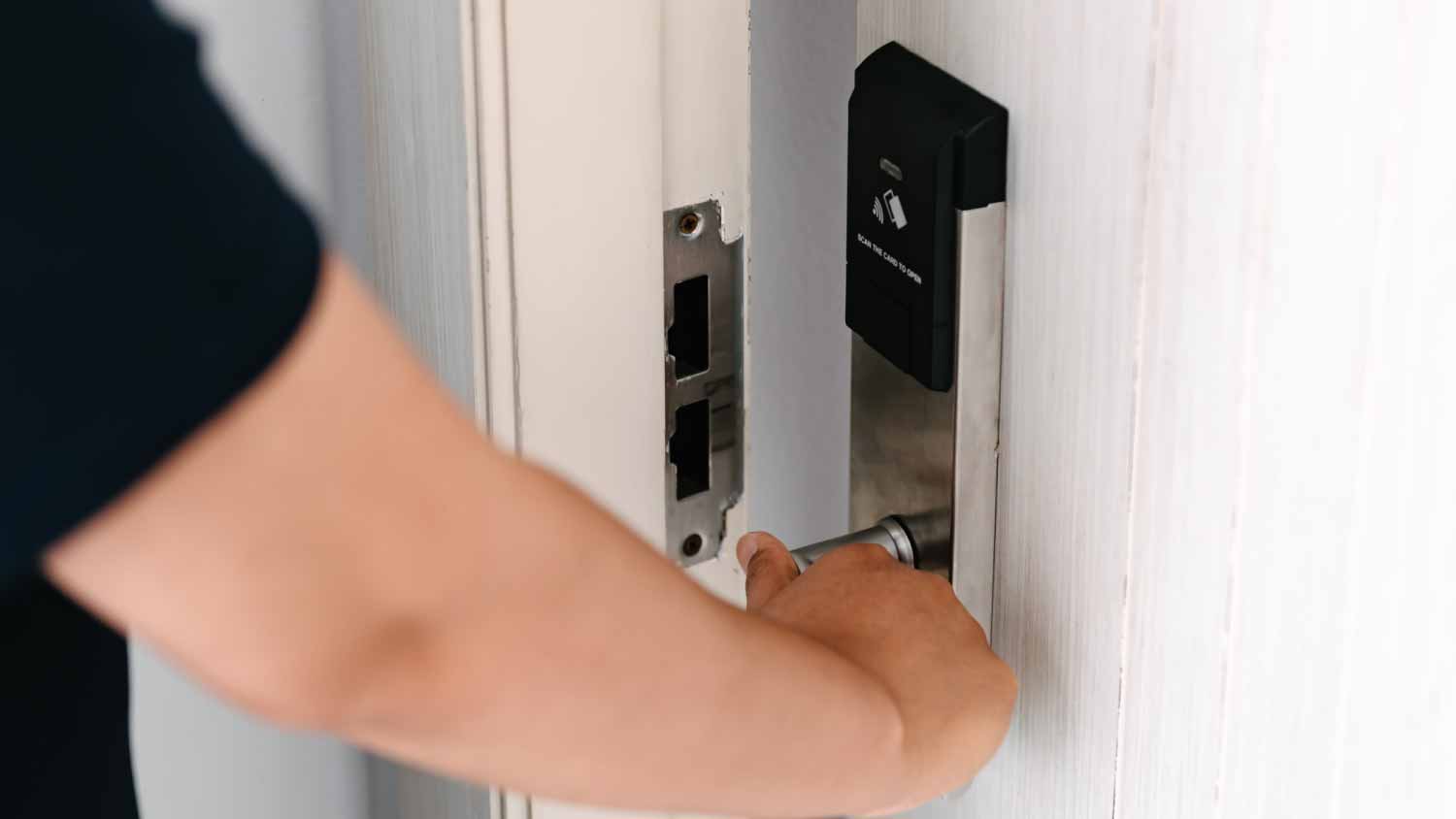
Electronic door locks and "smart" locks are either keyed or keyless locks that are less mechanical and more technological. They may have a keyhole, a numbered keypad for an entry code, or a scanner so you can swipe and enter. They’re a good option for homeowners who desire convenience or if you want to grant access to relatives, guests, or contractors without having to leave a key under the mat.
Best for: Exterior doors, particularly ones that outsiders often use
Can provide a higher level of security
Anyone in the household can operate it if they can input a code
Easier to set up and delete passwords for entry
Some depend on Wi-Fi or Bluetooth for a power source
Can be subject to hacking
More expensive than other locks

Cam locks are simple locks often found in cabinets or U.S. Postal Service mailboxes. Using a small key, you turn a metal piece within the lock to prevent a door or drawer from being opened.
Best for: Small doors and drawers with low security, like cabinets and mailboxes
Offer easy operation for small spaces
Simple to install
Doesn’t offer as much security as a dead bolt
Small key can be difficult to keep track of

As the name implies, this type of lock exclusively secures sliding doors. It's a simple lock that you push to the side to secure the door. This causes a latch to come up and hold the door in place at the frame. It doesn't provide much security, but it will keep your sliding doors more secure.
Best for: Exterior sliding doors
Easy operation for almost everyone in the household
Comes factory-installed
Doesn’t provide much security
Easily picked by would-be intruders

A barrel bolt, or sliding bolt, can be found inside doors and adds another layer of security. However, a barrel bolt isn’t as sturdy as a dead bolt and can be broken more easily with brute force. It uses a cylindrical lock that you slide into place from the inside after closing the door.
Best for: Exterior doors as a second layer of security
Simple operation and installation
Inexpensive compared to most other locks
Doesn’t provide as much security as a dead bolt
Easily broken or knocked off

A chain lock is often found on the inside of hotel rooms or apartments. It slides into place like a barrel bolt, but instead of using a bolt, it has a chain that stops the door from being opened, even if the doorknob and dead bolt are unlocked. This is usually used as a third layer of security after a doorknob and dead bolt, but it has to be unlatched from the inside.
Best for: Exterior doors as a third layer of security
Less expensive than most other locks
Easy to install
Not impossible to break
Cannot be operated from outside

A simple padlock is rarely used on doors. Instead, they're used for securing lockers and storage unit doors. Padlocks aren't physically attached to what they're latching, so you can take them anywhere. They work by closing a loop around a solid object. Some are very small, and some can be quite large, depending on what objects you need to secure.
Best for: Lockers, storage units, sheds, fences, bicycles, and anything else without an installed lock that needs to be secured
Inexpensive and easy to operate
Small enough to carry around
Can be broken in a matter of seconds
Can easily get picked

A mortise lock is set into the edge of the door opposite the hinge side and requires a “pocket” or a recess in the door itself. This allows the locking mechanism to slide into the door and sit flush against the edge. It’s most often used in commercial buildings and combines the dead bolt, latch, and door handle mechanisms in the case that slides into the door.
Best for: Commercial buildings that need a high level of security
High level of security
The mechanism is encased in one unit
More complex mechanism than other types of door locks
More difficult to install than other types
Each door lock is assigned a grade by the American National Standards Institute (ANSI) that indicates how durable it is and what type of construction it has. A strength test determines how much force a turning lock can withstand, and a cycle test determines how many times a lock can operate before it fails. The results of these tests assign a lock a grade:
| Grade | Strength in Pounds per Inch | Operation Cycles |
|---|---|---|
| 1 | 300 (key-in-knob) or 450 (lever lock) | 800,000 |
| 2 | 150 (key-in-knob) or 225 (lever lock) | 400,000 |
| 3 | 120 (key-in-knob) or 180 (lever lock) | 200,000 |
For the highest safety standards, look for a Grade 1 lock, but a Grade 2 can also mean it’s a durable, well-constructed lock.
Choosing a door lock will often depend on the type of door you’re securing—you’ll choose a sliding door lock for a sliding door, for example. However, there are a few more considerations to take into account when deciding on a door lock.
Type of door: If you’re securing an exterior door, you may choose a doorknob lock and a dead bolt and add a chain lock or barrel bolt for additional security. If you’re securing an interior or sliding door, you can go with a lock that offers less security.
Accessibility: It can be difficult for some people to operate a round doorknob or lock a dead bolt. A lever handle is a more accessible style, so consider who will be using the door lock.
Backset measurement: When choosing a doorknob lock, you’ll need to check the backset measurement to make sure it matches your door. The backset measurement is the distance between the edge of the door and the center of the hole where the doorknob sits. If you change the lock on an existing door, you’ll already have this hole in your door, and most new doors come with these holes precut.
Cross bore: The cross bore is the hole that extends from the edge of the door through to the bore hole where the doorknob is installed. The standard cross bore hole is 1 inch in diameter.
Handing: Handing is the direction that the door will swing toward when installed, as well as the way the level handle will point when installed. Getting these correct will help you order the correct hardware.
Purpose: Your goal with adding a lock can help you narrow down a type. If you’re securing a cabinet, a cam lock may work just fine, but if you need a lock on a bathroom door, you may want to go with a doorknob lock or barrel bolt. Exterior doors need more security, so a dead bolt or electronic door lock may be the way to go.
Door levers are more user-friendly than knobs, and all handles must be installed between 34 and 48 inches above the floor. Hire a pro to ensure your home meets all accessibility standards.

You can install some locks on your own, like a simple entry doorknob or chain lock, but other locks are complex mechanisms that require professional installation. That's especially true if you're getting something sophisticated like an electronic or smart lock.
Consult with a locksmith near you if you’re considering which locks to install in which parts of your house. They can explain the various types of locks for doors, the differences between the brands, their benefits and drawbacks, and how much you can expect to pay for each. A local door repair pro can help get your door, doorframe, and doorknob in working order if they need some TLC to stay secure.
Locksmith services cost around $170 each time they come out, but the range could be anywhere from $50 to $400, depending on the service. Some types of locks are more expensive than others to install, and calling in a pro to unlock your door in an emergency will cost you plenty, especially if it’s after hours.
Terrible experience. Walls/trim/floors/cabinets/doors all have drip marks, overspray, etc. Tiling at the fireplace had to be redone by another vendor due to incorrect and shoddy install by Profect. Contractor had his children in our house while he was on site without prior authorization or...
 Profect painting & exteriors
Jason has helped me with multiple household projects, with the most recent being new door installation. He has always showed up on time and organized and has done an incredible job! Jason is very professional and he's now my go-to for anything around my house that needs to be fixed or...
 Huff Garage Rescue, LLC
Company came to look at my garage door that was off track. They also said I needed a brace on the other garage door. They put the door back on track, and I paid to install the brace. The technician told me I needed a new garage door opener, and it would cost $1000. Red flags went off in...
 Precision Overhead Garage Door Service
On Sunday 2/26 I requested quotes via Angi from 4 refrigerator repair businesses. Northwest Appliance responded to me Monday morning (2/27) and my refrigerator was repaired by noon the same day. Great communication, they did everything they said they would. The technician had the parts on...
Excellent customer service and knowledge. I was recommend to him from my neighbour. My front door and window came in great and were installed beautifully perfectly, I m very satisfied with their excellent work, so decided to order one more big bow window for my living room. I cant wait for...
 Window Depot USA of Central Ohio
Called ahead and worked quickly to install keyless locks on vintage wooden doors.
 Expert Lock and Key, LLC
Scott did not get appropriate access to the property prior to the scheduled inspection which required us to come back later in the day to complete it. He also, unprofessionally, knocked on a neighbor?s door in his attempts to reach someone with access. His overall report was fine though the...
 Security First Home Inspections
Door Depot was very responsive - they came out the day after my call to assess my needs, then returned at my convenience to complete the work. They arrived early, and the work was completed in a shorter period of time than estimated. Very pleased with the results. I would definitely use them...
 Door Depot LLC
Replace garage doors: Fast response, competitive estimate, timely work done well.
 Village Garage Door
Jeremiah did an awesome job cleaning 28 windows inside and out! He was fast, efficient and now I have a beautiful view again. This was a Groupon for $139 for 20 windows, but I had 28 windows/doors cleaned, so there was an extra $6 per window. Totally worth it.
 Complete Home Services
From average costs to expert advice, get all the answers you need to get your job done.
Discover the cost to replace window locks. Learn about price factors, labor rates, and tips to save on your window lock replacement project.
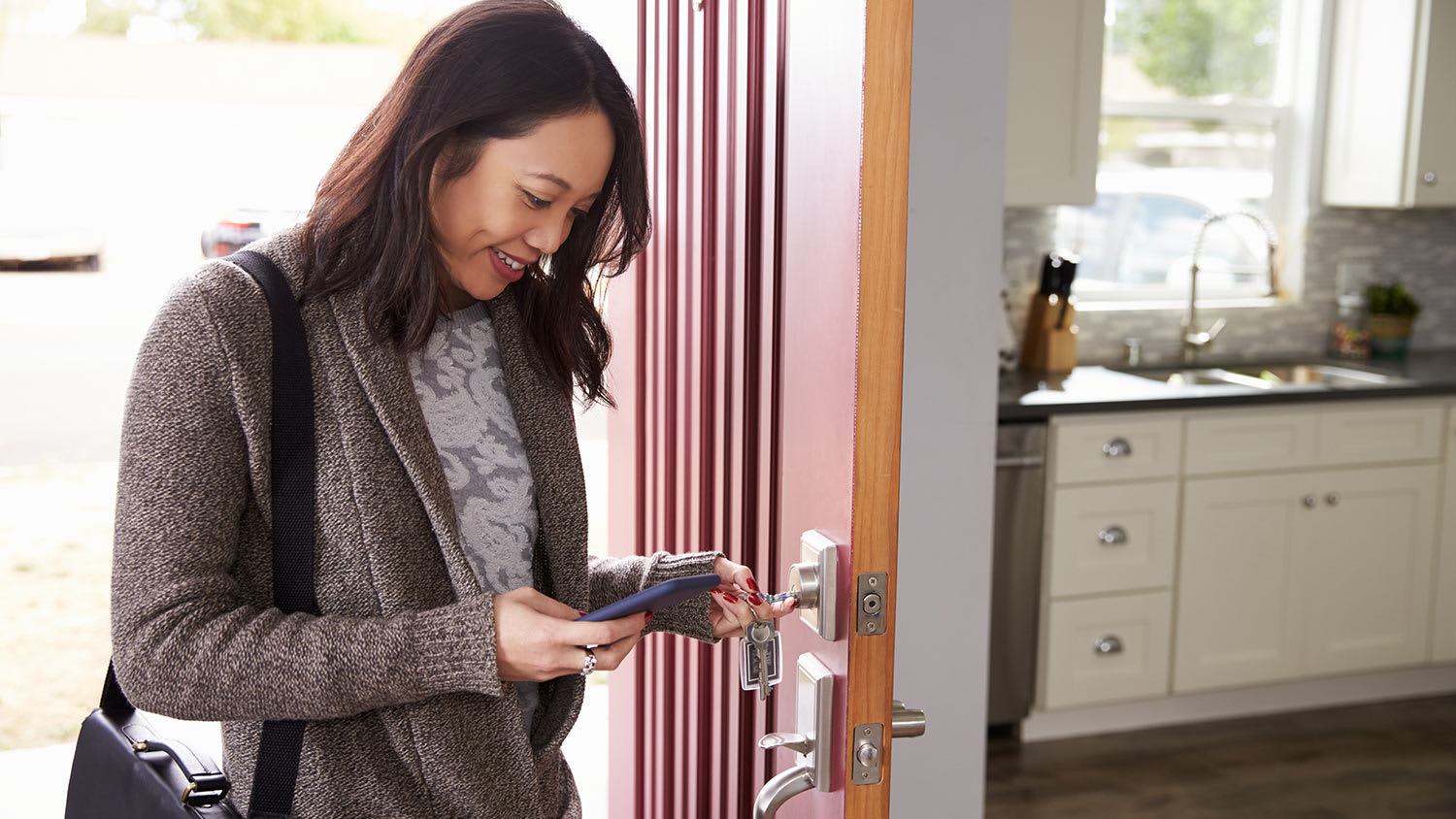
Discover the average deadbolt installation cost, price factors, and tips to save on your project. Learn how to budget for secure home upgrades.
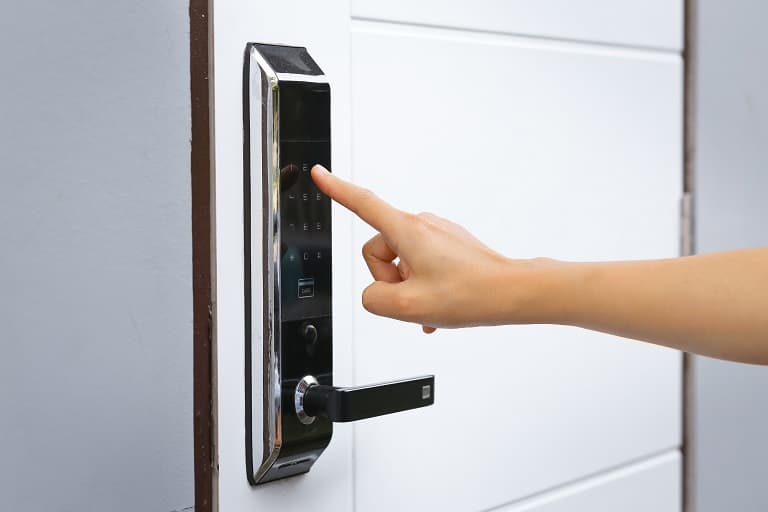
Which is better for protecting your home—smart locks or traditional locks? Use this guide to weigh their differences and decide which is better for you.
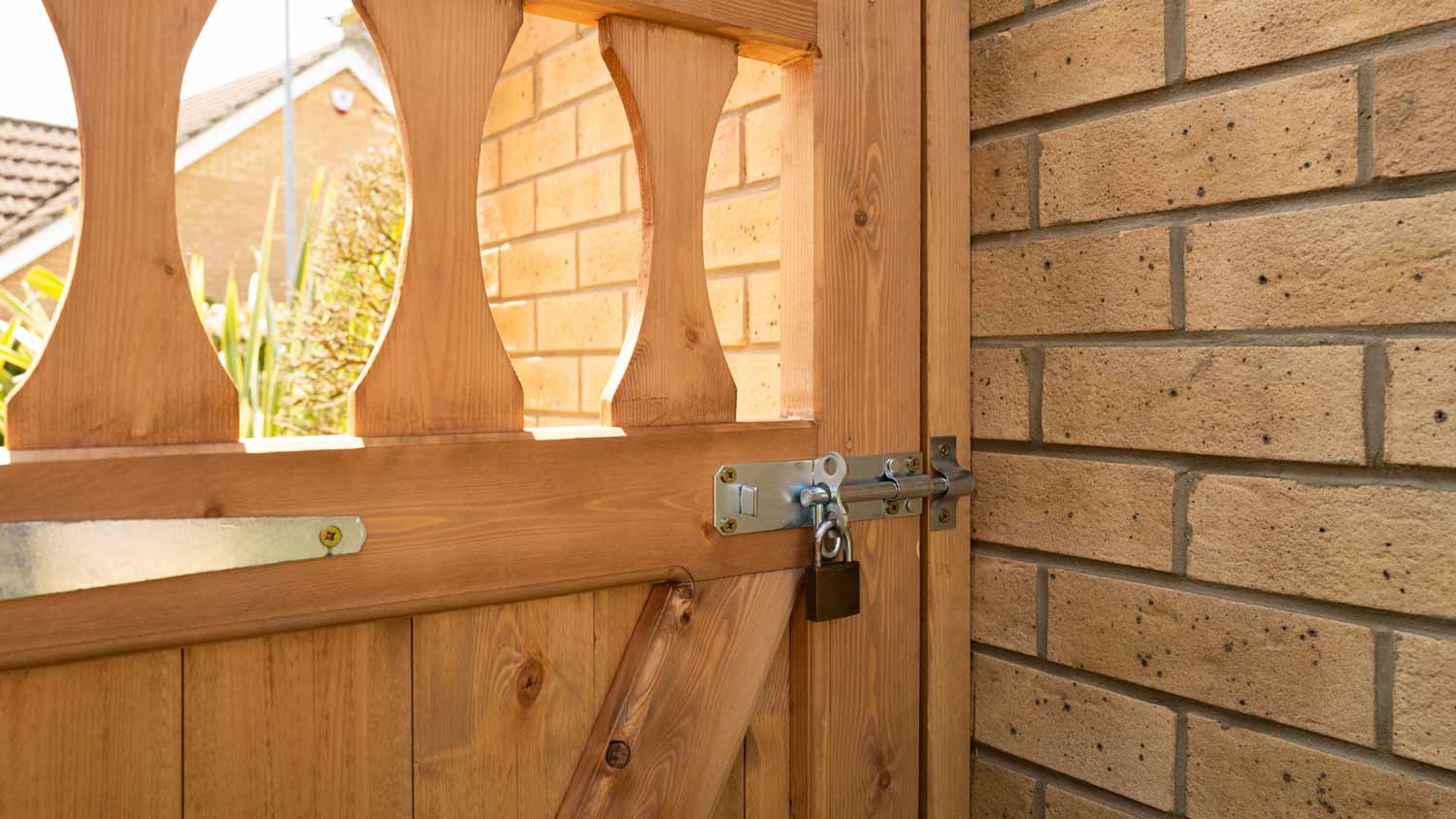
Besides opening, one of the most important things a door does is close. Here are some of the most common door latch types that’ll keep your door secure.
Learn about different types of deadbolts on the market and which one will make your home the most secure.
There are many types of interior doors, from swinging to folding and sliding. This article breaks down each to help you find the right door for your needs.