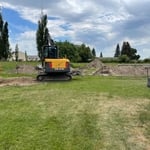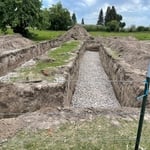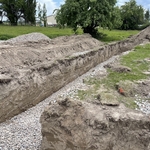




Top-rated excavation pros.

Best excavation pros near Thayne, WY

Enter your zip and get matched with up to 5 pros

Need a pro for your excavation project in Thayne, WY?

Select your specific project to find the pro for you.

Top-Rated Excavation pros in Thayne - Updated Nov 2026

P SQUARED EXCAVATION LLC.
New to Angi
Building Site - Preparation and ClearingBuilding Site - Preparation and Clearing - For BusinessExcavation - Major Grading or Resloping+2 more

Serving Thayne, WY and surrounding areas

We take great pride in our experience, expertise, quality, and customer service that we provide to meet the consumer's needs. It is our mission to provide excellent workmanship and complete customer satisfaction from start to completion of a project. In order to understand the needs and expectations of our customers, we take great care to work and communicate with every customer in a professional manner. Our reputation is based on service, safety, and quality, regardless of how large or small the job. Call us today. \n

Silver Line Excavation LLC
New to Angi
Excavation - Major Grading or ReslopingLandscape - Minor Grading or Resloping

Serving Thayne, WY and surrounding areas

In business since 2022

Free estimates

Credit card accepted

We take great pride in our experience, expertise, quality, and customer service that we provide to meet your needs. It is our mission to provide excellent workmanship and complete customer satisfaction from start to completion of a project. In order to understand the needs and expectations of our customers, we take great care to work and communicate with every customer in a professional manner. Our reputation is based on service, safety, and quality, regardless of how large or small the job. \n

R&S Excavation & Demolition
New to Angi
Building Site - Preparation and ClearingBuilding Site - Preparation and Clearing - For BusinessExcavation - Major Grading or Resloping+1 more

Serving Thayne, WY and surrounding areas

In business since 2021

Free estimates

Credit card accepted

Ryan is committed to excellence in every aspect of our business. We uphold a standard of integrity bound by fairness, honesty, and personal responsibility. Our distinction is the quality of service we bring to our customers. Accurate knowledge of our trade combined with ability is what makes us true professionals. Above all, we are watchful of our customers' interests, and make their concerns the basis of our business

Response time10 mins
Showing 1-10 of 18
Excavating FAQs, answered by experts

Depth is not a qualifying component of evacuation. Any human-made cut, cavity, or depression in the earth’s surface is considered excavation. The hole from excavation can be any size, shape, or depth. Excavation is used to create foundations, reservoirs, drainage ditches, and roads. Long, narrow excavations are called trenches and are often used for underground utilities.

Excavation is priced in cubic yards, so you’ll need to find the volume of the area in order to calculate costs. Multiply the length, width, and proposed depth of your excavation site, then convert it into yards to get the volume. Multiply this figure by the price per cubic yard.

Most homeowners can measure by hand to get a rough estimate, even if it’s tedious. You may want to pull out a tape measure or use a string to help mark the area.

Trenchers can dig holes as narrow as 4 inches or as wide as 4 feet. Check the specifications of the trencher you rent or buy to determine how wide it will cut into the landscape. Better yet, let the excavation company know how wide you’d like the trench to be, and they can help you choose the right trencher for the job (or do it for you).

You do not have to dig footers for a deck as long as it meets local code and holds up to weather in your area. If you live somewhere that experiences high winds and earthquakes, you may need to dig for your deck posts. Deck blocks, post anchors with base plates, and helical pile systems are the three no-dig deck post options you can choose from if local code permits.

There is no standard depth for burying a septic tank; they are typically buried anywhere from 4 inches to 4 feet underground. The final depth depends on several factors, including the depth of your main sewer line, the height of the bedrock, soil type, local regulations, and the property's landscape. If you plan to grow grass or plants over the tank, a depth of at least 4 to 6 inches is recommended. Deeper tanks can be more difficult to locate, but a septic professional can help find it for you.

The Thayne, WY homeowners’ guide to excavation services

From average costs to expert advice, get all the answers you need to get your job done.