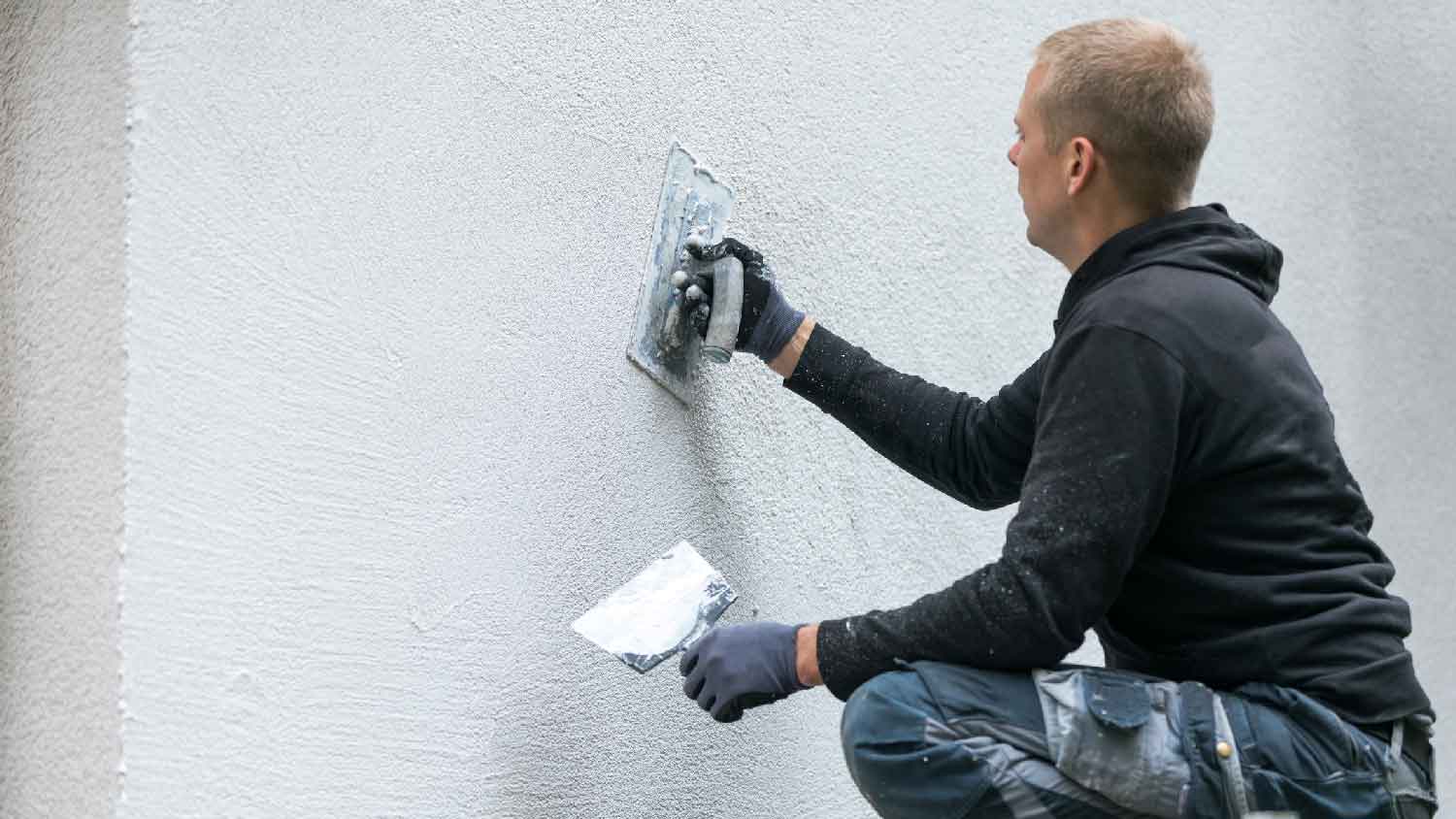







Top-rated stucco pros.

Best stucco pros near Lesage, WV

Enter your zip and get matched with up to 5 pros

Top-Rated Stucco pros in Lesage - Updated Nov 2026

Stucco FAQs, answered by experts

While your stucco repair professional can diagnose exactly what needs repair, it can be helpful to know what to look out for in the early stages to avoid significant reconstruction. Some common stucco repairs include: 

  • Cracks

  • Holes

  • Ceiling repair

  • Chimney repair

  • Stucco removal

  • Discoloration

  • Caulking

  • Water damage

  • Foundation repair

Masonry screws are the best option to be used on stucco. They’re thicker and made to penetrate harder surfaces like concrete and cinder blocks. Fluted masonry screws work the best because they create a stronger grasp thanks to the lines on their shafts. If you’re working on exterior stucco, use galvanized screws to prevent corrosion.

The curing time for stucco typically takes several weeks to fully complete. During the curing process, the stucco undergoes a chemical reaction and gradually hardens. It's important to note that curing is different from drying. While the surface of the stucco may dry relatively quickly within a few hours or days, the curing process continues beneath the surface, strengthening and solidifying the stucco. 

It's best to avoid excessive moisture exposure during the curing period, as it can impede the curing process. The exact curing time can vary based on factors such as temperature, humidity, and the specific stucco mixture used.

Failing to repair damaged stucco can lead to significant problems. Cracks can grow and deepen, allowing water and moisture to get behind the stucco. This moisture intrusion can cause water damage, structural issues, and mold or mildew growth. Delaying repairs will likely cost more in the long run as the damage worsens, so it's best to repair your stucco as soon as you notice any signs of damage, such as cracks, holes, or discoloration.

A standard drill will work just fine if you’re drilling small holes, and only a few of them. But anything with a diameter larger than 3/8 inch is best done with a hammer drill, since it is stronger, faster, and also makes your drill bits last longer. While you don’t absolutely need a hammer drill for stucco, it is a worthy investment if you think you might drill more holes down the road.

The Lesage, WV homeowners’ guide to stucco services

From average costs to expert advice, get all the answers you need to get your job done.