







Top-rated arborists.

Get matched with top arborists in Ansted, WV

Enter your zip and get matched with up to 5 pros

Need a pro for your arboricultural service project in Ansted, WV?

Select your specific project to find the pro for you.

TRUSTED BY ANSTED, WV HOMEOWNERS

  • Average homeowner rating star icon4.4
    Average homeowner rating
  • Verified reviews icon21
    Verified arboricultural services reviews

Find Arborists in Ansted

One Man Freelancing
New to Angi
Tree RemovalTree Stump - RemoveTree Trimming

Serving Ansted, WV and surrounding areas

Approved

I am a young business owner and brand new father! I have worked all over the construction industry from a young age and became a licensed plumber before I finished highschool. The name “One man” Freelancing was inspired by my service in the WV national guard where I still currently serve as the “one man” a term given to the cannon crewmember who loads and fires the artillery cannons. I have a broad range of knowledge and problem solving skills, if I don’t know how to do the job I will surely be able to learn and you will not be disappointed with results!

Avatar for Woodring Arbor Wellness
Woodring Arbor Wellness
5.0(
4
)
Tree RemovalTree Trimming

Serving Ansted, WV and surrounding areas

In business since 2021

Free estimates

Emergency services offered

"Brooks has a positive can do attitude. He arrived on time and quickly completed the agreed to task of trimming our storm damaged trees and removing all the debris. I would definitely hire him again."
Response time1 day
Recommended by100%of homeowners
...
Showing 1-10 of 67
Arborists questions, answered by experts

The best time to transplant a tree is when it is dormant. For many trees, this means either in the fall after the leaves have dropped (around October or November) or in early spring before new growth begins (around March). The ideal timing can depend on the type of tree. Deciduous trees do well when moved in early spring or fall, while evergreens are best transplanted in early spring or late summer. For example, pine trees are best moved in early fall, but maples prefer late fall. Avoid transplanting in winter, as the frozen or hard, cold soil poses a significant risk to the roots and prevents the tree from acclimating properly.

Make sure the tree roots soak around a day before you dig the tree up for the transplant. Keep the roots wet while the tree is above ground. After the transplant is finished, provide consistent water every day for the first month or so. You don’t want to overwater the tree, but you do want to keep the roots wet so they can thrive in their new environment.

A general rule is that trees need 10 gallons of water for each inch of the tree’s diameter. For large trees, that can amount to approximately 160 gallons of water or more. Watering big trees to this extent can take quite a bit of time using a hose. For this reason, you may consider installing a soaker hose or sprinkler system to make the job easier.  

If the roots are still alive, the dead tree will usually try to put out new shoots. That doesn’t mean the tree will survive or that the dead parts of a tree will come back to life. If parts of the tree have died and turned gray or rotten, nothing will bring them back to life and they need to be safely removed.

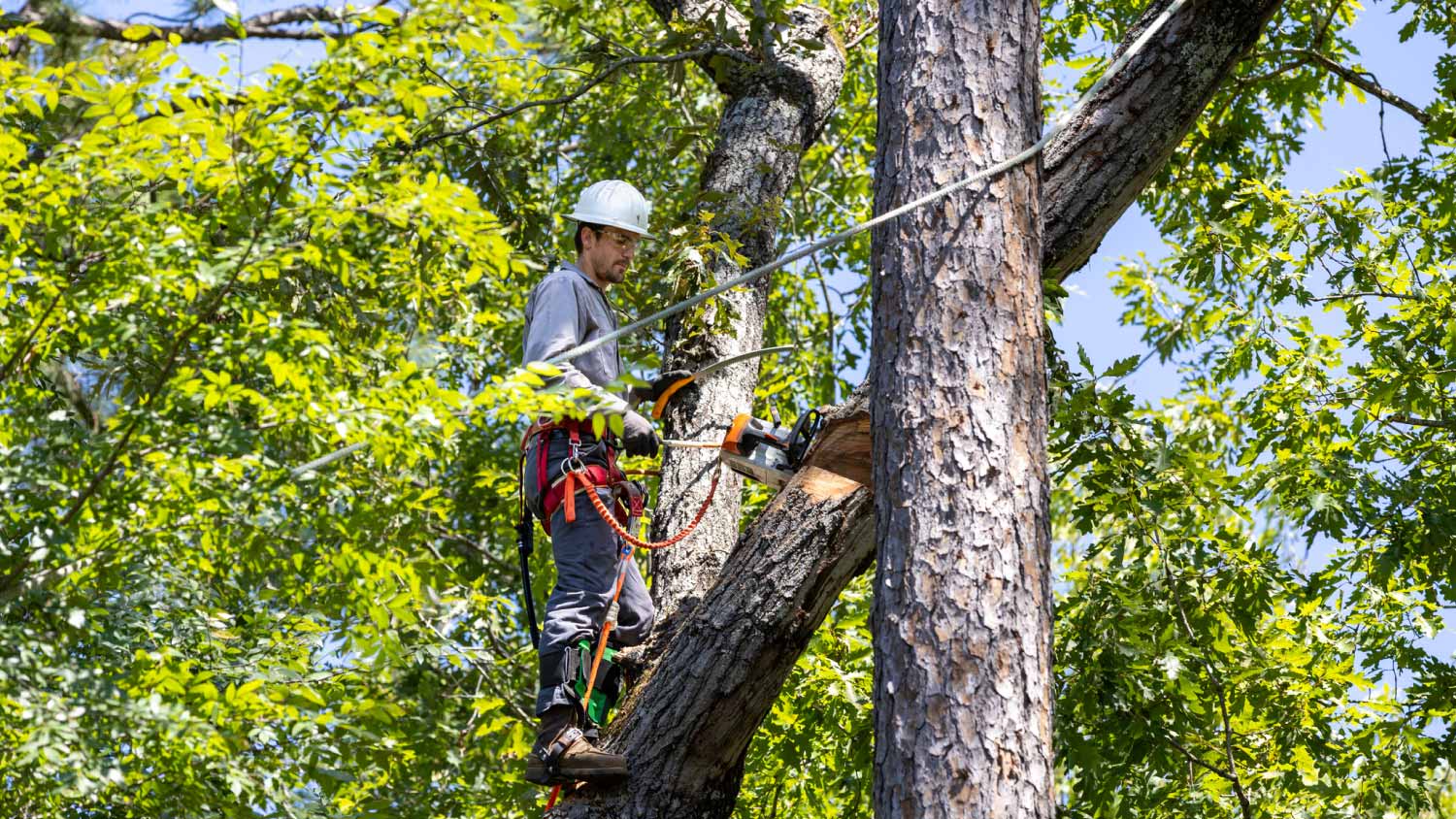
A chainsaw is the best tool to cut down a tree, but you may also use a handsaw or ax. You may also want to use a lopper or pole saw to remove limbs before cutting down the tree. Wear chainsaw chaps and protective gear, including eyewear and earplugs if you use a chainsaw. Again, if you’re unsure about how to use this tool, this project may be one to skip.

The Ansted, WV homeowners’ guide to arboricultural services

From average costs to expert advice, get all the answers you need to get your job done.