Top-rated drywall pros.

Best drywall pros near Townsend, WI

Enter your zip and get matched with up to 5 pros

Need a pro for your drywall service project in Townsend, WI?

Select your specific project to find the pro for you.

Top-Rated Drywall pros in Townsend - Updated Nov 2026

Avatar for Custom Craft Environmental
Custom Craft Environmental
4.6(
117
)
Drywall - InstallDrywall - Install - For BusinessDrywall - Repair+1 more

Serving Townsend, WI and surrounding areas

In business since 1991

Emergency services offered

Credit card accepted

"He had a cancellation and was able to come out the day I called. He verified that we actually didn't have mold growing in the one area. Since that area was connected to an indoor hot tub room, he checked the tub room just to verify that all was ok in there. He gave me some tips on preventing mold in that tub room and informed me about some other areas to watch (as this was in the basement and we have had water get inside with heavy rain) and I asked him about some marks on my basement ceiling. He was very knowledgeable and helpful. Will definitely be calling if need for future services."
Additional Photos
Additional Photos
Additional Photos
Before
After

+1

Recommended by94%of homeowners
Avatar for J&D Drywall LLC - Home  Facebook
J&D Drywall LLC - Home Facebook
5.0(
1
)
Drywall - Install - For BusinessDrywall - RepairDrywall - Repair - For Business

Serving Townsend, WI and surrounding areas

In business since 2020

Free estimates

Credit card accepted

With several years experience, J&D Drywall, LLC works hard to bring each customer the best possible service and quality available. We look forward to working with you soon on your next project. We welcome your questions and thank you for your interest. \n \n

Response time3 days
Response rate94%
Recommended by100%of homeowners
Avatar for Nicholas Palm Tile and Stone
Nicholas Palm Tile and Stone
4.8(
4
)
Drywall - InstallDrywall - Install - For BusinessDrywall - Repair+1 more

Serving Townsend, WI and surrounding areas

In business since 2003

Free estimates

Credit card accepted

In this business, there are two kinds of people. The first would be the average company who works an area, doing the same jobs repetitively. The second, a company that has traveled state to state, completed jobs in every atmosphere, and with every request imaginable. We've done small bathroom remodels, to tile-animal art on private homes in upper class neighborhoods, to creating home decor and outside masterpieces completely out of tile, stone, marble, and about 35 other materials! Contact us for a free estimate within 45 miles from our home in Horicon, WI. We also handle intermediate electrical, masonry, remodels, demo, fencing, painting, intermediate plumbing, a lot of drywall of all types, and custom designs for household items such as cabinets, porches, decks, and more! This business is run by my dad, myself, my brothers, and 3 of my best friends. We work fast and accurately so you can hurry to enjoy your new home improvements/renovations! Clean up included, and WE meet YOU. Call for your free consultation day or night! We look forward to hearing from you soon.

Additional Photos
Additional Photos
Additional Photos
Additional Photos
Additional Photos

+1

Recommended by100%of homeowners
Showing 1-10 of 42
Drywall FAQs, answered by experts

Although they have similar applications, spackle and joint compound are not the same. Their primary differences lie in their composition, consistency, and ideal use cases.

Spackle is composed of gypsum and binding agents, making it thicker than joint compound. It dries quickly and is easy to sand, which makes it ideal for small wall repair projects like filling nail holes or patching minor damage.

Joint compound, also known as drywall mud, consists of limestone and gypsum. It is primarily used for large-scale projects, such as taping and finishing the seams on newly installed drywall. It tends to shrink more than spackle and can be more difficult to spread.

While both products can be used to fill small depressions and cracks, spackle cannot replace joint compound for taping and mudding new drywall. Conversely, you can often use joint compound for small patching jobs typically done with spackle.

You can plaster over regular drywall, but it's essential to prepare the surface properly. Before plastering, the drywall should be clean, free of dust, and any loose or peeling paint should be removed. Applying a primer specifically designed for plastering can improve adhesion. Some professionals recommend applying a base coat of plaster or joint compound to create a better surface for the plaster to adhere to. Proper preparation ensures a smooth and durable plaster finish over regular drywall.

Both plaster and drywall are durable wall finishes, but they differ significantly in installation, cost, performance, and aesthetics.

Installation & Cost: Drywall installation is faster and more affordable, typically costing $1.50 to $3 per square foot. It uses premade sheets, making it a more accessible DIY project. Plastering is a labor-intensive craft that requires specialized skills, pushing costs to $2 to $10 per square foot. It involves applying a wet paste over a lath framework.

Durability & Performance: Plaster is generally more durable, longer-lasting, and provides superior soundproofing. It is also a better insulator, which can help reduce energy costs. Drywall is easier to remove for future renovations.

Aesthetics: Drywall provides a smooth, uniform surface ready for paint or texture. Plaster offers a high-end, naturally textured look that can hide imperfections and is often preferred for achieving a classic or historic aesthetic.

Which is better? The choice depends on your priorities. Drywall is ideal for those prioritizing a lower upfront cost, faster installation, and DIY potential. Plaster is the better option for a higher-end project where durability, soundproofing, and a unique, premium finish are more important than the initial cost.
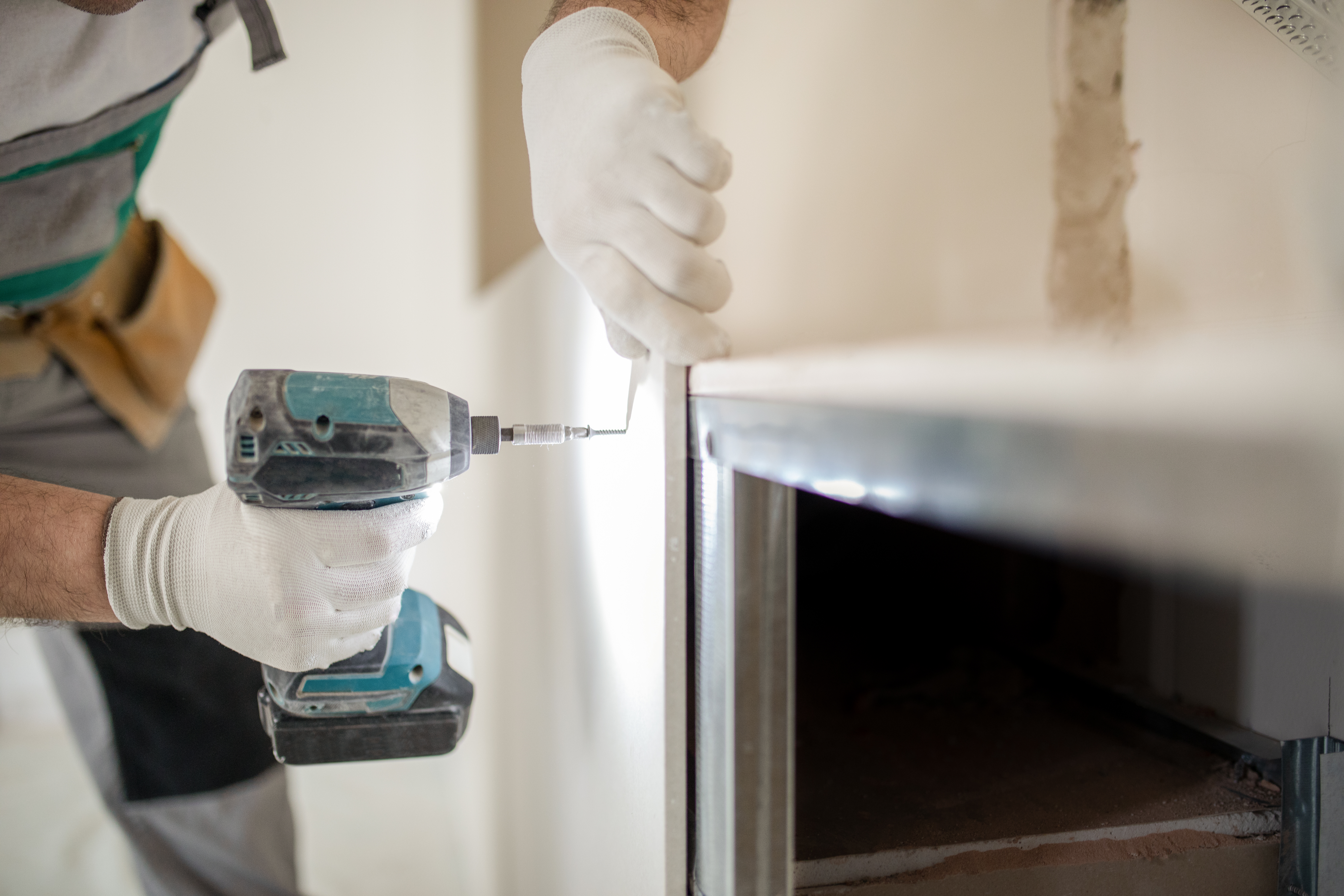

The two most common drywall thicknesses for ceilings are 1/2-inch and 5/8-inch. For most standard residential applications, 1/2-inch drywall is sufficient and widely used. It provides adequate support and is lighter and easier to handle during installation compared to thicker sheets. However, 5/8-inch drywall is often used for specific cases where additional benefits are needed. It is heavier but provides superior sound dampening and fire resistance. You should consider using 5/8-inch drywall for ceilings in commercial buildings, between a garage and a living space, or above a finished basement to meet building codes or for enhanced soundproofing.

When used correctly, drywall patch kits can work well. However, there are limitations. Specifically, these kits can only cover holes up to 5 inches in diameter. For anything larger than that, you’ll need to cut out the affected section of drywall and replace it with a new piece. That’s a far more complicated process that involves buying the right type of drywall, finding the wall studs, cutting into your wall, and screwing the replacement drywall in place.

The Townsend, WI homeowners’ guide to drywall services

From average costs to expert advice, get all the answers you need to get your job done.