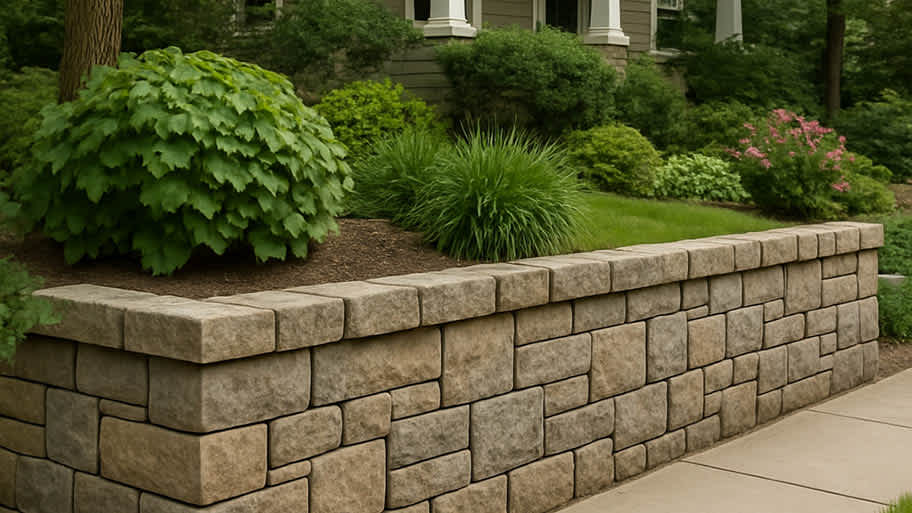




Top-rated retaining wall installation pros.

Get matched with top retaining wall installation pros in Stoddard, WI

Enter your zip and get matched with up to 5 pros

Need a pro for your retaining wall installation project in Stoddard, WI?

Select your specific project to find the pro for you.

TRUSTED BY STODDARD, WI HOMEOWNERS

  • Average homeowner rating star icon3.9
    Average homeowner rating
  • Verified reviews icon39
    Verified retaining wall installation services reviews

Find Retaining wall installation pros in Stoddard

Apex Concrete & Construction
New to Angi
Retaining Wall - Install

Serving Stoddard, WI and surrounding areas

In business since 2025

Free estimates

Credit card accepted

We take great pride in our experience, expertise, quality, and customer service that we provide to meet the consumer's needs. It is our mission to provide excellent workmanship and complete customer satisfaction, from the start to the completion of a project. In order to understand the needs and expectations of our customers, we take great care to work and communicate with every client in a professional manner. Our reputation is based on service, safety, and quality, regardless of how large or small the job.

Retaining Wall Installers questions, answered by experts

Most railroad tie retaining walls have a life span of 20 to 30 years, though you may need to replace your wall sooner if it’s repeatedly exposed to heavy rain, runoff, and excess moisture. Railroad ties are typically treated with creosote, which makes them much more durable than untreated wood. Though they last longer, they don’t last forever. For the most longevity, make sure your retaining wall has a sturdy base and steel reinforcements. You should also install drainage to direct water away from the wall.

To maintain the integrity of your landscape, a retaining wall must be installed if the slope of the angle exceeds 35 degrees. The lean of the wall must be 1 inch per 12 inches in height to disperse the weight of the soil uniformly and guarantee the correct drainage of the soil.

Sand and gravel are two suitable options for filling behind a retaining wall. If you’re building your own retaining wall, you’ll complete this part of the process—known as backfilling—after you finish laying the blocks. Make sure not to skip it—otherwise, you could wind up with drainage issues, which can cause your retaining wall to collapse.

With foundation walls, the slab on grade and force at the top of the wall is resisted by flooring. With retaining walls, the force at the top of the wall is not resisted.

Through proper drainage solutions and compacting the foundation soil.

The Stoddard, WI homeowners’ guide to retaining wall installation services

From average costs to expert advice, get all the answers you need to get your job done.