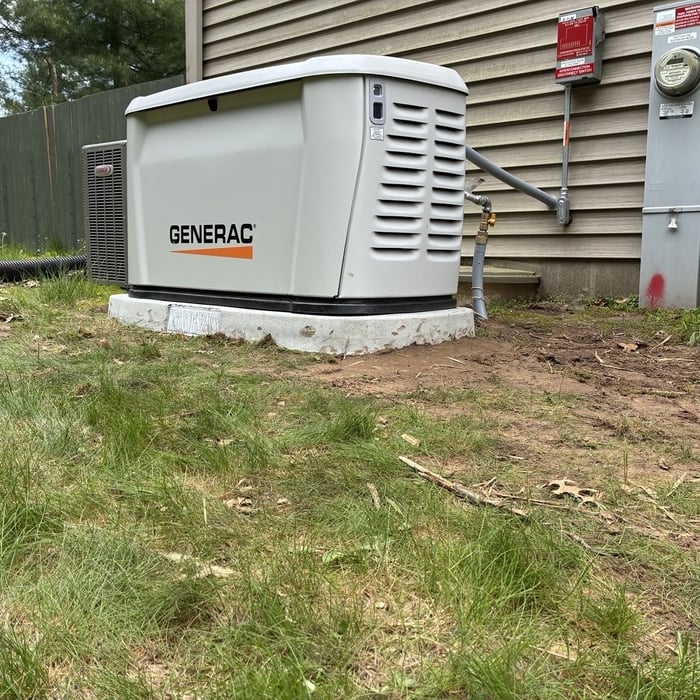




Top-rated generator install pros.

Best generator install pros near Boscobel, WI

Enter your zip and get matched with up to 5 pros

Need a pro for your generator install project in Boscobel, WI?

Select your specific project to find the pro for you.

Top-Rated Generator install pros in Boscobel - Updated Nov 2026

Tek Electric
2.3(
3
)
Fixed Generator - InstallFixed Generator - RepairGenerator - Install+4 more

Serving Boscobel, WI and surrounding areas

In business since 2002

Free estimates

Emergency services offered

"First, they were recommended to us for the whole house generator by home depot.  We were so happy with the generator that we had him do a bathroom fan at my house and a bathroom fan at my son's house.  I did some checking and that was a reasonable price.  With the work he did, it was more than reasonable.  The job was a little more involved than he thought it would be and he didn't have any problem with any of it.  Without anything to judge the pricing from, other than online and a couple of guys I had come over who weren't on the same page as me, I'd say excellent.  The quality was top of the line.  As soon as he got the generator, he got over here to put it in. As a matter of fact, I am thinking about calling him again for something."
Recommended by50%of homeowners
Generator Install FAQs, answered by experts

The cost to install a whole-house generator averages $5,200, with a typical price range of $1,500 to $8,900. However, total costs can vary from $400 for a small portable unit to over $18,000 for a large-capacity system. The most significant cost factor is the generator's size and capacity, but other variables include the brand, fuel type, and labor for assembly and installation.

Generator costs can be broken down by type:

  • Portable or Emergency Backup Generators (1kW–7.5kW): $500 to $2,000

  • Partial-Home Generators (9kW–20kW): $2,000 to $6,500

  • Whole-House Generators (22kW–48kW): $5,000 to $18,000

To avoid paying for more power than you need, consider hiring an electrician to calculate the electrical load for your essential appliances. It is also recommended to get at least three quotes to find the best deal for your specific needs and budget.

Generators are usually sized by running watts and starting watts. Ideally, you’ll want a generator that can offer both the necessary running watts and starting watts for everything you need to power without going beyond 90% of its capacity. Calculate your home’s electrical load based on the breakers in your home or adding up the appliance and lighting needs of connected rooms.

Generators are safe to use as long as they are installed and operated correctly according to the manufacturer's recommendations. The most critical safety tips are to never use a portable or fuel-powered generator inside an enclosed space due to the risk of lethal carbon monoxide poisoning; always operate it outdoors where fumes can dissipate away from your home. Additionally, never attempt to connect a generator to your home’s electrical panel yourself—hire a professional to ensure the setup meets safety standards. Finally, avoid overloading the generator by not connecting more appliances than it is rated for, as this can damage your equipment or cause a fire.

Potential benefits of using a natural gas generator include reducing your carbon footprint, lower likelihood of carbon monoxide exposure, budget-friendly operating costs, and low-maintenance, continuous fuel supply. Some possible drawbacks, though, include higher initial installation costs, dependency on a natural gas supply, and installation complexity. Keep in mind that pros and cons will vary based on the type and brand of natural gas generator. 

Sizing a generator is a careful process that requires calculating the electrical load of your entire house. You have to take into account every device you want to use and their wattage requirements, plus the wattage needed to start them, and look for a generator that can safely run all that at around 80% capacity.

In more practical terms, a small home can run on a 10,000-watt generator (and if you only want to power a few key appliances, much less than that). A mid-sized home may need something between 15,000 and 22,000 watts. Larger homes require 25,000 watts or more. 

The Boscobel, WI homeowners’ guide to generator installs

From average costs to expert advice, get all the answers you need to get your job done.