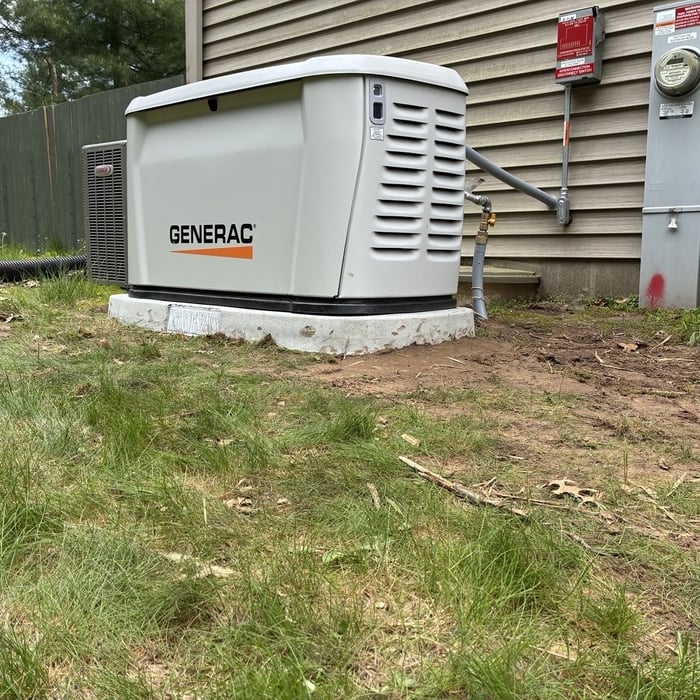




Top-rated generator install pros.

Get matched with top generator install pros in Arkansaw, WI

Enter your zip and get matched with up to 5 pros

Need a pro for your generator install project in Arkansaw, WI?

Select your specific project to find the pro for you.

Find Generator install pros in Arkansaw

Rentas Electric LLC
New to Angi
Fixed Generator - InstallFixed Generator - RepairGenerator - Install - For Business+1 more

Serving Arkansaw, WI and surrounding areas

In business since 2025

We take great pride in our experience, expertise, quality and customer service that we provide to meet every consumer's needs. \nIt is our mission to provide excellent customer service from start to completion of a project. \nTo understand the needs and expectations of our customers, we take great care to work and communicate with every customer in a personal and professional manner. \nOur reputation is based on service, safety and quality, regardless of how large or small the job. \n

QualityFast
New to Angi
Portable Generator - InstallPortable Generator - Repair

Serving Arkansaw, WI and surrounding areas

In business since 2022

Free estimates

Emergency services offered

QualityFast is committed to excellence in every aspect of our business. We uphold a standard of integrity bound by fairness, honesty, and personal responsibility. Our distinction is the quality of service we bring to our customers. Accurate knowledge of our trade combined with ability is what makes us true professionals. Above all, we are watchful of our customers' interests, and make their concerns the basis of our business.

Generator Install questions, answered by experts

If you have a transfer switch properly installed, the generator and main electrical power cannot feed the system at the same time. However, you should still shut off the power at your main circuit breaker panel before activating the generator. If you do that, you’ll simply need to shut off the generator and reset your circuit breaker once the local power comes back on.

Potential benefits of using a natural gas generator include reducing your carbon footprint, lower likelihood of carbon monoxide exposure, budget-friendly operating costs, and low-maintenance, continuous fuel supply. Some possible drawbacks, though, include higher initial installation costs, dependency on a natural gas supply, and installation complexity. Keep in mind that pros and cons will vary based on the type and brand of natural gas generator. 

In most cases, there are no tax credits available for home generators. However, that’s a general statement that applies to federal tax credits, so you might have access to state or local tax incentives. You can check the Database of State Incentives for Renewables & Efficiency (DSIRE) for more information about your area. If you hire a reliable home generator installer, they should also know if there are any state or local perks you can use to reduce your installation costs, including tax breaks and rebates.

To determine the right size generator for your house, you should calculate the total wattage of the appliances and devices you want to power during an outage. List all essential items, note their start-up wattages, and add them together.

Here are some typical wattage requirements for common appliances:

  • Refrigerator: 600 watts

  • Large dehumidifier: 700 watts

  • Large window air conditioner: 1,400 watts

  • Water heater: 3,000 to 4,500 watts

  • Electric furnace: 5,000 to 25,000 watts

A 7,500-watt generator might be sufficient for essentials like a refrigerator, freezer, well pump, and lighting circuits. However, for high-demand items like a water heater or furnace, a whole-home generator is a better choice. A portable generator may be enough if you only need to power a few critical items.

While home square footage can offer a rough estimate, it is not always a reliable indicator. For reference, here are some typical generator sizes based on square footage:

  • 1,000 sq ft: 6–9 kW

  • 1,500 sq ft: 7–10 kW

  • 2,000 sq ft: 10–14 kW

  • 2,500 sq ft: 12–16 kW

  • 3,000 sq ft: 16–20 kW+

For the most accurate sizing, consult a professional who can calculate your home's peak and average power consumption and recommend the optimal generator.

Whole-house generators need to be installed on level ground several feet away from walls and other objects. Because they tap into the electrical system directly, they usually need to be close to your home electrical panel for a transfer switch installation. It also helps with installation if they are near to a gas line or propane tank installation.

The Arkansaw, WI homeowners’ guide to generator installs

From average costs to expert advice, get all the answers you need to get your job done.