




Top-rated electricians.

Get matched with top electricians in Waterford, VT

Enter your zip and get matched with up to 5 pros

Need a pro for your electrical service project in Waterford, VT?

Select your specific project to find the pro for you.

Find Electricians in Waterford

Avatar for M.L. & Sons Electric
M.L. & Sons Electric
5.0(
1
)

Serving Waterford, VT and surrounding areas

Approved

In business since 2018

Free estimates

Small jobs welcome

"Milton was amazing. He quickly discovered the causes and solutions to our electrical problems. He is extremely knowledgable, professional, personable and kind. He is enthusiastic about his work and has great energy. He is also affordable- which is a rare thing these days. We are looking forward to seeing him soon to do further work for us."
Response time3 days
2 neighbors recently requested a quote
Aurora Electrical Contracting, Inc.
4.4(
17
)

Serving Waterford, VT and surrounding areas

In business since 2014

Free estimates

Credit card accepted

"Jay Messer was timely, professional and skilled. He replaced a non-functional GFCI outlet, replaced two light fixtures, moved two outlets, removed several non-functioning exit signs and emergency lights, and identified a formerly unidentified switch, solving a mystery for us. We are very happy with his work and would look to work with Aurora Electrical Contracting on future projects."
Response time1 day
Response rate90%
Recommended by93%of homeowners
Avatar for Ivers Electric and Controls, LLC
Ivers Electric and Controls, LLC
5.0(
5
)

Serving Waterford, VT and surrounding areas

In business since 2015

Warranties offered

Small jobs welcome

"We were very pleased with how quickly he called to find out what we needed and to fit us in his busy schedule. Very professional, was able to fix the electrical issues we had in a timely matter. We will absolutely hire him again if we ever need any more work done."
After
Before
Response time3 hrs
Recommended by100%of homeowners
Showing 1-10 of 36
Electrical questions, answered by experts

Watts and volts represent distinct aspects of a light bulb’s functionality. Volts measure the electrical force that drives the current through the bulb, determining its compatibility with the power source. Watts, on the other hand, quantify the bulb’s power consumption and indicate its brightness level. Higher watts generally mean a brighter bulb.

Leaving lights on raises the electric bill, but not as much as having high-wattage light bulbs. The best way to save on electric costs is to swap your light bulbs to LED or CFL bulbs that use far fewer watts. You can also use smart lights and light switches to control usage via a smartphone or voice-controlled device.

Most standard residential water heaters, which are typically around 40 gallons and use 240 volts and between 3,500 and 5,500 watts, require a 30-amp, two-pole circuit breaker. For smaller, point-of-use water heaters using 120 volts and between 1,500 and 3,000 watts, a 30-amp breaker is also often adequate. However, some models may have different needs; units that use more watts than average may require a 40-amp breaker, while smaller units might only need a 20-amp breaker. Newer, tankless, or more energy-efficient models can also require a higher amperage. Having the correct breaker size is crucial for safe and efficient operation, so it's best to consult a licensed electrician to determine the specific needs of your water heater.

Smart light switches are designed to work with most traditional light fixtures and wiring. However, there are several compatibility factors to consider. Some smart switches require a neutral wire to function, which may not be present in older homes (typically built before 1985). If you plan to use a dimming feature, ensure your LED bulbs are specifically the dimmable type. Additionally, a stable Wi-Fi connection is necessary for remote control, though some models may use other standards like ZigBee, which would require a compatible smart home hub.

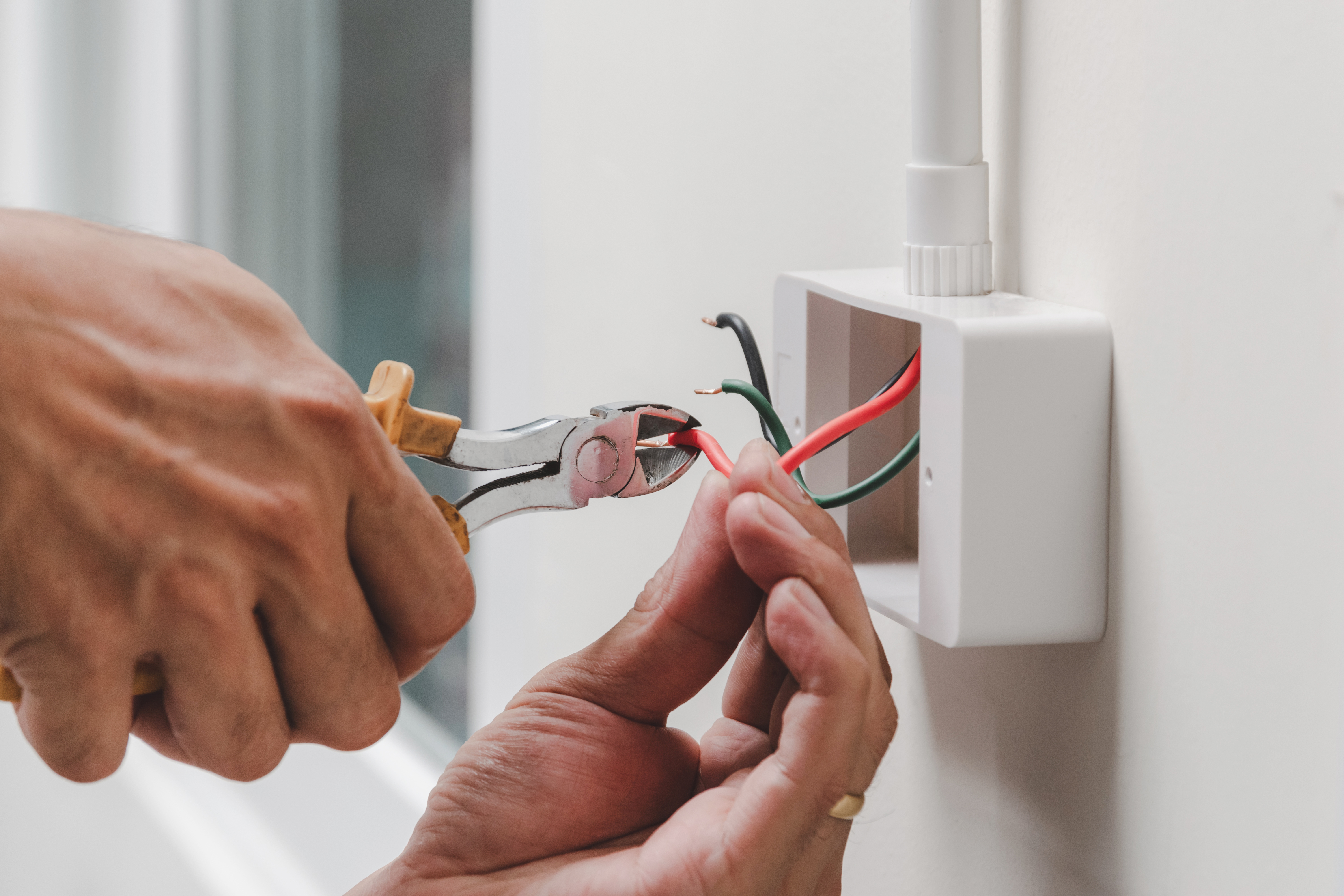
A ceiling light will usually have two or three wires: black, white, and sometimes green. Black wires are positive, or hot, while white wires are negative, or neutral. The green wire is the grounding wire. 

When you’re wiring the light, connect black to black, white to white, and green to the grounding screw.

The Waterford, VT homeowners’ guide to electrical services

From average costs to expert advice, get all the answers you need to get your job done.