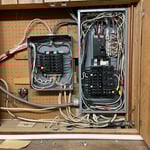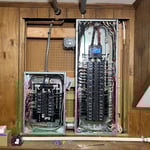






Top-rated generator install pros.

Get matched with top generator install pros in Copper Hill, VA

Enter your zip and get matched with up to 5 pros

Need a pro for your generator install project in Copper Hill, VA?

Select your specific project to find the pro for you.

Find Generator install pros in Copper Hill

Avatar for Tech Connect Electric LLC
Tech Connect Electric LLC
5.0(
23
)

Serving Copper Hill, VA and surrounding areas

Approved

Super Service Award Winner

In business since 2024

Free estimates

Emergency services offered

"The customer service was impeccable. They were honeat, fair, and super friendly. Without a doubt I would hire this team again for any electrical needs in the future."

Under cabinet LEDs
Before
After
Response time7 hrs
5 neighbors recently requested a quote
Recommended by85%of homeowners

Avatar for Bobcat Electric LLC
Bobcat Electric LLC
5.0(
5
)

Serving Copper Hill, VA and surrounding areas

Approved

In business since 2022

Free estimates

Small jobs welcome

We are dedicated to providing our clients with the very best in service, installation, and repair for all phases of your electrical needs. We specialize in a variety of residential and commercial services and take pride in the attention to detail put into each of the projects we're involved with. We also offer complete Gas Service, including generators, gas stoves & water heaters. We're known for our quality work and the integrity of our business. We look forward to building long-term relationships with our clients, and guarantee your satisfaction.

7 neighbors recently requested a quote
Avatar for Maxfield Electric, LLC
Maxfield Electric, LLC
5.0(
5
)

Serving Copper Hill, VA and surrounding areas

Approved

In business since 2022

Free estimates

Credit card accepted

Maxfield Electric, LLC was found in 2022 on the core principles of integrity, quality, and commitment to excellence. These core principles are visibly in every phase of our company?s operation. We take great pride separating ourselves from competition by delivering a high quality of workmanship and raising the standard of electrical contracting.

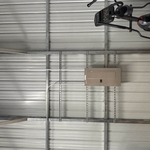
40x60 metal building

+12

7 neighbors recently requested a quote
Avatar for Cline Electrical
Cline Electrical
5.0(
1
)

Serving Copper Hill, VA and surrounding areas

In business since 1996

Free estimates

Emergency services offered

"Arrived on time. Did a great job. When there were problems, they were quick to remediate the issues. I have used Cline Electric on many jobs and routinely go to them for my electrical needs."
Additional Photos
Additional Photos
Additional Photos
Electrical Panel
EV Charger

+17

Recommended by100%of homeowners

Avatar for The Home Depot - Generators
The Home Depot - Generators
2.5(
1
)

Serving Copper Hill, VA and surrounding areas

In business since 2003

Free estimates

Small jobs welcome

Today, we're proud to be the world's largest home improvement retailer. In 2,300 stores across North America, we aspire to excel in service – to our customers, associates, communities and shareholders. That's what leadership means to us. That's The Home Depot difference.

Generators
Generators
Generators
Generator
Generators

+5

Showing 1-10 of 18
Generator Install questions, answered by experts

Generally, you’ll want to keep between 60 and 70 feet between the generator and the transfer switch. There are a few reasons for this, including:

  • The distance reduces the noise coming from the generator into your home.

  • It increases efficiency because you won’t have a voltage drop from this short of a distance.

  • Prevents carbon monoxide poisoning: keep at least 15 feet between your generator and an open window. 

Yes, in most municipalities, you will need a permit to install a permanent home generator, including emergency backup, partial-home, and whole-home models. Because these installations involve significant alterations to your home's electrical system and produce exhaust fumes, local governments often require a permit or inspection for safety purposes. A generator permit typically costs between $50 and $250, depending on your location. Your electrician or certified installer can usually handle the permitting process for you, but you will be responsible for the cost. It's a good practice to confirm with your installer that they will pull all necessary permits before work begins.

A portable generator can supply power to selected appliances and circuits in a home, but it's generally not designed to handle the entire household's electrical needs simultaneously. Portable generators have limited wattage capacity, so they are only designed to power essential devices and electronics temporarily until local power is restored. If your power needs outweigh the capabilities of a portable generator, consider installing a whole-home generator instead.

To determine the right size generator for your house, you should calculate the total wattage of the appliances and devices you want to power during an outage. List all essential items, note their start-up wattages, and add them together.

Here are some typical wattage requirements for common appliances:

  • Refrigerator: 600 watts

  • Large dehumidifier: 700 watts

  • Large window air conditioner: 1,400 watts

  • Water heater: 3,000 to 4,500 watts

  • Electric furnace: 5,000 to 25,000 watts

A 7,500-watt generator might be sufficient for essentials like a refrigerator, freezer, well pump, and lighting circuits. However, for high-demand items like a water heater or furnace, a whole-home generator is a better choice. A portable generator may be enough if you only need to power a few critical items.

While home square footage can offer a rough estimate, it is not always a reliable indicator. For reference, here are some typical generator sizes based on square footage:

  • 1,000 sq ft: 6–9 kW

  • 1,500 sq ft: 7–10 kW

  • 2,000 sq ft: 10–14 kW

  • 2,500 sq ft: 12–16 kW

  • 3,000 sq ft: 16–20 kW+

For the most accurate sizing, consult a professional who can calculate your home's peak and average power consumption and recommend the optimal generator.

No, you should never plug a generator directly into a wall outlet in your house. This practice is extremely dangerous, often illegal, and can cause "back-feeding," where power from the generator flows back into utility lines, creating a life-threatening hazard for utility workers. It can also damage your home's electrical system, including appliances like pumps and HVAC fans. If the main power is restored while the generator is connected, it can destroy the generator and cause an electrical fire. To safely connect a generator, you must use a professionally installed transfer switch or an interlocking kit, which prevents back-feeding by disconnecting your home from the utility grid before the generator provides power.

The Copper Hill, VA homeowners’ guide to generator installs

From average costs to expert advice, get all the answers you need to get your job done.