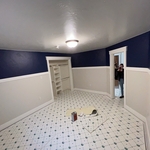
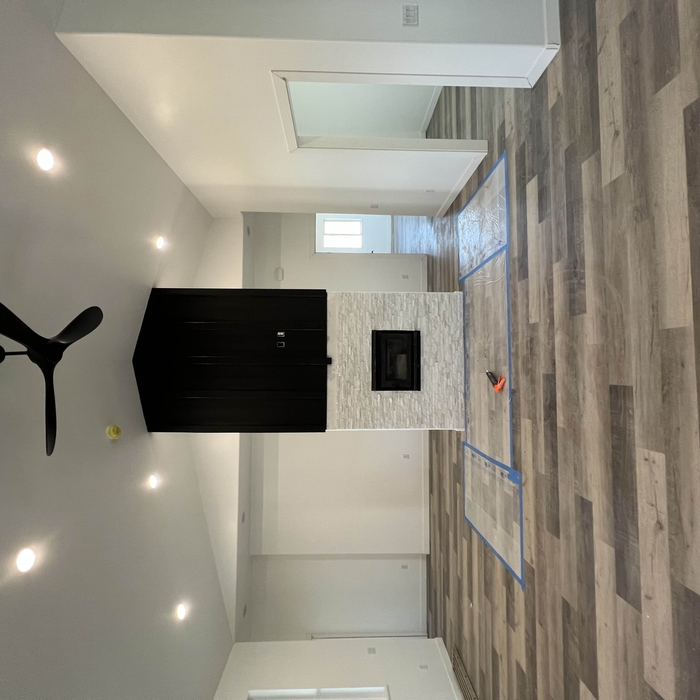
"Accent Design and Remodel are EXCELLENT! Up front, clean, and just over all very professional. I definitely will be calling back for my next project."
Designs 4 U Painting is committed to excellence in every aspect of our business. We uphold a standard of integrity bound by fairness, honesty, and personal responsibility. Our distinction is the quality of service we bring to our customers. Accurate knowledge of our trade combined with ability is what makes us true professionals. Above all, we are watchful of our customers' interests and make their concerns the basis of our business. 25 + years experience.
Ernz Painting is dedicated to providing our customers with the best quality and craftsmanship. We are here to build relationships with our customers and communities. No job is too big or too small! We look forward to working with you!
Wood stain does go bad, but it will last in the can for between three and six years, provided you use proper storage techniques. Storing wood stain in open containers or in extremely low or high temperatures will cause your wood stain to become unusable much more quickly. Water- and latex-based wood stains typically last for just two to four years, while oil-based wood stains can last for three to six years.
Yes, you can waterproof any wood that has not already been treated. A good way to test this is to splash some water on it. If the water starts to bead up, the wood is treated and most likely doesn’t need another coating.
Limewash and whitewash are two techniques used to give brick a light, matte finish, but they differ in composition, application, and permanence. The best choice depends on your aesthetic goals and the specific surface.
Composition
Limewash: A natural and environmentally friendly option made from limestone, water, and sometimes pigments. It is breathable and soaks into porous surfaces like brick.
Whitewash: Traditionally made from lime, water, chalk, and binders, but a similar look can be achieved with watered-down white paint. It is paint-based and sits on top of the surface.
Appearance and Finish
Limewash: Provides a natural, textured appearance that allows the brick's character to show through. It offers a more traditional finish.
Whitewash: Creates a softer, more opaque finish, often used for a rustic or shabby-chic style.
Application and Permanence
Limewash: Is semi-permanent and can be removed, making it a good choice if you might want to change the look in the future. It requires more skill to apply and cannot be used on previously painted brick.
Whitewash: Is a more permanent solution. It is more forgiving to apply and can be used on painted brick. However, because it sits on the surface, it can trap moisture.
Ultimately, if you want a breathable, natural, and reversible finish for unpainted brick, limewash is a great option. If you need a more permanent, opaque coating that can be applied over painted surfaces, whitewash is the better choice. Whitewashing may also be more economical, costing approximately $1.40 to $4.20 per square foot.
When applying multiple coats, wait four to six hours for each coat to dry. Not waiting long enough can result in streaks, peeling, and uneven color. Plus, it will be more difficult to discern where the second coat has already been applied.
Wood stains last anywhere from two to five years, depending on exposure to the elements, your local climate, the type of stain, and the surface it’s on. For instance, vertical surfaces last longer than horizontal surfaces. Some types of woods, like dense hardwoods, will require a recoat yearly, as they are too dense for the stain to absorb. In any event, apply a recoat every 2 to 4 years. As for storage, a can of unopened stain can last up to 5 years, though results may vary.
The Green River, UT homeowners’ guide to painting services
From average costs to expert advice, get all the answers you need to get your job done.
How much does it cost to paint a room? Learn what you’ll pay to give your space a makeover, depending on room size, paint type, the pro you hire, and more.
You’ve likely heard of it, but do you actually know what milk paint is? Churn up some helpful info about this product and what it’s best for in our guide.