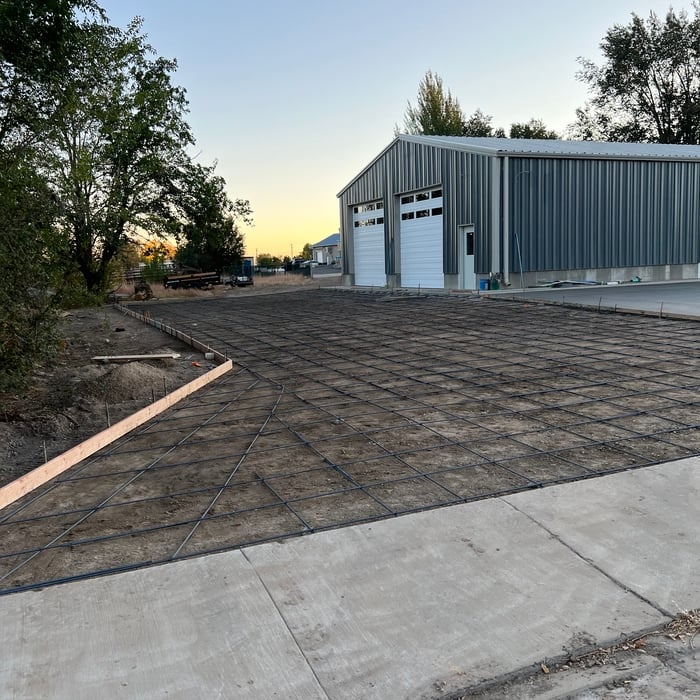
At Dirt Rich Excavating, we take pride in delivering reliable, high-quality earthwork and utility services built on a foundation of integrity, hard work, and precision. We believe in doing the job right the first time, maintaining clear communication with our clients, and showing up with a commitment to safety and professionalism. Our goal is to build lasting relationships through honest work, dependable results, and a reputation you can trust—whether we’re on a small residential project or a large-scale site development.
Hi My name is Auatin Jessop , I've been in construction for 20 years now I've been doing dirt work and house framing but our company is going into dirt work full time now and would love to work with you .
Customer satisfaction is what determines our success, which is why we take a hands-on approach. When interacting with DB BUILDING INC, you'll notice that we're particularly focused on the principles of quality workmanship, timely completion, competitive pricing and integrity in all our business dealings. We combine knowledge and research with our extensive practical experience to ensure a specialized approach for your project needs. Contact us today for a fair and accurate estimate of your project. We look forward to adding you to our long and growing list of happy customers.
"This was the easiest process. They checked what we wanted, made sure everyone working on it understood and the price they quoted came in under the original once they got into it. Will definitely be hiring these guys again for my next project!"
At SLX Excavating it is our mission to provide the highest quality of service in all aspects of our business. We are extremely thorough in services that we provide and aim to be very receptive to any client's issues, questions or concerns and handle them promptly and professionally. We take necessary steps to ensure that our clients are completely satisfied with all of our contractual and assumed responsibilities. Above all else, we will fulfill these responsibilities while maintaining the highest ethical standards in both of our work and our character.
A perc test can take anywhere from one to eight hours to complete. The total time depends on factors like the amount of excavation required, the depth and width of the holes, and whether multiple test holes are needed. For a single hole, the process of filling it with water and monitoring the drainage rate usually takes less than an hour. Professionals can often complete the entire test in a single day. While it's possible to get results the same day, some companies may take a few days to provide the official report.
No, fire blight does not survive free in the soil but instead is carried through insects, animals, rain, or wind during the spring. Keep in mind that it can also spread on tools, which is why you should always disinfect them in between cuts.
To determine whether your homeowners' insurance will cover crawl space repair, consider the cause of the issue. Repair may be covered if the problems were caused by an event that the insurance covers, such as vandalism or a windstorm. However, companies won't cover the repair if the issues are caused by neglect or wear and tear.
A mini excavator can dig between 5 and 11 feet deep, depending on the type and size of the mini excavator. Mini hydraulic excavators are more powerful and can reach deeper into the earth, but electric models have a more limited range. Mini excavators over two tons in size are also more powerful and able to dig as deep as 11 feet.
Digging a well can cost between $20 and $25,000,depending on your needs. If you’re looking to dig a well yourself, all you need is a shovel. If you’re looking to have a well drilled by a professional, you can expect to pay around $15 to $30 per foot. The total cost of drilling a well will average to $5,500.
The Green River, UT homeowners’ guide to excavation services
From average costs to expert advice, get all the answers you need to get your job done.
Excavation costs $1,500 to $6,300 for most residential projects—but it depends on factors like the size of the area. This guide will help you plan a budget.
You can't have an in-ground pool without digging into the ground. How much does pool excavation cost, and can you take it on yourself? Our guide explains.