



Top-rated electricians.

Get matched with top electricians in Holliday, TX

Enter your zip and get matched with up to 5 pros

Need a pro for your electrical service project in Holliday, TX?

Select your specific project to find the pro for you.

Find Electricians in Holliday

United Lightning Rods
4.9(
64
)
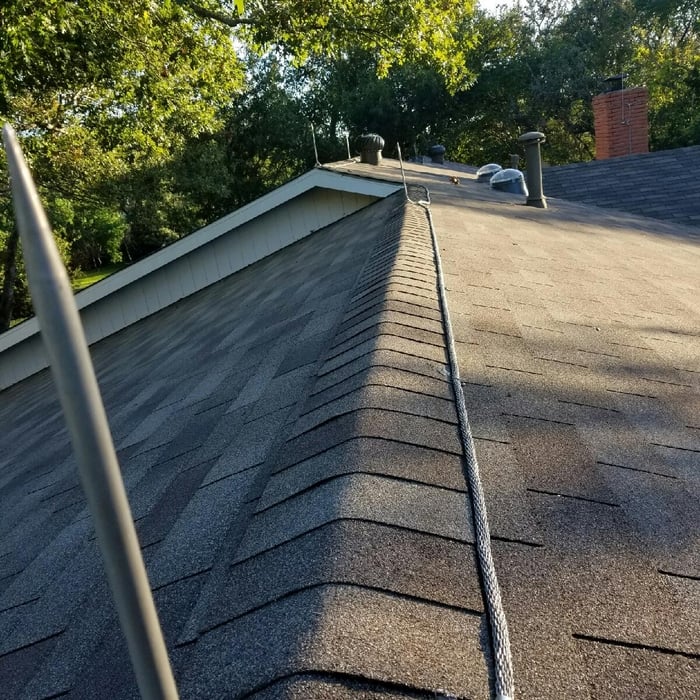
Lightning Protection - Install or Repair

Serving Holliday, TX and surrounding areas

Approved

Super Service Award Winner

In business since 1941

Free estimates

Warranties offered

"Ed Riley is extremely knowledgeable about what causes lighting and how to protect from it. He explained to me which and how structures develop static electricity that lead to lighting discharges in a way that the physics made sense to me. They were also reasonably priced and kept their word. Definitely recommend them."
Response time2 days
Response rate99%
82 neighbors recently requested a quote

Avatar for Red, White, and Blue Lightning Protection
Red, White, and Blue Lightning Protection
4.7(
78
)
Lightning Protection - Install or Repair

Serving Holliday, TX and surrounding areas

In business since 1970

Free estimates

"Honest family business that does outstanding work, quickly? How can you top that. He explained a lot about lightning and the various dangers. Given my tall, metal roofed home in a wooded setting, I needed lightning protection. I've never had a problem in 23 years, until the past 3 months. The frequency and intensity of electrical storms is increasing. I had two close calls (at the expense of over $1,000 of electronics (that I had plugged into expensive surge protectors!) With something as important as lightning protection, go with experience. Red, White, and Blue has that!"
Lightning rod system
Lightning rod residential

+5

Response time4 hrs
Recommended by100%of homeowners
Showing 1-10 of 48
Electrical questions, answered by experts

If you’re someone who likes to tinker around the house and make DIY repairs, a multimeter or voltmeter can be a great tool to have around, especially if you’re comfortable with electrical repairs. That said, if working with electricity feels out of your depth, you don’t need to invest in a multimeter. Reach out to an electrical pro for any electrical work you need done if any part of you is hesitant about a project.

No, it’s extremely dangerous to cap off live electrical wires. Working with live wires puts you at serious risk of electric shock, which can cause injury or even be fatal. Whenever you need to cap off electrical wires or complete any electrical work in general, it’s essential to shut the power off at the breaker before you begin.

If you need to run a wire from the meter to the breaker box, start by turning off the power using the main switch to avoid injury risks from live wires. Then, locate the ground wire from your meter and connect it to the ground bar of the breaker box. Connect the neutral wire using the same method to improve your circuit efficiency.

Next, locate the hot wires running from the main switch to the meter. To connect them to the correct terminals from meter to breaker, unscrew the nuts of the breaker hotwire terminals, insert the positive hotwire, and ensure it’s firmly attached. Finally, secure the wires with electrical tape and wire tie cables before re-securing your breaker box. Keep in mind that this process can be dangerous, so don’t hesitate to hire a local electrician.

Different fences use different amounts of electricity, but their operating costs are very low overall. Electric fences pull between 4 and 25 watts from the system if you have an average-sized yard. Barring any complicated math, you can expect an average electric fence to cost less than $5 a month to run. Aboveground electric fences, which are not typical for residential use or small animals, can cost more, but you shouldn't notice a significant change in your electric bill. 

Yes, but our analogy with the water hose doesn’t really work here. You see, electrical flow isn’t constant: It ebbs and flows like waves, coming in pulses of power. Hertz measures the rate of change in the flow of electricity, or how often it ebbs and flows. For example, 60Hz means that the electrons pulse through wiring 60 times per second. When they are pulsing, they’re in a brief retreat. Almost all United States equipment is rated for 60Hz.

The Holliday, TX homeowners’ guide to electrical services

From average costs to expert advice, get all the answers you need to get your job done.