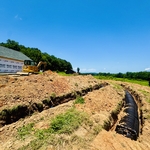
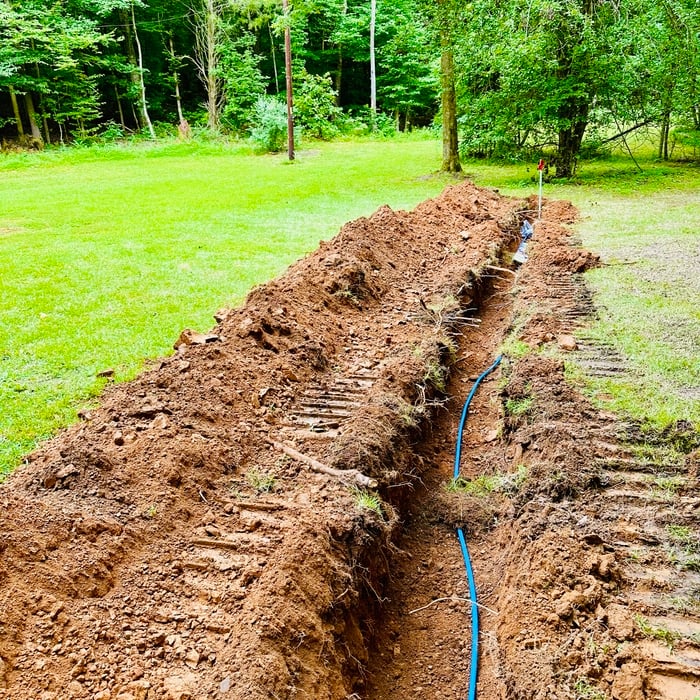
"I have been in construction for 45 years… This is by far the best septic system installers I have ever seen! I work out of state and They came out and completely installed my system and got it inspected with zero issues.. They Took drone footage of the install and the backfilling the fill lines so I would know everything about the system. This is a true professional company !!"
Hi, I'm Isaiah, owner of Highline Excavation. I provide dependable excavation services throughout Owensboro, Bowling Green, Henderson, Evansville, and the surrounding areas. Whether you need a building pad, grading/sloping, trenching, gravel driveway installation or repair, land clearing, small demolition, or junk removal, I show up on time, work hard, and treat every job like it's my own property. If you're looking for honest work, fair pricing, and someone who takes pride in doing the job right the first time, I'd love the opportunity to earn your business. Reach out for a free estimate!\n
My name is Joseph, the owner of ALLpoint Multiservices LLC. We are very professional and we offer several services such as Delivery-Cleaning & Moving. \n\nWe are reliable-fast & always on time.\n\nWe are the Company that you can Trust.\n\n
Leedy Farms & Land Management LLC is a locally owned and operated land management, excavation, and property improvement company based in Buchanan, Tennessee. Established in 2023, our team brings decades of combined hands-on experience in heavy equipment operation, excavation, land clearing, grading, property maintenance, welding, fabrication, construction support, and industrial work.\n\nWe serve West Tennessee and surrounding areas and are willing to travel for larger projects. Our services include excavation, land and lot clearing, tree and brush removal, driveway and road work, gravel spreading, grading, drainage improvements, bush hogging, site preparation, and property cleanup.\n\nWe believe in honesty, dependability, hard work, clear communication, and treating every customer's property like our own. We take pride in doing the job right from start to finish.\n\nFrom clearing to completion – we do it all!
"Everything went very well with the yard he had to work with, We thought. Jason was very informative, he let us know at every stage what was going to happen. Very thoughtful ,nice and fair person. He was reasonable as far as pricing the job at task. Thank you Jason.?"
Digging a well can cost between $20 and $25,000,depending on your needs. If you’re looking to dig a well yourself, all you need is a shovel. If you’re looking to have a well drilled by a professional, you can expect to pay around $15 to $30 per foot. The total cost of drilling a well will average to $5,500.
Almost any kind of home can have a wine cellar or cabinet installed. You’ll need an area where a concrete floor can be put in, along with the necessary insulation, climate control, and ventilation systems. If you think of yourself as an aspiring sommelier, an underground wine cellar may be ideal, but it will cost significantly more.
What you choose to install really depends on your budget and how many bottles you’re looking to store.
Yes, chipmunk holes may have two or more entrances. Chipmunks can create an entire network of burrows. Having multiple entrances makes it easier for them when trying to escape from a predator, such as a snake, or if an entrance collapses due to flooding. Each entrance leads to the nesting chamber underground, which is where the chipmunk spends the majority of its time sleeping.
If you don’t have a crawl space but have a partial basement you want to make deeper, you can expect to spend a little less—between $40,000 and $90,000 on average. However, if you’re not adding new finished square footage, you won’t see much in the way of ROI.
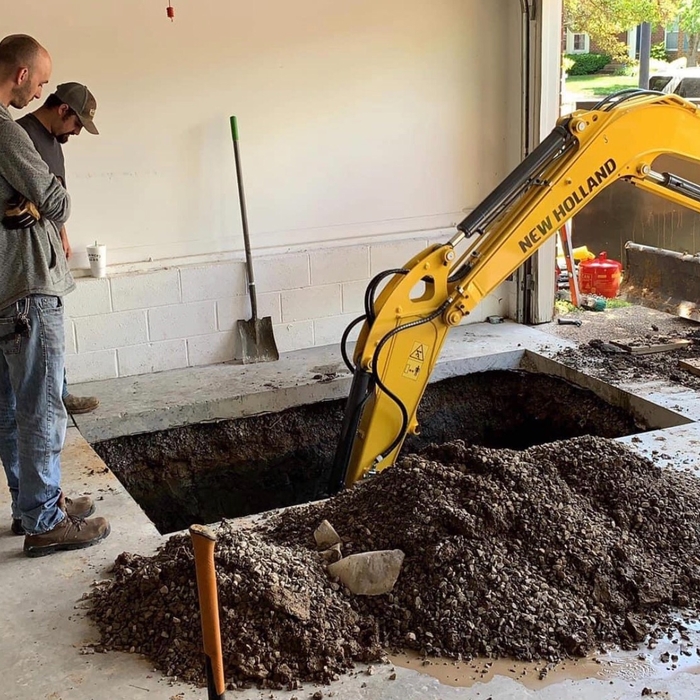
There are several different factors that influence how long it takes to excavate. For a foundation, it could take anywhere from three days to three weeks. It can take even longer if you face weather-related delays or an inaccessible site that’s riddled with boulders and rough terrain. It may also take longer if you have clay soil, which is more difficult to dig.
The Puryear, TN homeowners’ guide to excavation services
From average costs to expert advice, get all the answers you need to get your job done.
Excavation costs $1,500 to $6,300 for most residential projects—but it depends on factors like the size of the area. This guide will help you plan a budget.
You can't have an in-ground pool without digging into the ground. How much does pool excavation cost, and can you take it on yourself? Our guide explains.
Picking the right pro can make or break your project. Learn how to hire an excavation pro with the qualifications and skillset to do the job efficiently.