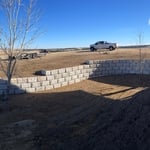
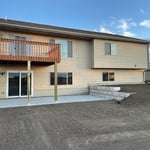
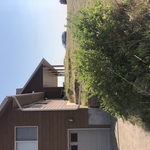
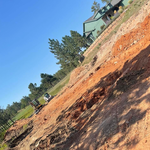
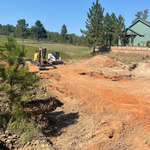
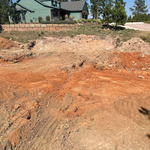
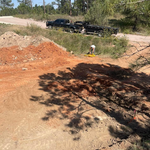
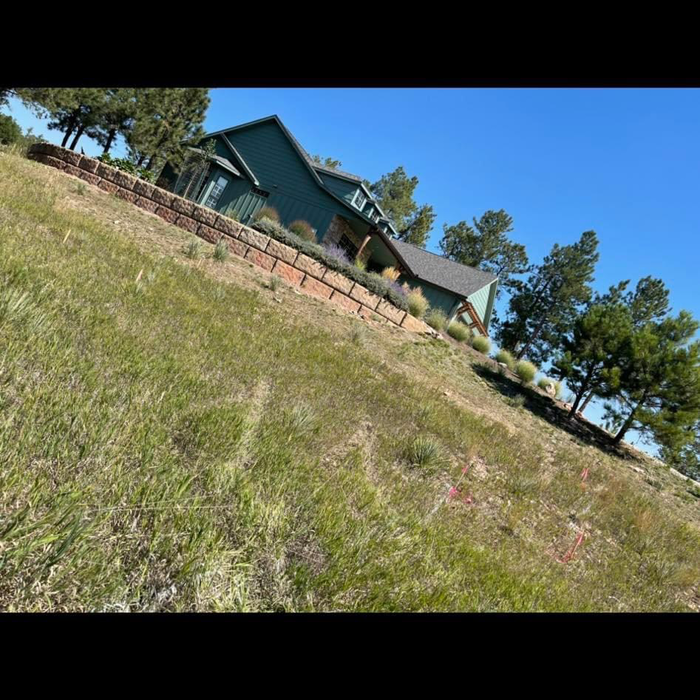
This is a new business, but I've been doing this type of work for about 10 years. \nI am licensed in South Dakota and am getting registered in Wyoming. \nI have experience running multiple types of construction equipment. If my skid steer with attachments and excavator won't do the job I can rent what is needed. No job is too small and always up for a challenge. \nI listen to the clients ideas and needs to insure the job is done successfully and to the clients expectations. I strive to complete a job in a timely manner and encourage the clients input during a job avoids delays.
"Totally Excellent! Jon and the Crew at ERE flattened out about a 1 acre square of my property (future building site) Perfectly! And it was a gnarly pit to start with full of boulders and old items like water heaters and car fenders as it was evidently a dump site for the neighborhood before I got here. Finished the project quickly and to my complete satisfaction, I recommend ERE to Everyone for your next Excavation project, big or small Jon can handle em All!"
"Colton did a great job with welding up my dump trailer. Overtime it developed some issues and without hesitation, he came and picked up my dump trailer for me and immediately got to work and got it back to need fixed as I requested within about a day and a half."
\nVanDerVliet Excavating LLC is committed to excellence in every aspect of our business. We uphold a standard of integrity bound by fairness, honesty, and personal responsibility. Our distinction is the quality of service we bring to our customers. Accurate knowledge of our trade combined with ability is what makes us true professionals. Above all, we are watchful of our customers' interests, and make their concerns the basis of our business.
The average cost of excavation is approximately $3,200, with typical projects ranging from $500 to $15,000. Depending on the contractor, you may be charged between $50 and $200 per cubic yard or an hourly rate of $40 to $180 for an excavation specialist. The total cost is influenced by several factors, including the project size, the amount of soil to be removed, and the soil's condition. Hard soil, tree roots, or excessive rocks and clay can increase the price, potentially adding $200 to $1,200 to the final bill. Other factors that can drive up costs include the presence of nearby structures that complicate the work or tight spaces that require manual excavation instead of heavy machinery.
Underground downspouts refer to the sections of downspout extensions that lead away from your home and gutter system. While they cost more than traditional extensions, they can provide several benefits, such as less frequent damage and no need to move them for lawn care tasks. Whether they're worth it or not depends on your budget at installation time and how much convenience they'll add to your situation.
Chipmunks dig their burrows about three feet deep and up to 30 feet long. The entrances can be two inches wide or more. Chipmunks are fiercely protective of their burrows and use them to protect the nuts and seeds they gather for the long winters.
The cost to repair a crawl space runs between $1,500 and $15,000, depending on the extent of the damage. Major flooding or water repairs can cost up to $10,000 for removal and repairs. If you simply need to clean your crawl space, expect to pay between $2,000 and $6,000 for a major cleanout. Replacing a crawl space beam due to rot or damage can cost between $1,500 and $5,000, while removing and replacing damaged insulation costs between $1,000 and $4,000.
Whether you grind or dig up and remove your tree stump depends on your landscaping goals. Using a stump grinder leaves the root system in place for it to decompose over time, whereas digging up the tree stump removes the roots and the stump. Overall, stump grinding is a far simpler process since you won’t need to deal with the roots. Stump removal will make your yard look like a demolition site, but you’ll have an easier time replanting in the same place as your former tree.
The Wall, SD homeowners’ guide to excavation services
From average costs to expert advice, get all the answers you need to get your job done.
Excavation costs $1,500 to $6,300 for most residential projects—but it depends on factors like the size of the area. This guide will help you plan a budget.
You can't have an in-ground pool without digging into the ground. How much does pool excavation cost, and can you take it on yourself? Our guide explains.