"Jim is local. It went great. Jim Ferrell is a professional of the highest caliber. Responded quickly, took care of my problems, and advised me as to better means of protection than I had. He came back a second time to uninstall software that I purchased that did not provide adequate protections and installed free software that would do the job. He did the work through remote connection, but is available on site if necessary. For those people needing help on getting red of malware, viruses , etc. on your computer, Jim is local, better than all thse remote out of state location providers, is a mature, highly trained professional in this area. If you go to local computer stores you get very young people that can do a basic job, but are no where near the professional level of Jim. I highly recommend Jim to anyone that needs these type services. "
"AHS is ok. They cover repairs of most everything under the roof of your house. The companies that contract with them are not always the best. You call AHS with the issue, they send a fax to the repair company and give you the contact info. If they don't contact you within 24 hours, you call them. Sometimes they answer, sometimes they don't. When they arrive (usually three days or so later), they service the item. if it has issues within the 90 days, you call AHS again, they are sent out with no charge. If the serviceman decides the unit is unrepairable, AHS will allow you to choose a replacement from their listing (usually not as good as what you have) they will install and remove your old item, or give you wholesale amount to buy and install your own. Prices vary on what you want covered and what you want the copay to be, plus where you live. For me it is 49.99 per month with a 75.00 time of service order. You can have more than one item serviced at the same time under the same fee. If you have a SEAR product the repair guys are great. Not that wild about the other ones they send out. But it is a big savings compared to calling someone on your own. The cost of service is only the 75.00 copay."
An HVAC system typically lasts between 10 and 30 years, with an average lifespan of 15 to 25 years. The longevity of the system is influenced by factors such as the quality of the unit, usage frequency, local climate, and how well it is maintained. Regular maintenance, including cleaning, filter replacements, and professional inspections, can help maximize its lifespan. Different components within the system have varying life expectancies. For example:
Furnaces: 15 to 30 years
Boilers: 20 to 35 years
Air Conditioners (AC units): 12 to 20 years
Heat Pumps: 10 to 20 years
Ductless Mini-Splits: 10 to 30 years
You can use a boiler and a furnace, although it’s not common to use both for whole-house heating. For example, your furnace may take care of HVAC heating through your vents, while a boiler powers your floor-based radiant heating in the bathrooms. Mixing and matching like this gives homeowners a variety of heating possibilities.
The average lifespan of a boiler is typically between 15 and 20 years, though some may last for as little as 10 years while others can reach 30. A boiler's longevity is influenced by several factors, including the quality of the unit, proper installation, and consistent professional maintenance.
The material also plays a significant role. Older boilers made from durable cast iron can last for over 20 years, with some functioning for up to 50 years. However, it's important to consider their lower efficiency, which can lead to higher utility bills. Modern boilers, often made from steel alloys, are designed to withstand high pressure and temperatures and have an average lifespan of about 20 years.
To maximize your boiler's lifespan, ensure it is installed correctly, have it professionally maintained each year, and address any necessary repairs immediately.
The primary differences between a heat pump and a boiler are their function and how they produce heat. A heat pump is a versatile system that provides both heating and cooling by moving ambient air and altering its temperature. In contrast, a boiler is solely a heating system, often working with a furnace or AC unit as part of a larger HVAC system. In terms of heat production, a heat pump generates heat more slowly and at a lower temperature, requiring a large convector for distribution. A boiler, however, produces a large amount of high-temperature heat that it emits through smaller radiators.
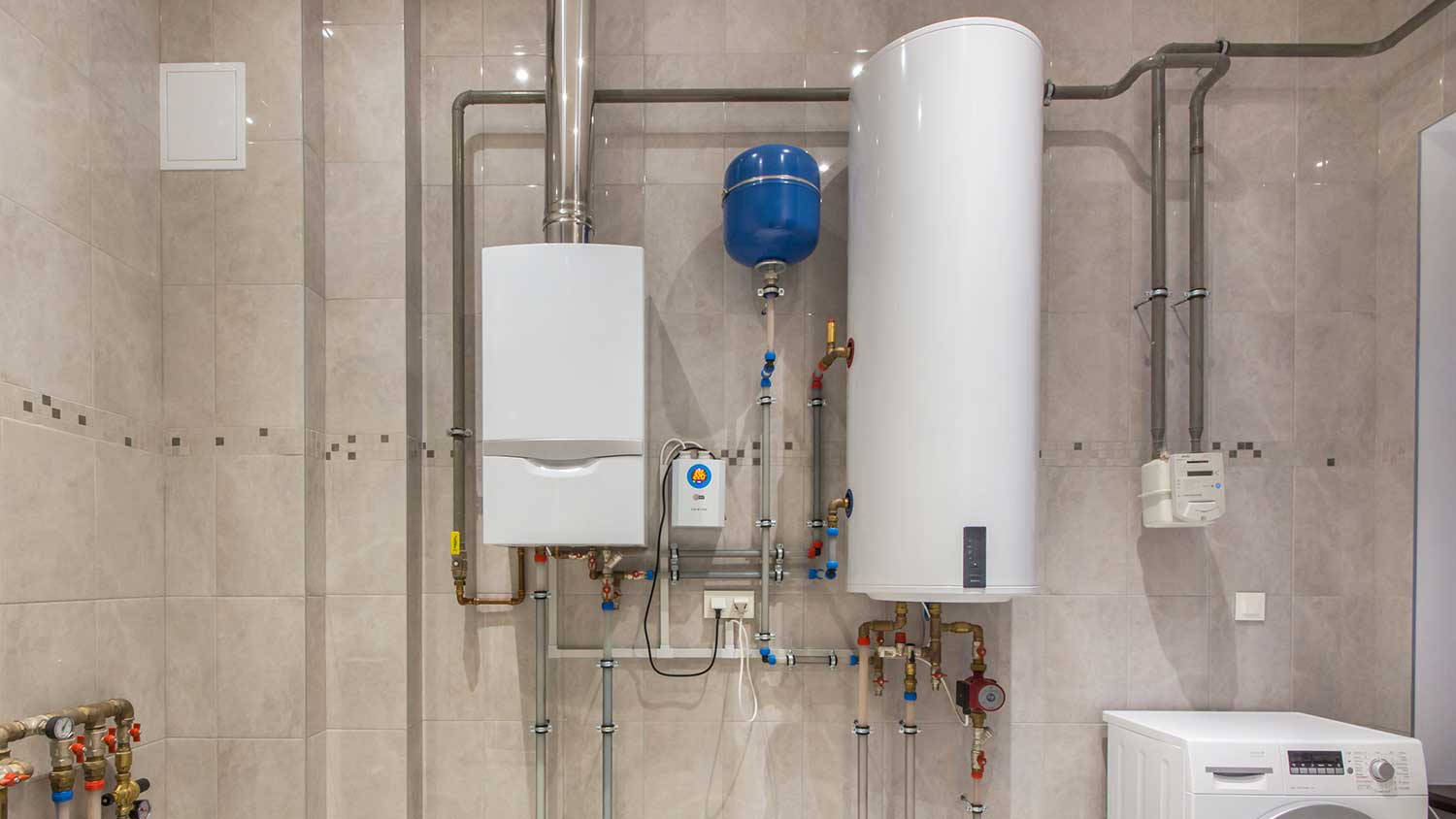
Most home boilers will need an expansion tank. That’s because these boilers are closed-loop systems, where the water is trapped. An expansion tank is needed when the boiler heats the water and it expands, allowing air to condense in the tank to make room for the water. Other types of boilers don’t use an expansion tank, such as traditional steam boilers, but these aren’t as common. And hot water tanks may be able to use a pressure release valve instead. When in doubt, call in a pro to take a look.
The Marty, SD homeowners’ guide to boiler installation services
From average costs to expert advice, get all the answers you need to get your job done.
Discover the average electric boiler installation cost, key price factors, and ways to save. Get transparent, expert-backed estimates for your project.