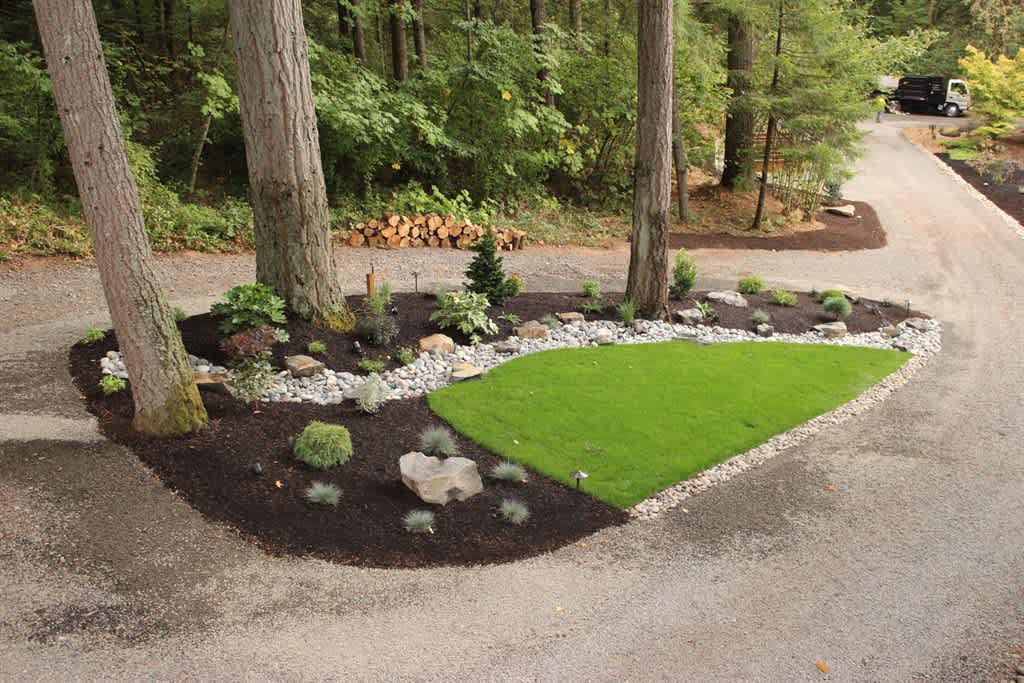
The best way to clean an overgrown yard is to create a multi-stage game plan, from clearing out the debris to cleaning up the edges around hardscaping and landscape curbing. Get rid of yard debris like worn furniture and broken tools first, then start trimming and raking what’s left. Mow the grass, trim the hedges, and rake leaves away. Once that’s complete, move on to more detailed work, like pulling weeds and replanting gardens.
If composting feels too complicated, mulching is an effective alternative. While composting focuses on breaking down yard waste to feed the soil, mulching uses that same organic material as a protective top layer. It's a quick way to get value from leaves, grass clippings, and other yard debris without the time or effort composting requires.
There are several ways to decompose yard waste quickly. The first step is to move all debris into a compost bin or pile. From there, microorganisms, bacteria, and insects will break down the yard waste into compost. To speed things up, shred the waste into smaller pieces, add live worms to the pile, or introduce nitrogen-rich compost accelerators like grass clippings, coffee grounds, and manure. Turn the compost over every few days. This process, called aerating, allows oxygen to get in and accelerate decomposition.
While a rented dumpster can handle a wide variety of materials, there are significant restrictions on what is allowed. Generally, you can dispose of most non-hazardous household junk, yard waste, and construction debris.
Accepted items typically include:
Furniture, carpets, old linens, and toys
Wood and yard debris
Small appliances and excess trash
Renovation waste like old finishes, building debris, and roofing materials (unless they contain lead paint or asbestos)
However, you cannot put toxic, flammable, or hazardous materials in a dumpster. Prohibited items almost always include:
Paint, gasoline, oil, and other fuels
Household cleaners and other chemicals
Electronics, batteries, and tires
Refrigerators, hot water tanks, and medical waste
Since regulations can vary by location and company, it is essential to check with your dumpster rental provider for their specific list of accepted and prohibited items before you begin.
For minor unevenness, you don't necessarily need to remove grass before leveling. You can apply a topdressing mixture to fill in low areas and even out the surface. However, for more significant unevenness or deep depressions, it might be necessary to temporarily remove the grass to ensure proper leveling and soil compaction. After filling and leveling, you can replace the grass or consider reseeding the area.
The Kimball, SD homeowners’ guide to brush chipping services
From average costs to expert advice, get all the answers you need to get your job done.
If your painted deck is less than appealing, it's time for a refresh. DIY your paint removal from your deck to enjoy your outdoor space for many seasons.
Cleaning the latex paint from your brushes is the easiest part of the entire painting process when you have the right tools and techniques. Find out how to clean your brushes like a professional painter with these three simple tips.