Top-rated concrete leveling pros.

Get matched with top concrete leveling pros in Transfer, PA

Enter your zip and get matched with up to 5 pros

Need a pro for your concrete leveling project in Transfer, PA?

Select your specific project to find the pro for you.

Find Concrete leveling pros in Transfer

Gia Construction and Masonry, LLC
New to Angi
Concrete - Injection Leveling - Mudjacking - For Business

Serving Transfer, PA and surrounding areas

In business since 2020

Gia Construction and Masonry is committed to excellence in every aspect of our business. We uphold a standard of integrity bound by fairness, honesty, and personal responsibility. Our distinction is the quality of service we bring to our customers. Accurate knowledge of our trade combined with ability is what makes us true professionals. Above all, we are watchful of our customers' interests, and make their concerns the basis of our business.\n

Blind Cat Construction LLC
New to Angi
Concrete - Injection Leveling - Mudjacking - For Business

Serving Transfer, PA and surrounding areas

Free estimates

Emergency services offered

Small jobs welcome

We invite you to experience a tradition of customer satisfaction that will exceed your greatest expectations. Our professionalism and quality workmanship will accurately reflect your taste and lifestyle. From conception to completion, we work with you until the job is done. We are ethical, honest, and easy to communicate with. \nCall us today you'll be pleased you did. Thank you

Concrete Leveling questions, answered by experts

Charges correlate with surface size, settlement depth, and access, often yielding significant savings over concrete replacement.

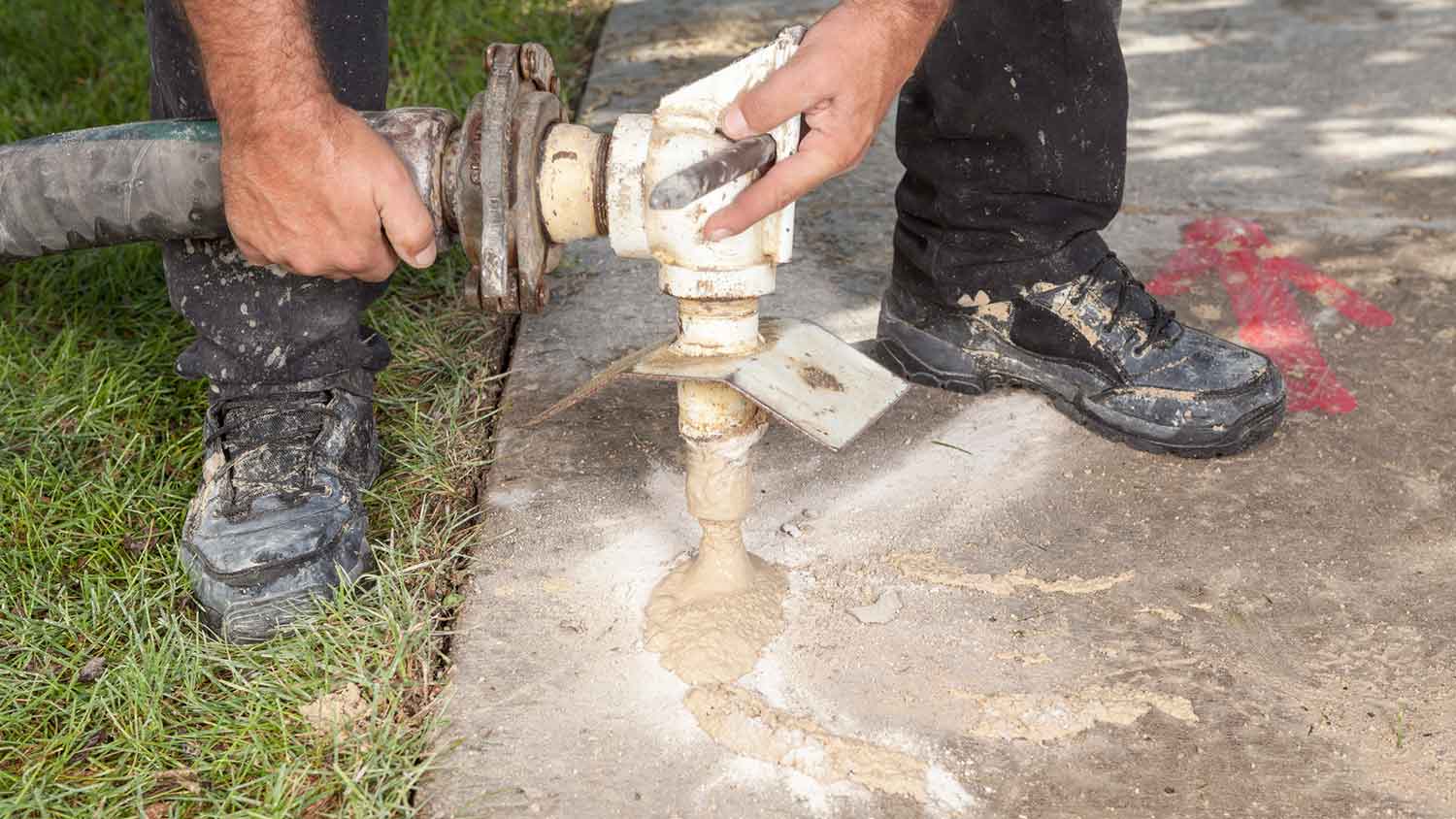
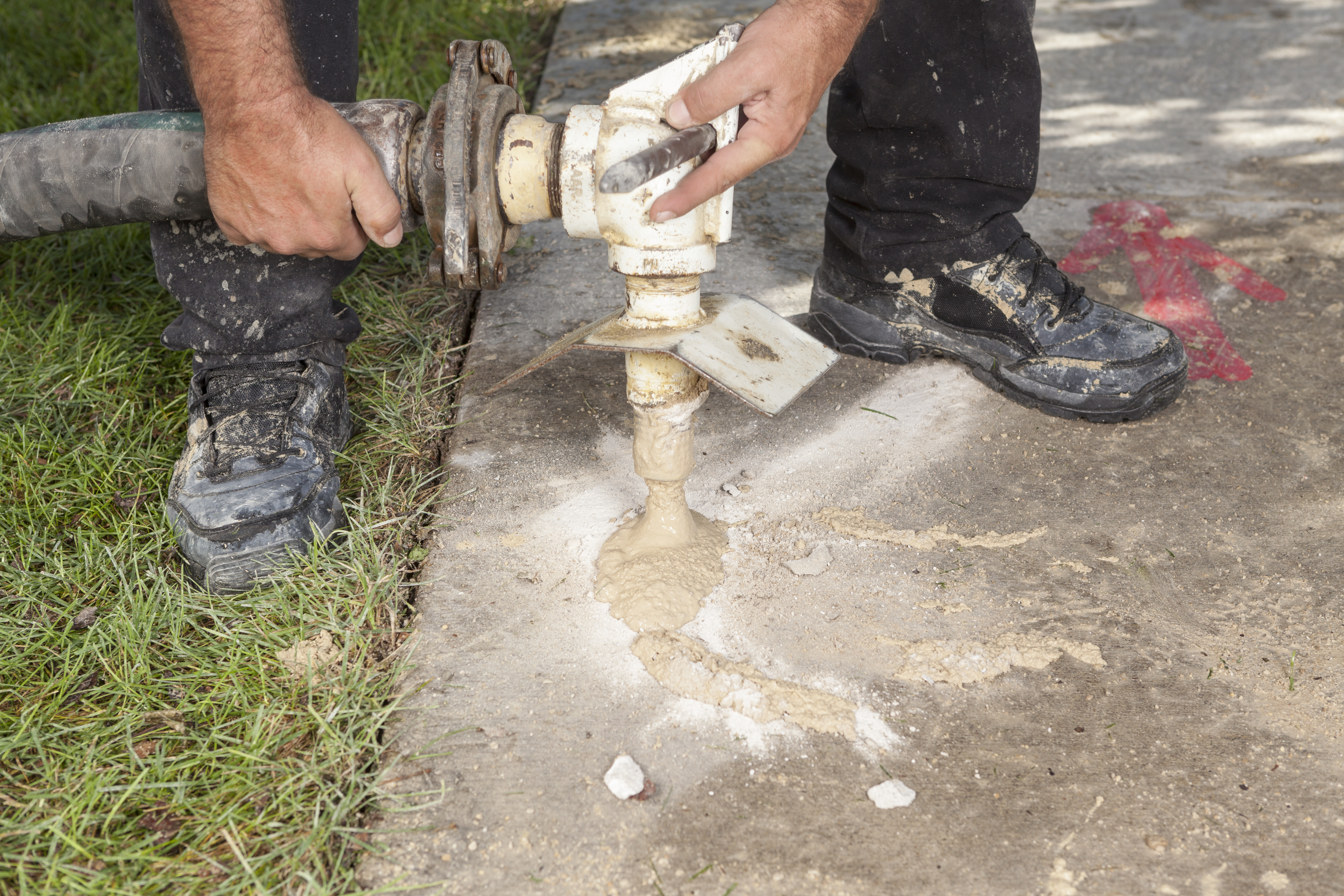
On average, a mudjacking repair lasts between five and 10 years, though it can sometimes last for well beyond a decade under ideal conditions. Its longevity depends heavily on several factors, including the condition of the underlying soil, environmental conditions like freeze/thaw cycles and erosion, and whether the root cause of the sinking, such as drainage issues, is resolved. Because it doesn't always fix the underlying problem of loose soil, mudjacking is often considered a temporary solution. Proper maintenance and evaluation can help extend its lifespan.

Trenching and boring are two distinct methods for installing underground utilities. Trenching involves digging a channel using equipment like an excavator, trencher, backhoe, or shovel. While it is a simpler process, it causes significant disruption to the surface, landscaping, and surrounding ecosystems.

Boring, also known as directional boring, is a less invasive alternative that uses a drill to create a tunnel for utility lines without disturbing the surface. This method is more precise and is ideal for installations that need to go underneath buildings, roads, or bodies of water. Although boring is less disruptive, it is generally more expensive than trenching.

Generally speaking, push piers—or steel piers—are the best option for underpinning, as they reach down to solid bedrock to find support for your foundation rather than relying on soil, which could be subject to the same issues as the soil directly below your foundation. However, the best underpinning method for your home depends on your location, how far down the bedrock is, and the type of soil in your area. Helical piers are usually the best option for sandy soil or in areas where the bedrock is too deep to use steel piers.

It’s best not to perform mudjacking in the winter unless the ground temperature remains above freezing. Freezing temperatures can cause the slurry to harden too quickly, compromising its strength and longevity. Concrete is also more susceptible to cracking and splitting in cold temperatures, so there’s a higher risk of damaging the slab during the drilling and lifting process in winter.

The Transfer, PA homeowners’ guide to concrete leveling services

From average costs to expert advice, get all the answers you need to get your job done.