






Top-rated generator install pros.

Get matched with top generator install pros in Conway, PA

Enter your zip and get matched with up to 5 pros

Need a pro for your generator install project in Conway, PA?

Select your specific project to find the pro for you.

Find Generator install pros in Conway

Avatar for The Electrical Company LLC
The Electrical Company LLC
4.3(
23
)
Fixed Generator - InstallFixed Generator - RepairGenerator - Install+4 more

Serving Conway, PA and surrounding areas

Approved

In business since 2017

Free estimates

Emergency services offered

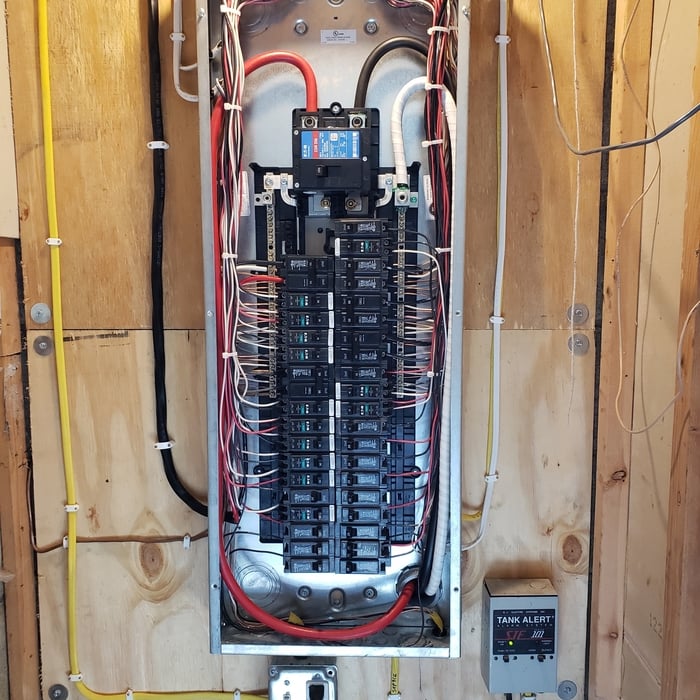
"Very personable, listened to what I was able to relay about my project, gave me realistic options and recommended one solution and stated the reasons why - worked to replace my panel until it was complete and added a generator connection that I had been wanting. Top notch work and service - will hire again for future projects!"
Additional Photos
Additional Photos
Additional Photos
Additional Photos
Additional Photos

+8

13 neighbors recently requested a quote
Recommended by63%of homeowners
Calfo Home Services
4.3(
234
)
Fixed Generator - Install

Serving Conway, PA and surrounding areas

Approved (Corporate)

In business since 2008

Emergency services offered

Warranties offered

The problem with most "pros"? Too many bad habits. \nIt's easy to get swept away in the day to day monotony, even for those that call themselves "pros". When it comes to hiring a heating and cooling technician, nobody wants to deal with being treated like a sale rather than a person, the use of scare tactics instead of education, or someone who just wants to get to job done quickly instead of correctly. \nAll our HVAC pros go through 5 years of HVAC schooling, for a total of 10,000 hours of on-the-job training. And it's not just technical training either; it's training that focuses on you, on making you feel comfortable every step of the way. We will roll out the red carpet for you, both figuratively and literally. \nRed Carpet Treatment \nDuring every visit to a home, we lay out an actual red carpet to prevent any additional mess. But what may be even more important than just protecting your home is making sure you feel like you've received the best in customer service.

Recommended by84%of homeowners
Green Acres Outdoor Services, LLC
New to Angi
Portable Generator - Repair

Serving Conway, PA and surrounding areas

Approved

Free estimates

Small jobs welcome

Offers commercial services

Hi my name is Tyler Kissling (27) I am the owner of Green Acres Outdoor Services LLC. I am looking for new contracts for the 2027 season. I have dipped my feet into lots of different types of jobs over the last 10 years and I’m ready to get to work. Weather you are wanting your lawn mowed by Someone who genuinely cares about what it looks like to designing new landscaping to make your house pop out in your neighborhood. Call me to get to work

1 neighbors recently requested a quote
Alpha
New to Angi
Generator - Repair - For BusinessPortable Generator - Repair

Serving Conway, PA and surrounding areas

Approved

In business since 2001

Free estimates

Credit card accepted

Alpha, is committed to excellence in every aspect of our business. We uphold a standard of integrity bound by fairness, honesty and responsibility in all of our jobs. We are a locally owned and operated business with more than 7 years of experience serving \nPittsburgh, PA and surrounding areas. There is no job too big, or too small for our team. Call today and let us put our experience to work for you!

...
Showing 1-10 of 60
Generator Install questions, answered by experts

With proper maintenance, a whole-house generator can last between 20 and 40 years. The specific lifespan depends on how often and for how long the generator is used, and some models may have their life expectancy rated in hours of operation. To maximize its lifespan, expect to spend around $150 to $300 per year for annual maintenance checks from a qualified technician. During these checks, a technician will inspect the engine filter, starting mechanism, fuel, lubrication, and coolant levels. Consulting your installer and choosing a low-impact fuel like natural gas or diesel can also help ensure your generator lasts as long as possible.

To power a central air system during a power outage, the whole-house generator will need to be at least 5,000 watts, and this number will significantly increase for larger units. Check the specific wattage requirements of your AC unit to choose the right generator size. Consider consulting a generator installer to ensure your whole-house generator meets your electrical load needs.

You may need a permit for a portable generator if you’ll be installing a transfer switch for your primary residence or similar work. Otherwise, a permit for other uses may not be necessary. Check your local building codes or ask a local generator installer for more information about your local regulations.

As a safety measure, you should always turn off the main breaker while operating your generator’s backup breaker. In addition, you should also switch off all appliance breakers so you don't have a power surge when the main breaker turns back on. And finally, turning off the main breaker prevents back-feeding, which endangers utility workers with the risk of electrocution. Back-feeding could also destroy the electrical circuits of your neighbors if they use the same power network.

To determine the right size generator for your house, you should calculate the total wattage of the appliances and devices you want to power during an outage. List all essential items, note their start-up wattages, and add them together.

Here are some typical wattage requirements for common appliances:

  • Refrigerator: 600 watts

  • Large dehumidifier: 700 watts

  • Large window air conditioner: 1,400 watts

  • Water heater: 3,000 to 4,500 watts

  • Electric furnace: 5,000 to 25,000 watts

A 7,500-watt generator might be sufficient for essentials like a refrigerator, freezer, well pump, and lighting circuits. However, for high-demand items like a water heater or furnace, a whole-home generator is a better choice. A portable generator may be enough if you only need to power a few critical items.

While home square footage can offer a rough estimate, it is not always a reliable indicator. For reference, here are some typical generator sizes based on square footage:

  • 1,000 sq ft: 6–9 kW

  • 1,500 sq ft: 7–10 kW

  • 2,000 sq ft: 10–14 kW

  • 2,500 sq ft: 12–16 kW

  • 3,000 sq ft: 16–20 kW+

For the most accurate sizing, consult a professional who can calculate your home's peak and average power consumption and recommend the optimal generator.

The Conway, PA homeowners’ guide to generator installs

From average costs to expert advice, get all the answers you need to get your job done.