
Top-rated lead testing and removal specialists.

Best lead testing and removal specialists near Coquille, OR

Enter your zip and get matched with up to 5 pros

Need a pro for your lead testing and removal project in Coquille, OR?

Select your specific project to find the pro for you.

Top-Rated Lead testing and removal specialists in Coquille - Updated Nov 2026

Avatar for JBC Group Solutions Inc
JBC Group Solutions Inc
4.0(
4
)
Toxic Lead - AbatementToxic Lead - Testing

Serving Coquille, OR and surrounding areas

In business since 2007

Emergency services offered

"They did a real good job. They were real professional. We can now open the garage door from the inside of the house and now it is so smooth that we have to check to see if we hit the button to open it or close it.  Before we used to know when it was opening or closing because it used to make a noise. It helps when you move to a city where you are new. "
Custom Staircases
Custom Exterior Restoration
Custom Bathrooms
Recommended by75%of homeowners
Pacific Rim Construction Services, Inc.
0.0(
2
)
Toxic Lead - AbatementToxic Lead - Testing

Serving Coquille, OR and surrounding areas

In business since 1996

Our expertise ranges from small remodeling abatement projects to preparation for complete demolition. Our abatement activities are performed above the standards of E.P.A. / D.E.Q Regulations. \n \nEach and every project, no matter how small is documented to assist the owner / property manager with the critical information often valuable in later sales, appraisal and or renovations. \n \nPacific Rim Construction takes great pride in the fact of meeting stringent site specific needs of our clients and keeping the project needs **Cost Effective**. We understand that in many applications, abatement Work Needs to be Performed **Discreetly**and **Work Windows of Opportunity can be Tight**. With all of these challenges, Pacific Rim Construction Services Inc. Sets into motion a *Site* Specific Plan** Tailored to your Needs. \n \n

Lead Testing and Removal FAQs, answered by experts

You can expect to pay between $200 and $400 for a lead inspection, where your local lead testing pro will scan surfaces and items with an X-ray fluorescent analyzer. Lead risk assessments are slightly different and run around $800 to $2,000. A pro may find lead during an evaluation, and create a removal strategy.

While not all homes built before 1978 contain lead paint, enough do, so you’ll still want to test to be on the safe side. The federal government banned lead-based paint for homes in 1978, but your state may have banned lead before that time. Around 24% of homes built between 1960 and 1977 contained lead-based paint, while 87% of homes built before 1940 contained lead-based paint.

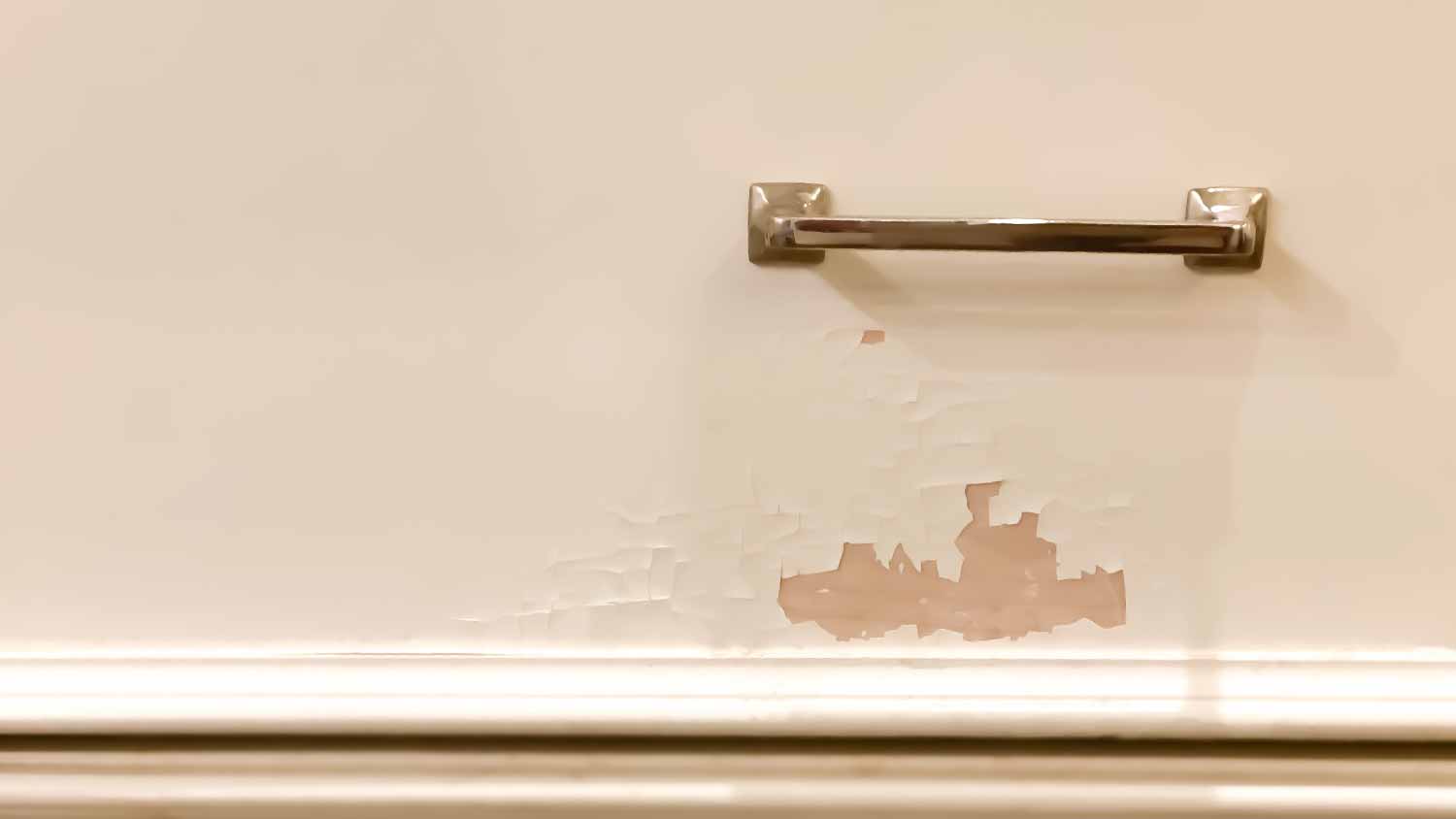
You do not have to remove lead paint if the surface is not chipping or peeling or if there are no pregnant people or children under the age of six who live in or regularly visit your home. Lead paint is a particular risk for young children whose brains and bodies are not fully developed. Experts strongly recommend that you call a pro to remove lead paint if it’s peeling or flaking, no matter who lives in the home. You can experience lead poisoning by breathing in or ingesting just a small amount of it.

Hiring a professional for mold and toxic material testing ensures precise identification of harmful substances within a home. Professionals utilize specialized equipment and techniques, providing accurate results that inform proper removal strategies, safeguarding occupant health.

According to the Environmental Protection Agency (EPA), hazardous waste is generally classified into four main categories:

1. Characteristic Wastes: These exhibit at least one of four hazardous traits: ignitability (flammable, like gasoline), corrosivity (can rust or decompose materials, like car batteries), reactivity (unstable and can explode, like aerosol cans), or toxicity (harmful when ingested, like lead-based paint).

2. Listed Wastes: These are specific wastes from manufacturing and industrial processes that the EPA has officially designated as hazardous. They include byproducts from processes that use solvents, pesticides, and other chemicals.

3. Universal Wastes: These are commonly generated hazardous items that are subject to streamlined regulations. Examples include batteries, pesticides, mercury-containing equipment (e.g., bulbs), and some lamps.

4. Mixed Wastes: This category includes waste that contains both hazardous and radioactive components, making it subject to regulation by both the EPA and the Nuclear Regulatory Commission.

The Coquille, OR homeowners’ guide to lead testing and removal services

From average costs to expert advice, get all the answers you need to get your job done.