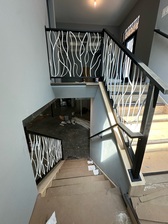
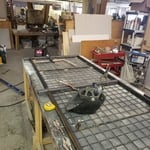
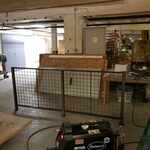
Trivett Fabrications LLC is committed to excellence in every aspect of our business. We uphold a standard of integrity bound by fairness, honesty, and personal responsibility. Our distinction is the quality of service we bring to our customers. Accurate knowledge of our trade combined with ability is what makes us true professionals. Above all, we are watchful of our customers' interests and make their concerns the basis of our business. \n \n
We are a locally owned and operated company that values honesty and integrity in all aspects of our business. Not only are we focused on quality work and outstanding results, we are also committed to educating our clients through our wide range of expertise, in turn creating a level of value unmatched by any of our competitors. We look forward to building lasting relationships with our clients and guarantee your satisfaction!
I’m Richard prewitt! I’m 22 years old I have been welding for a few years now I can do small welds on trailers, hand rails, fire escapes, swallowed metals or steels I’m dependable and show up I care about my work and satisfying the customer and ensuring the job gets done!
About Me\nHi, I’m a certified mobile welder and fabricator with years of hands-on experience working with steel, aluminum, and stainless. I specialize in custom fabrication, automotive welding, heavy equipment repair, and structural work. Whether you need a small repair or a fully custom build, I bring quality workmanship, attention to detail, and a commitment to getting the job done right the first time.\n\nI’m reliable, mobile, and can come to you with all the equipment needed to complete your project safely and efficiently. I take pride in delivering strong, clean welds and professional results every time.\n\nIf you’re looking for someone who’s dependable, skilled, and easy to work with, I’d be happy to help with your next project.
With several years of experience, we work hard to bring each customer the best possible service and quality available. We look forward to working with you on your next project. We welcome your questions and thank you for your interest.\n
We pride our company on reliability, great communication, integrity, and quality work. We are experts in our trade and will do our best to keep you as educated as we can on your particular task or project. We look forward to earning your business! Book with us online or feel free to give us a call today!\n
Jeffrey of Adams Welding LLC has been working with residential customers taking care of their metal needs for 19 years now. His quality workmanship shows in the pride of the work he is creating.
We are committed to excellence in every aspect of our business. We uphold a standard of integrity bound by fairness, honesty, and personal responsibility. Our distinction is the quality of service we bring to our customers. Accurate knowledge of our trade combined with ability is what makes us true professionals. Above all, we are watchful of our customer's interests and make their concerns the basis of our business. We have over 30 years of experience.
You should not do your own welding unless you have the proper training and experience. Most home electrical systems can only handle MIG welding, which creates weaker bonds than TIG welding and won’t work on certain metals or metal thicknesses. Both welding forms usually require the use of shielding gas, which can be dangerous to store at home. Additionally, welding machines create temperatures of over 3,000 degrees, and the sparks can blind you if you don’t have the proper equipment. As such, it’s usually better to hire a professional welder for your welding projects.
It will likely take an experienced pro less than an hour to install a ground rod, which is another reason why letting them handle the job is such a good idea. Safety concerns aside, it would likely take you much longer to install a ground rod if you decided to take this one as a DIY job.
Costs depend on unit complexity, labor, wall mounting needs, and additional accessories like floating shelves.
To maintain custom or fabricated metal structures and extend their lifespan and appearance, perform regular cleaning, apply rust prevention treatments, and use protective coatings.
Yes, but you’ll need reliable steel-cutting tools and safety gear to get started. Shipping containers are typically around ¾ inch thick, so it’s entirely possible to cut through them, but experience and the right equipment are very important. When possible, try to get a container as close to the size you want it as possible.
The Ripley, OH homeowners’ guide to welding services
From average costs to expert advice, get all the answers you need to get your job done.
When you need help with a metal project and don’t have the expertise or the time, call an expert welder for your project. Here’s how to vet and hire a welder.