








Top-rated excavation pros.

Get matched with top excavation pros in Oak Harbor, OH

Enter your zip and get matched with up to 5 pros

Need a pro for your excavation project in Oak Harbor, OH?

Select your specific project to find the pro for you.

Find Excavation pros in Oak Harbor

Avatar for Veteran's Home Maintenance, LLC
Veteran's Home Maintenance, LLC
4.3(
91
)
Landscape - Minor Grading or Resloping

Serving Oak Harbor, OH and surrounding areas

Approved

Super Service Award Winner

In business since 1973

Free estimates

Emergency services offered

"VHM power washed part of our roof which had some moss on it, the exterior of our house, landscaping rock around our house, our sidewalks and driveway. We were pleased with the job they did and the price charged for the job."
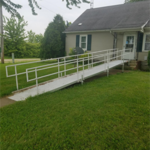
Ramp
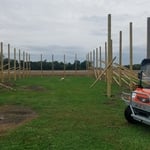
32 6x6x18 ft. post set 4 foot into a 5 foot hole.
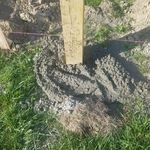
Posts set into holes before concrete
Response time1 day
197 neighbors recently requested a quote
Recommended by44%of homeowners
Avatar for Hemenway Land Enhancement
Hemenway Land Enhancement
5.0(
1
)
Landscape - Minor Grading or Resloping

Serving Oak Harbor, OH and surrounding areas

Approved

In business since 2025

Free estimates

Credit card accepted

"Shane and his crew went above and beyond to completely exceed our expectations not only in getting our concrete job and driveway work done in a very timely manner...but also in taking the extra time to really finish the job with a decorative texture that looks amazing and will last a long time. We highly recommend Shane Hemenway and his crew for your home concrete work."
12 neighbors recently requested a quote
...
Showing 1-10 of 69
Excavating questions, answered by experts

The best way to protect tree roots is to avoid the roots entirely by excavating outside the root radius of the tree. For nearby projects, it’s a good idea to construct a temporary retaining wall. But that’s not always possible, depending on the project and the root system. In these cases, consider using alternative equipment like an auger to tunnel under the ground.

Remember, tree roots can damage nearby cement foundations as they grow. If a tree is close enough to interfere with large excavations, it may be better to remove the tree than risk future problems.

A joint utility trench, or joint trench, is a long, buried ditch on a property that contains two or more utility lines rather than running the lines in multiple trenches. Some utilities, like gas and electric or electric and communication lines, are better suited to joint trenching, while others, like water and sewer, are not allowed to be in the same trench.

Septic drain lines (or leach lines) are typically buried between 18 and 36 inches underground, and should be at least 6 inches below the surface. These pipes are perforated and surrounded by filtering materials like sand or gravel. Burying the lines at this depth helps minimize odors and allows bacteria and other biological processes in the soil to effectively treat the wastewater. Burying lines too close to the surface can cause issues unless the soil is very compact and stable.

There are several methods to hollow out a tree stump, and the best one depends on your tools, experience, and priorities. Common methods include using a chisel and hammer, a chainsaw, or burning.

  • Chisel and Hammer: This is often considered the easiest approach for those with limited tools or experience, though it is the most time-consuming.

  • Chainsaw: Using a chainsaw is the fastest method, but it comes with significant safety risks, especially for inexperienced users.

  • Burning: This can be an effective method, but it is not recommended unless you can first drill holes into the stump. Without holes, the stump will be difficult to light and may not burn completely through.

A power drill with at least a ⅜-inch diameter bit can make the job quicker and easier, regardless of the primary method. While you can use a chisel or chainsaw without a drill, it will require more time and effort. Always wear protective goggles and thick gloves, as splinters are an inevitable risk.

A walk-behind trencher can cut through roots as long as they’re not too thick, making a project much easier than digging with a shovel and other hand tools. Assess your terrain and the number of trees in the surrounding area to determine if a walk-behind trencher will ease the job. Digging a trench by hand is much more time-consuming and labor-intensive. 

The Oak Harbor, OH homeowners’ guide to excavation services

From average costs to expert advice, get all the answers you need to get your job done.