Top-rated excavation pros.

Get matched with top excavation pros in Houston, OH

Enter your zip and get matched with up to 5 pros

Need a pro for your excavation project in Houston, OH?

Select your specific project to find the pro for you.

Find Excavation pros in Houston

Avatar for Russell Laine Construction, LLC
Russell Laine Construction, LLC
4.6(
14
)
Landscape - Minor Grading or Resloping

Serving Houston, OH and surrounding areas

Approved

In business since 2014

Free estimates

Warranties offered

"Our experience with Russell Laine Construction was hands down the best experience we've ever had with a contractor. From the initial contact and quote, to the finished product, Ed and his crew were a pleasure to work with. Professionalism, Communication and Workmanship were all excellent! We really appreciated the attention to detail and little extra touches that really shined through on the final product. During the construction process, we were always amazed at the little details that were added that we knew took more time and effort, but showed that Ed truly cared about the project and making things special for the homeowner. We would (and have already) recommend Russell Laine Construction to anyone looking to have quality work done on their home. You won't be disappointed!"
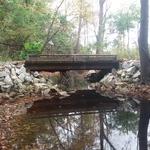
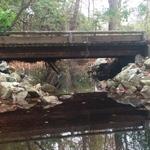
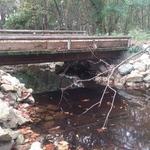
Residential Bridge
Residential Bridge
Residential Bridge
Residential Bridge
Residential Bridge

+15

Response time1 day
Recommended by92%of homeowners
Clark's Excavating
New to Angi
Building Site - Preparation and ClearingExcavation - Major Grading or Resloping

Serving Houston, OH and surrounding areas

Approved

In business since 1998

Free estimates

Offers commercial services

Clark's Excavating is committed to excellence in every aspect of our business. We uphold a standard of integrity bound by fairness, honesty, and personal responsibility. Our distinction is the quality of service we bring to our customers. Accurate knowledge of our trade combined with ability is what makes us true professionals. Above all, we are watchful of our customers' interests, and make their concerns the basis of our business.\n\n

Response time10 mins
Avatar for Kenneth Dietz
Kenneth Dietz
New to Angi
Landscape - Minor Grading or Resloping

Serving Houston, OH and surrounding areas

Approved

Credit card accepted

Offers commercial services

Hi, my name is Riley. I’m 22 years old and working hard to build my path as a general contractor. I take pride in honest work, reliability, and doing every job the right way. My goal is to provide quality craftsmanship people can trust while continuing to grow my business through hard work and dedication.

Accent Wall
Accent Wall
Accent Wall
2 neighbors recently requested a quote
...
Showing 1-10 of 87
Excavating questions, answered by experts

Trenches are typically 12 to 24 inches deep and 8 inches wide. However, the required depth depends on the specific project and local ordinances. For example, a French drain may need to be 18 inches deep, while a water pipe might require a depth of 24 inches and a drainage pipe 36 inches. Your city or county may have specific regulations, so it's wise to consult with an excavation professional to determine the correct depth for your project.

Septic drain lines (or leach lines) are typically buried between 18 and 36 inches underground, and should be at least 6 inches below the surface. These pipes are perforated and surrounded by filtering materials like sand or gravel. Burying the lines at this depth helps minimize odors and allows bacteria and other biological processes in the soil to effectively treat the wastewater. Burying lines too close to the surface can cause issues unless the soil is very compact and stable.

Directional drilling is complex and requires training to use the advanced machinery. It can be challenging to monitor the position of the drill since there’s no direct line of sight. Directional drilling can also be more expensive with a cost of $10 to $30 per linear foot compared to $5 to $12 per linear foot for trenching. 

As a general rule, the protected area should be about 1½ times as wide as the canopy of the tree’s leaves. This digging measurement can vary by tree species and the age of the tree. Of course, that can be a lot of fencing for larger trees, which is why our first step is about making difficult decisions on which trees to save.

To locate an underground downspout, you should start by identifying where the above ground gutter drains. Look for an entry point, such as a pipe or elbow leading into the ground. Follow the surface path for signs like depressions, landscaping disruptions, or wet areas after rain. You can use a metal detector or plumber’s snake to trace the pipe underground. For deeper pipes, a professional locator tool or camera inspection may be necessary. Visual markers or utility maps can also guide the search.

The Houston, OH homeowners’ guide to excavation services

From average costs to expert advice, get all the answers you need to get your job done.