






Top-rated excavation pros.

Get matched with top excavation pros in Harrod, OH

Enter your zip and get matched with up to 5 pros

Need a pro for your excavation project in Harrod, OH?

Select your specific project to find the pro for you.

Find Excavation pros in Harrod

Avatar for Bluewater Construction Group
Bluewater Construction Group
4.8(
5
)
Building Site - Preparation and ClearingBuilding Site - Preparation and Clearing - For Business

Serving Harrod, OH and surrounding areas

Approved

In business since 2023

Offers commercial services

"Raj and his crew did an incredible job building our outdoor patio. He was easy to work with, highly professional, and paid close attention to every detail. The craftsmanship is truly top-notch and we couldn?t be happier with the result. Highly recommend! We?ll be using him for any future remodeling needs!"
Surround Patio
Retaining Wall
Response time3 hrs
Response rate100%
3 neighbors recently requested a quote
Avatar for Landmark Excavation and Drainage
Landmark Excavation and Drainage
New to Angi
Building Site - Preparation and ClearingExcavation - Major Grading or ReslopingLandscape - Minor Grading or Resloping

Serving Harrod, OH and surrounding areas

Approved

In business since 2025

Free estimates

Credit card accepted

We're dedicated to providing our clients with the very best in service, installation, and repair for all phases of your plumbing needs. We specialize in a variety of residential and take pride in the attention to detail put into each of the projects we're involved with. We're known for our quality work and the integrity of our business. We look forward to building long-term relationships with our clients, and guarantee your satisfaction.\n

Response time7 hrs
...
Showing 1-10 of 73
Excavating questions, answered by experts

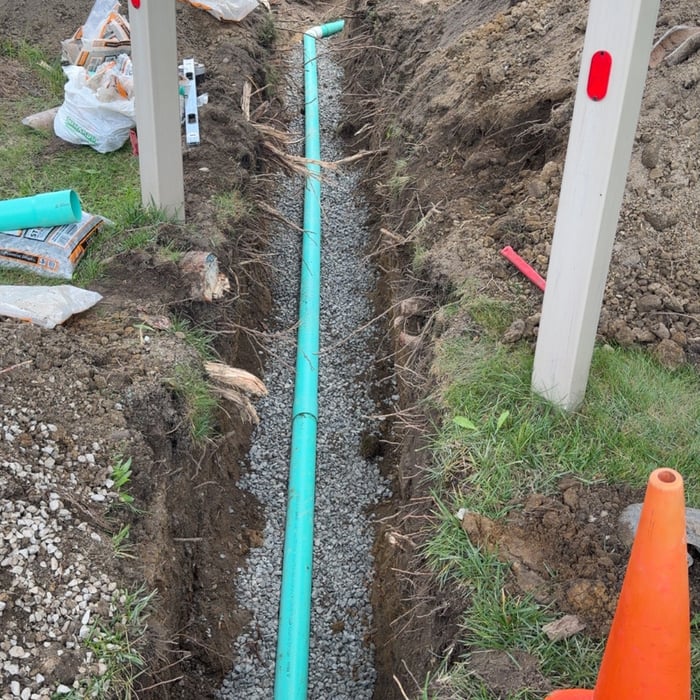
Septic drain lines (or leach lines) are typically buried between 18 and 36 inches underground, and should be at least 6 inches below the surface. These pipes are perforated and surrounded by filtering materials like sand or gravel. Burying the lines at this depth helps minimize odors and allows bacteria and other biological processes in the soil to effectively treat the wastewater. Burying lines too close to the surface can cause issues unless the soil is very compact and stable.

Landscape edging is more DIYable than trenching. You can DIY your own digging projects, but proceed carefully and only with proper knowledge of the equipment and appropriate safety measures in place. Keep in mind the project's scope and estimate how long it will take you to do it on your own. While you can certainly save money by DIYing home improvement projects, you can’t exactly hide an unfinished—or worse, ruined— landscaping job from the neighbors. It’s always safer to call an excavation pro near you to get an estimate.

There is no standard depth for burying a septic tank; they are typically buried anywhere from 4 inches to 4 feet underground. The final depth depends on several factors, including the depth of your main sewer line, the height of the bedrock, soil type, local regulations, and the property's landscape. If you plan to grow grass or plants over the tank, a depth of at least 4 to 6 inches is recommended. Deeper tanks can be more difficult to locate, but a septic professional can help find it for you.

The average cost of excavation is approximately $3,200, with typical projects ranging from $500 to $15,000. Depending on the contractor, you may be charged between $50 and $200 per cubic yard or an hourly rate of $40 to $180 for an excavation specialist. The total cost is influenced by several factors, including the project size, the amount of soil to be removed, and the soil's condition. Hard soil, tree roots, or excessive rocks and clay can increase the price, potentially adding $200 to $1,200 to the final bill. Other factors that can drive up costs include the presence of nearby structures that complicate the work or tight spaces that require manual excavation instead of heavy machinery.

Trenching is a specific kind of digging. Trenching means digging a depression in the earth that’s deeper than it is wide, often with heavy machinery. Digging refers to any kind of removal of earth in order to create a human-made depression, hole, or cut in the earth’s surface. You can dig with big tools or even with just a hand shovel.

The Harrod, OH homeowners’ guide to excavation services

From average costs to expert advice, get all the answers you need to get your job done.