








Top-rated deck maintenance specialists.

Get matched with top deck maintenance specialists in Bowling Green, OH

Enter your zip and get matched with up to 5 pros

Need a pro for your deck maintenance project in Bowling Green, OH?

Select your specific project to find the pro for you.

Find Deck maintenance specialists in Bowling Green

Avatar for CSG Specialty Fabrication
CSG Specialty Fabrication
5.0(
22
)
Deck, Fence, Patio or Porch - Clean and SealDeck, Fence, Patio or Porch - Clean and Seal - For Business

Serving Bowling Green, OH and surrounding areas

Approved

In business since 1997

Free estimates

Credit card accepted

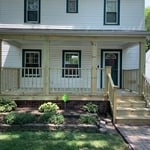
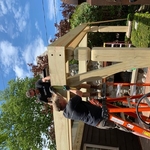
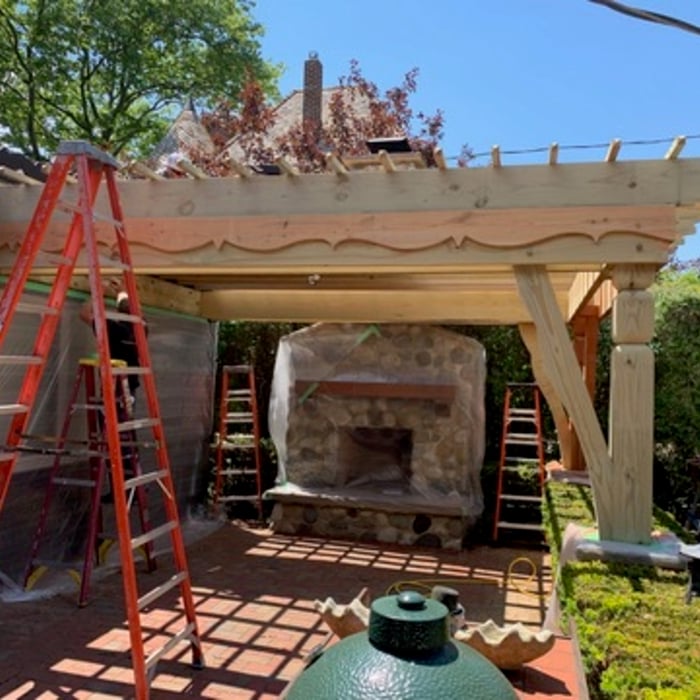
"David and his team did a wonderful job building my deck and pergola as well as replacing a step on my front porch and adding railings. Their work is wonderful and they completed the work when they said they would. I highly recommend them and I will be hiring them again to seal the deck."
Front Porch
Front Porch
Pergola Remodel
Pergola Remodel
Pergola Remodel

+47

Response time5 hrs
Recommended by100%of homeowners
Avatar for Miller & Sons Construction & Home Builders
Miller & Sons Construction & Home Builders
New to Angi
Deck, Fence, Patio or Porch - Clean and Seal

Serving Bowling Green, OH and surrounding areas

Approved

Free estimates

Warranties offered

Small jobs welcome

🏡 Dedicated to transforming homes with expertise in earthworks, concrete, pole barn building, and underground drainage. We believe in honest pricing and integrity, taking pride in our community and the quality of our work.

1 neighbors recently requested a quote
...
Showing 1-10 of 66
Deck Maintenance questions, answered by experts

Ideally, a gate should be able to swing both in and out. However, if it can only open in one direction, it is generally best for it to swing inward. This is often the safest option, especially for deck gates near steps, as you'll want the gate to swing away from the stairs. An inward swing also prevents the gate from opening into a public space, like a sidewalk, and can be more convenient when carrying heavy items like a wheelbarrow into a garden.

There are exceptions, however. The layout of your property may require a different approach. For example, if your property is on a slope, the gate may not be able to swing inward. You should also ensure the gate can open fully without colliding with any objects or blocking access to other areas. For a backyard garden gate where public access isn't a concern, the direction it swings is largely a matter of personal preference. Finally, always check your local building codes, as they may have specific requirements for which way a gate must swing.

Yes, deck pier blocks can be used as an alternative to traditional deck footings, especially for smaller or low-to-the-ground decks. Unlike poured concrete and buried post footings, deck blocks do not require digging or pouring. However, their use is dependent on local building codes. Some areas, particularly those prone to high winds, earthquakes, or hurricanes, may not permit the use of deck pier blocks. It is essential to consult your local building codes before choosing them for your deck project.

PVC decking tends to be cooler than composite because the material is less dense and absorbs less heat. However, it depends on the deck’s color. A dark-colored PVC deck may run hotter than a light-colored composite deck. If you’re concerned about your deck getting too hot, it’s best to stick to a light color such as beige or gray.

Building a deck is often worth the investment, not only because it provides more utility to your yard and gives you more space to entertain but also because decks tend to add value to your home. Keep in mind that second-story decks often require concrete footings, which means they will bump up your property taxes, while decks built on the first story generally don’t require a permanent foundation and won’t affect your taxes. Even with the tax increase, decks are usually a good investment in the long run.

When installing deck boards, screws are generally a better option than nails. Screws offer superior holding strength over time, keeping the boards securely in place. In contrast, nails are more likely to pop out, which can create a tripping hazard. While you can use either, we recommend using 3-inch galvanized deck screws. To minimize the risk of cracking the wood, it's a good practice to drill small pilot holes before driving the screws into the deck joists.

The Bowling Green, OH homeowners’ guide to deck maintenance services

From average costs to expert advice, get all the answers you need to get your job done.