


Top-rated plaster repair specialists.

Get matched with top plaster repair specialists in Beaver, OH

Enter your zip and get matched with up to 5 pros

Need a pro for your plaster repair project in Beaver, OH?

Select your specific project to find the pro for you.

TRUSTED BY BEAVER, OH HOMEOWNERS

  • Average homeowner rating star icon4.2
    Average homeowner rating
  • Verified reviews icon11
    Verified plaster repairs reviews

Find Plaster repair specialists in Beaver

Avatar for I Can Fix That!
I Can Fix That!
3.5(
28
)
Plaster - InstallPlaster - Install - For BusinessPlaster - Repair+1 more

Serving Beaver, OH and surrounding areas

In business since 2010

Free estimates

Emergency services offered

"I called I can fix that after being stood up by a roofing company 4 days in a row. John Hicks the owner came right to my house after I told him my predicament. I told what need attention and he went right to work. I will definitely call him for all my handy man projects."
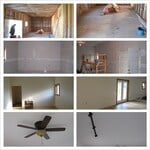
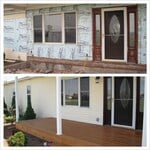
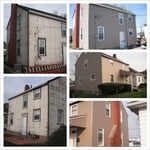
Additional Photos
Additional Photos
Additional Photos
Additional Photos
Additional Photos

+3

Recommended by78%of homeowners
Webb's Drywall
New to Angi
Plaster - InstallPlaster - Install - For BusinessPlaster - Repair+1 more

Serving Beaver, OH and surrounding areas

In business since 2025

Free estimates

Credit card accepted

We work extremely hard for the owner and our company strives to take care of all our client's unique needs and always have the owner's best interest at heart. We are very detailed and meticulous in our work. Our long-term vision is for us to become your go to Contractor with capabilities to do multiple types of Dry wall projects. \nCall us today youÂ’ll be relieved you did. Thank you \n

J & J Drywall Finishing
New to Angi
Plaster - InstallPlaster - Repair

Serving Beaver, OH and surrounding areas

In business since 2001

Free estimates

We are a locally owned and operated company that values honesty and integrity. We stand behind our workmanship on all of our completed projects. We specialize in a variety of residential services to include drywall and plaster. We also provide upholstery cleaning as well as tile and grout cleaning. We've earned a solid reputation in our 13 years of business and pride ourselves on the quality of our work as well as our commitment to outstanding results. We look forward to building long-term relationships with our clients and guarantee your satisfaction!

Showing 1-10 of 27
Plaster Repair questions, answered by experts

Plaster provides a durable, soundproof, and moisture-resistant finish compared to drywall.

Although they have similar applications, spackle and joint compound are not the same. Their primary differences lie in their composition, consistency, and ideal use cases.

Spackle is composed of gypsum and binding agents, making it thicker than joint compound. It dries quickly and is easy to sand, which makes it ideal for small wall repair projects like filling nail holes or patching minor damage.

Joint compound, also known as drywall mud, consists of limestone and gypsum. It is primarily used for large-scale projects, such as taping and finishing the seams on newly installed drywall. It tends to shrink more than spackle and can be more difficult to spread.

While both products can be used to fill small depressions and cracks, spackle cannot replace joint compound for taping and mudding new drywall. Conversely, you can often use joint compound for small patching jobs typically done with spackle.

This depends on how much plaster is applied and in how many layers, but a decent estimate is around 150 square feet. If you are applying only two coats on a small wall, there is a chance you may only need one or two gallons for the entire project. If you are plastering a large living room wall with high ceilings, using one of the more involved techniques–like Scagliola–that requires several coats, expect the project materials costs to add up quickly. 

Plaster can be a difficult DIY to master, especially if you plan to plaster an entire room, rather than patch a small area. Before you begin a plaster DIY project, you need to know which tools and type of plaster to use. It's also important to know how to prepare the surface and apply the plaster for a smooth finish. If that all sounds like a lot of work, you may prefer hiring a local plaster repair contractor to do the job.

Plastering and skimming are two different techniques for finishing walls. Plastering involves applying a thick layer of a plaster mixture—typically containing gypsum, lime, cement, sand, and water—to create a new surface. This process often requires multiple coats and is used for repairing significant damage or creating decorative textures. Skimming, on the other hand, is a technique that involves applying a thin layer of drywall compound or joint compound over an existing surface to smooth it out, covering minor imperfections, small cracks, or uneven textures for a polished look. Plastering is generally more costly and labor-intensive than skimming. Although some people use the terms interchangeably, they refer to different processes and materials.

The Beaver, OH homeowners’ guide to plaster repairs

From average costs to expert advice, get all the answers you need to get your job done.