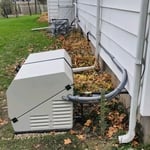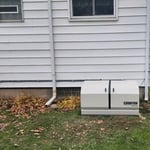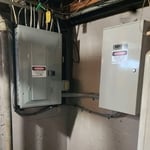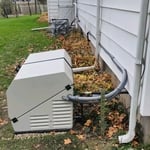








Top-rated generator install pros.

Get matched with top generator install pros in Smithville, NY

Enter your zip and get matched with up to 5 pros

Need a pro for your generator install project in Smithville, NY?

Select your specific project to find the pro for you.

Find Generator install pros in Smithville

Avatar for NYTRIC Electrical Contractors, LLC
NYTRIC Electrical Contractors, LLC
5.0(
3
)
Fixed Generator - InstallFixed Generator - RepairPortable Generator - Install

Serving Smithville, NY and surrounding areas

Approved

In business since 2007

Free estimates

Credit card accepted

NYTRIC Electrical Contractors, LLC, is Watertown New York's premier electrical contractor. With decades of combined experience, you can rest assured that we will get the job done to your exact specifications the first time, on time, every time. Call today, and find out first hand how world class our workmanship truly is!

Whole House Generator
Response time10 mins
Recommended by100%of homeowners
Sanner Electric
New to Angi
Fixed Generator - InstallGenerator - Install - For BusinessPortable Generator - Install

Serving Smithville, NY and surrounding areas

Approved

In business since 2000

Free estimates

Emergency services offered

With over 40 years serving Chenango, Madison, and Broome counties, Sanner Electric is your trusted electrical contractor for all your residential or commercial rewiring, upgrades, or generator installation needs. We've successfully wired entire brand new homes, additions to homes, and remodels. We also take regular calls to install or repair outlets and fixtures.

Astar Heating & Air Conditioning Inc
4.8(
138
)
Fixed Generator - InstallFixed Generator - RepairGenerator - Install+4 more

Serving Smithville, NY and surrounding areas

In business since 1976

Free estimates

Emergency services offered

"I used A-Star last summer. It went very well. From the salesman to the installers, everyone was very professional, very accommodating, and very punctual. The installation was done in the end of August 2014. When I initially contacted them, summer was just around the corner. As you can imagine, they were booked solid for installations through almost the end of summer, however, they loaned me 4 or 5 (I don't remember exactly) brand new window units to put throughout my house until they could complete the installation, and at no additional cost. I was very pleased with their service. Recently, an issue arose with the thermostat that affected our ability to use the Central Air. They came as soon as I called and serviced it at no charge being as that it had been installed less than a year ago. They offer service plans in connection with the manufacturers warranty, and they were significantly cheaper price wise than all the local competitors. I will continue to utilize their company and service, as well as highly recommend them to others.
"
Red Carpet Treatment
Furnace
AC
Recommended by98%of homeowners
Showing 1-10 of 38
Generator Install questions, answered by experts

Generators are safe to use as long as they are installed and operated correctly according to the manufacturer's recommendations. The most critical safety tips are to never use a portable or fuel-powered generator inside an enclosed space due to the risk of lethal carbon monoxide poisoning; always operate it outdoors where fumes can dissipate away from your home. Additionally, never attempt to connect a generator to your home’s electrical panel yourself—hire a professional to ensure the setup meets safety standards. Finally, avoid overloading the generator by not connecting more appliances than it is rated for, as this can damage your equipment or cause a fire.

While the rating will tell you how many watts the refrigerator needs at the peak of its cycle, it requires additional wattage to start. At the bare minimum, you’ll need a 1,500-watt generator to get the fridge up and running after a blackout. A 2,000-watt generator should be sufficient for most home refrigerators.

If you’re wondering if you can use your electric vehicle as a backup battery, it depends on whether your EV is compatible with bidirectional charging. This technology allows energy to flow both ways, enabling vehicle-to-home (V2H) backup power, vehicle-to-load (V2L) for appliances and camping, and vehicle-to-grid (V2G) to support the power grid. Compatible EVs convert stored DC energy into usable AC power, helping reduce energy costs and enhance grid stability while providing emergency backup power.

A portable generator can supply power to selected appliances and circuits in a home, but it's generally not designed to handle the entire household's electrical needs simultaneously. Portable generators have limited wattage capacity, so they are only designed to power essential devices and electronics temporarily until local power is restored. If your power needs outweigh the capabilities of a portable generator, consider installing a whole-home generator instead.

To determine the right size generator for your house, you should calculate the total wattage of the appliances and devices you want to power during an outage. List all essential items, note their start-up wattages, and add them together.

Here are some typical wattage requirements for common appliances:

  • Refrigerator: 600 watts

  • Large dehumidifier: 700 watts

  • Large window air conditioner: 1,400 watts

  • Water heater: 3,000 to 4,500 watts

  • Electric furnace: 5,000 to 25,000 watts

A 7,500-watt generator might be sufficient for essentials like a refrigerator, freezer, well pump, and lighting circuits. However, for high-demand items like a water heater or furnace, a whole-home generator is a better choice. A portable generator may be enough if you only need to power a few critical items.

While home square footage can offer a rough estimate, it is not always a reliable indicator. For reference, here are some typical generator sizes based on square footage:

  • 1,000 sq ft: 6–9 kW

  • 1,500 sq ft: 7–10 kW

  • 2,000 sq ft: 10–14 kW

  • 2,500 sq ft: 12–16 kW

  • 3,000 sq ft: 16–20 kW+

For the most accurate sizing, consult a professional who can calculate your home's peak and average power consumption and recommend the optimal generator.

The Smithville, NY homeowners’ guide to generator installs

From average costs to expert advice, get all the answers you need to get your job done.