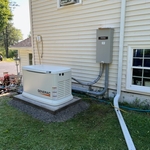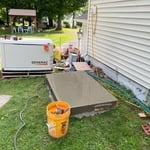








Top-rated generator install pros.

Get matched with top generator install pros in Peru, NY

Enter your zip and get matched with up to 5 pros

Need a pro for your generator install project in Peru, NY?

Select your specific project to find the pro for you.

Find Generator install pros in Peru

Avatar for Mr. Electric of the North Country
Mr. Electric of the North Country
4.7(
65
)
Fixed Generator - Repair

Serving Peru, NY and surrounding areas

Approved

In business since 2017

Emergency services offered

Credit card accepted

"Excellent service. Timely, courteous, and very professional - from scheduling to arrival and throughout the maintenance process. Our technician, Logan Ferguson was thorough in his work and very patient and courteous answering my many questions. Could not have had a better experience. Highly recommended."
Happy Customer!
Mr. Electric doing it right!
Happy Customer!
How we get things done at Mr. Electric
That's a nice run!

+1

Response time1 day
Response rate89%
16 neighbors recently requested a quote
Avatar for Roger's Service & Repair, Inc.
Roger's Service & Repair, Inc.
5.0(
2
)
Fixed Generator - InstallFixed Generator - RepairGenerator - Install - For Business+3 more

Serving Peru, NY and surrounding areas

In business since 1992

Free estimates

Emergency services offered

Roger's Service & Repair Inc. is an HVAC and plumbing contracting company that provides Sales, Service, Repair & Installation of Conventional Air Conditioning and Specializing in Ductless Mini Splits Heating / Cooling Systems including Natural / Propane Gas, Oil and Electric Heating Systems.\nROGERS also provides sales, service and repair of Generac Emergency Standby Generators for residential and commercial customers. \nResidential & Commercial 24/7 emergency services with Service Contracts available.

Response time8 hrs
Recommended by100%of homeowners
Showing 1-10 of 13
Generator Install questions, answered by experts

Setting up utilities on a vacant property usually takes at least a few months, or between 6 weeks to 16 weeks. This process requires working with the local planning and zoning department, hiring a building contractor or engineer to design the utility layout, securing permits, laying the lines, and connecting the utilities.

In most cases, there are no tax credits available for home generators. However, that’s a general statement that applies to federal tax credits, so you might have access to state or local tax incentives. You can check the Database of State Incentives for Renewables & Efficiency (DSIRE) for more information about your area. If you hire a reliable home generator installer, they should also know if there are any state or local perks you can use to reduce your installation costs, including tax breaks and rebates.

These advanced generators use a key fob or a smartphone app to remotely start, which is ideal for getting power back on immediately without venturing outside. This feature is more common on whole home generators, but you may be able to find it on large portable generators, too.

To determine the right size generator for your house, you should calculate the total wattage of the appliances and devices you want to power during an outage. List all essential items, note their start-up wattages, and add them together.

Here are some typical wattage requirements for common appliances:

  • Refrigerator: 600 watts

  • Large dehumidifier: 700 watts

  • Large window air conditioner: 1,400 watts

  • Water heater: 3,000 to 4,500 watts

  • Electric furnace: 5,000 to 25,000 watts

A 7,500-watt generator might be sufficient for essentials like a refrigerator, freezer, well pump, and lighting circuits. However, for high-demand items like a water heater or furnace, a whole-home generator is a better choice. A portable generator may be enough if you only need to power a few critical items.

While home square footage can offer a rough estimate, it is not always a reliable indicator. For reference, here are some typical generator sizes based on square footage:

  • 1,000 sq ft: 6–9 kW

  • 1,500 sq ft: 7–10 kW

  • 2,000 sq ft: 10–14 kW

  • 2,500 sq ft: 12–16 kW

  • 3,000 sq ft: 16–20 kW+

For the most accurate sizing, consult a professional who can calculate your home's peak and average power consumption and recommend the optimal generator.

Generators run on a variety of fuel types, ranging from natural gas to solar power. Keep in mind that fuel costs varying by type:

  • Natural gas: $2,000–$21,000 per year 

  • Liquid propane: $2,000–$21,000 per year

  • Diesel: $3,000–$20,000 per year

  • Gasoline: $500–$3,000 per year

  • Solar generator: $2,000–$25,000 per unit

  • Battery backup: $10,000–$25,000 per unit

The Peru, NY homeowners’ guide to generator installs

From average costs to expert advice, get all the answers you need to get your job done.