




Top-rated excavation pros.

Get matched with top excavation pros in Cape Vincent, NY

Enter your zip and get matched with up to 5 pros

Need a pro for your excavation project in Cape Vincent, NY?

Select your specific project to find the pro for you.

Find Excavation pros in Cape Vincent

Avatar for EMC Property and Excavation
EMC Property and Excavation
4.6(
9
)
Building Site - Preparation and ClearingBuilding Site - Preparation and Clearing - For BusinessExcavation - Major Grading or Resloping+2 more

Serving Cape Vincent, NY and surrounding areas

Approved

In business since 1996

Free estimates

Emergency services offered

"Chris is the best contractor we have ever worked with. He removed my fathers harbor and kept us informed on progress daily. You could not ask for a more honest businessman. What he thought would only take a few days turned into many days, he never complained and we know he absorbed some of the extra cost. He and his team are the Best in the business! I would never hesitate to hire him and his ethics were outstanding. He worked hard and God bless him he got the job done .I would recommend him highly. You won't be dissapointed."
Response time2 days
15 neighbors recently requested a quote
Recommended by87%of homeowners
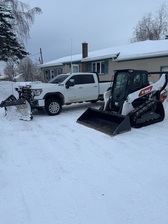
Horton's Services, Inc.
New to Angi
Building Site - Preparation and Clearing - For Business

Serving Cape Vincent, NY and surrounding areas

Approved

In business since 2000

Free estimates

Offers commercial services

We take great pride in our experience, expertise, quality, and customer service that we provide to meet the consumer's needs. It is our mission to provide excellent workmanship and complete customer satisfaction from start to completion of a project. In order to understand the needs and expectations of our customers, we take great care to work and communicate with every customer in a professional manner. Our reputation is based on service, safety, and quality, regardless of how large or small the job.

Rail
Rail
Rail
Rail
Response time1 day
3 neighbors recently requested a quote
Showing 1-10 of 42
Excavating questions, answered by experts

Trenches are typically 12 to 24 inches deep and 8 inches wide. However, the required depth depends on the specific project and local ordinances. For example, a French drain may need to be 18 inches deep, while a water pipe might require a depth of 24 inches and a drainage pipe 36 inches. Your city or county may have specific regulations, so it's wise to consult with an excavation professional to determine the correct depth for your project.

Sewer lines can be buried anywhere from 18 inches to 8 feet deep, with a common average depth between 18 and 30 inches. The exact depth depends on local factors like climate and soil type. In colder regions, pipes must be buried deeper (below the frost line) to prevent freezing, sometimes as deep as 8 feet. The digging depth can also impact the cost of sewer line replacement. To find the specific depth for your property, you can check the building plans for your system, which should be on file with your city or local sanitation department since permits are required for installation.

As a general rule, the protected area should be about 1½ times as wide as the canopy of the tree’s leaves. This digging measurement can vary by tree species and the age of the tree. Of course, that can be a lot of fencing for larger trees, which is why our first step is about making difficult decisions on which trees to save.

There is no standard depth for burying a septic tank; they are typically buried anywhere from 4 inches to 4 feet underground. The final depth depends on several factors, including the depth of your main sewer line, the height of the bedrock, soil type, local regulations, and the property's landscape. If you plan to grow grass or plants over the tank, a depth of at least 4 to 6 inches is recommended. Deeper tanks can be more difficult to locate, but a septic professional can help find it for you.

Digging a bush up by the roots is the most natural DIY method for removing a bush stump. Start by identifying the shrub type and revealing its roots. Cut the shrub to its base and loosen the soil, ensuring no utility lines are nearby. Optionally, treat the base with herbicide, then dig around the roots and cut a circle around the shrub using various tools. Dig a trench, cut the base of the root ball, and finally fill the hole to prevent regrowth. This thorough process ensures complete removal without damaging surrounding areas.

The Cape Vincent, NY homeowners’ guide to excavation services

From average costs to expert advice, get all the answers you need to get your job done.