


Top-rated excavation pros.

Best excavation pros near Black River, NY

Enter your zip and get matched with up to 5 pros

Need a pro for your excavation project in Black River, NY?

Select your specific project to find the pro for you.

Top-Rated Excavation pros in Black River - Updated Nov 2026

Over the Top Unlimited, Inc.
New to Angi
Building Site - Preparation and ClearingBuilding Site - Preparation and Clearing - For Business

Serving Black River, NY and surrounding areas

Approved

In business since 2023

Free estimates

Credit card accepted

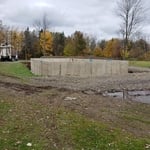
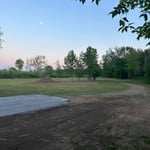
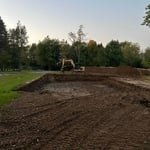
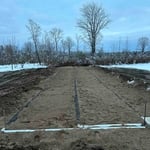
Over The Top Unlimited Inc. is a fully incorporated, licensed and insured excavation and proudly serving Parish, NY and the surrounding areas. Owned and operated by Michael Peters, the company brings over 20 years of hands-on industry experience to every residential and commercial project. \n \nWith a full fleet of heavy equipment and the expertise to handle projects of all sizes, Over The Top Unlimited Inc. specializes in excavation, septic system installation and replacement, foundations, basement and crawl space work, waterproofing, and encapsulation services. Whether preparing a site for new construction, replacing aging infrastructure, or solving drainage and foundation issues, Michael and his team deliver dependable workmanship built to last. \n \nFrom start to finish, clients can expect professionalism, efficiency, and quality results backed by decades of experience in the field. \n

6 neighbors recently requested a quote
Horton's Services, Inc.
New to Angi
Building Site - Preparation and Clearing - For Business

Serving Black River, NY and surrounding areas

Approved

In business since 2000

Free estimates

Offers commercial services

We take great pride in our experience, expertise, quality, and customer service that we provide to meet the consumer's needs. It is our mission to provide excellent workmanship and complete customer satisfaction from start to completion of a project. In order to understand the needs and expectations of our customers, we take great care to work and communicate with every customer in a professional manner. Our reputation is based on service, safety, and quality, regardless of how large or small the job.

Rail
Rail
Rail
Rail
Response time1 day
1 neighbors recently requested a quote
...
Showing 1-10 of 63
Excavating FAQs, answered by experts

Trenching and boring are two distinct methods for installing underground utilities. Trenching involves digging a channel using equipment like an excavator, trencher, backhoe, or shovel. While it is a simpler process, it causes significant disruption to the surface, landscaping, and surrounding ecosystems.

Boring, also known as directional boring, is a less invasive alternative that uses a drill to create a tunnel for utility lines without disturbing the surface. This method is more precise and is ideal for installations that need to go underneath buildings, roads, or bodies of water. Although boring is less disruptive, it is generally more expensive than trenching.

The cost to drill a well varies, with a national average of around $5,500 for a 150-foot well. However, prices can fluctuate significantly based on several factors, including your location, the required well depth, geological conditions, local regulations, and the specific drilling methods used. For the most accurate cost assessment, it is best to research and get quotes from local well-drilling professionals in your area.

Tree experts don’t advise against digging through tree roots, but instead encourage caution and consultation with a local arborist to make sure you don’t damage the tree’s structure or interrupt its water or nutrient intake. An arborist can recommend specific practices when digging and help prune the roots or dig a trench for utilities with a tool that can remove soil without touching the tree’s roots.

No, fire blight does not survive free in the soil but instead is carried through insects, animals, rain, or wind during the spring. Keep in mind that it can also spread on tools, which is why you should always disinfect them in between cuts.

Septic drain lines (or leach lines) are typically buried between 18 and 36 inches underground, and should be at least 6 inches below the surface. These pipes are perforated and surrounded by filtering materials like sand or gravel. Burying the lines at this depth helps minimize odors and allows bacteria and other biological processes in the soil to effectively treat the wastewater. Burying lines too close to the surface can cause issues unless the soil is very compact and stable.

The Black River, NY homeowners’ guide to excavation services

From average costs to expert advice, get all the answers you need to get your job done.