



Top-rated generator install pros.

Get matched with top generator install pros in Bergen, NY

Enter your zip and get matched with up to 5 pros

Need a pro for your generator install project in Bergen, NY?

Select your specific project to find the pro for you.

Find Generator install pros in Bergen

John Betlem Heating & Cooling Inc - Electrical
4.7(
157
)
Fixed Generator - Install

Serving Bergen, NY and surrounding areas

Approved (Corporate)

In business since 1941

Free estimates

Emergency services offered

John Betlem Heating & Cooling is a 3rd generation company founded in 1941. They provide Residential HVAC, Electrical and Insulation Services to Rochester, NY and the surrounding towns. John?s slogan that still holds true today is to do ?whatever it takes? to satisfy customers.\n\nJohn Betlem is a premier family operated solutions provider, passionately committed to the health, safety, and comfort for all they serve.

33 neighbors recently requested a quote
Recommended by91%of homeowners
Avatar for Loos Electric, Inc.
Loos Electric, Inc.
4.9(
17
)
Portable Generator - Install

Serving Bergen, NY and surrounding areas

Approved

In business since 2021

Free estimates

Credit card accepted

"They were great I like them they cleaned up after themselves I will use them again and I will call him again to do more jobs even though we use them for installing a fan as well he was great thank you for the service."
Response time1 day
2 neighbors recently requested a quote
Recommended by94%of homeowners
Avatar for Schedel Electric
Schedel Electric
5.0(
10
)
Fixed Generator - InstallPortable Generator - Install

Serving Bergen, NY and surrounding areas

In business since 2022

Free estimates

Emergency services offered

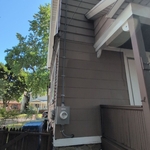
"Project was replacement of breaker box and electrical riser (the wires on the side of the house from the power company) whose insulation deteriorated and caused water leakage into breaker box during heavy rains. Got three proposals and went with Schedel. Very satisfied. Their honesty, flexibility, and punctuality were commendable. Unlike other contractors, they don't listen to the radio while working. Their quote included relabeling the circuit breakers, a plus since other contractors charge extra. Finally, their quote was significantly lower than the other two contractors. And the payment terms were flexible, to say the least."
Response time5 hrs
Response rate98%
Recommended by100%of homeowners
Showing 1-10 of 19
Generator Install questions, answered by experts

It is safe to run a generator continuously, but you must follow safety protocols to ensure personal and home safety. Read the manufacturer’s instructions for specific recommendations, but the general recommendation is to turn generators off overnight or when you’re away from the house. Overworked generators can pose a fire hazard and if your generator is not in a well-ventilated area, running it continuously could lead to carbon monoxide poisoning.

In many cases, yes. There are models called dual-fuel generators and fuel switches, but only between certain types of fuel. For example, with the right setup you can convert a generator from natural gas to propane. Some allow switching between diesel and gasoline. There are even tri-fuel generators available in some cases, which adds a large layer of security if you are worried about fuel availability in times of crisis. Always check your generator capabilities and manual instructions before trying to switch fuels. Some generators can use another fuel but may need a fuel conversion kit to prep them first.

To determine the right size generator for your house, you should calculate the total wattage of the appliances and devices you want to power during an outage. List all essential items, note their start-up wattages, and add them together.

Here are some typical wattage requirements for common appliances:

  • Refrigerator: 600 watts

  • Large dehumidifier: 700 watts

  • Large window air conditioner: 1,400 watts

  • Water heater: 3,000 to 4,500 watts

  • Electric furnace: 5,000 to 25,000 watts

A 7,500-watt generator might be sufficient for essentials like a refrigerator, freezer, well pump, and lighting circuits. However, for high-demand items like a water heater or furnace, a whole-home generator is a better choice. A portable generator may be enough if you only need to power a few critical items.

While home square footage can offer a rough estimate, it is not always a reliable indicator. For reference, here are some typical generator sizes based on square footage:

  • 1,000 sq ft: 6–9 kW

  • 1,500 sq ft: 7–10 kW

  • 2,000 sq ft: 10–14 kW

  • 2,500 sq ft: 12–16 kW

  • 3,000 sq ft: 16–20 kW+

For the most accurate sizing, consult a professional who can calculate your home's peak and average power consumption and recommend the optimal generator.

To power a central air system during a power outage, the whole-house generator will need to be at least 5,000 watts, and this number will significantly increase for larger units. Check the specific wattage requirements of your AC unit to choose the right generator size. Consider consulting a generator installer to ensure your whole-house generator meets your electrical load needs.

Homeowners can often access federal tax credits, such as the Investment Tax Credit (ITC), which covers a percentage of installation costs. Many states and utilities offer additional rebates, grants, or performance-based incentives. These programs can significantly lower your upfront investment. Check the Database of State Incentives for Renewables and Efficiency (DSIRE) or contact your local energy office for current offers.

The Bergen, NY homeowners’ guide to generator installs

From average costs to expert advice, get all the answers you need to get your job done.