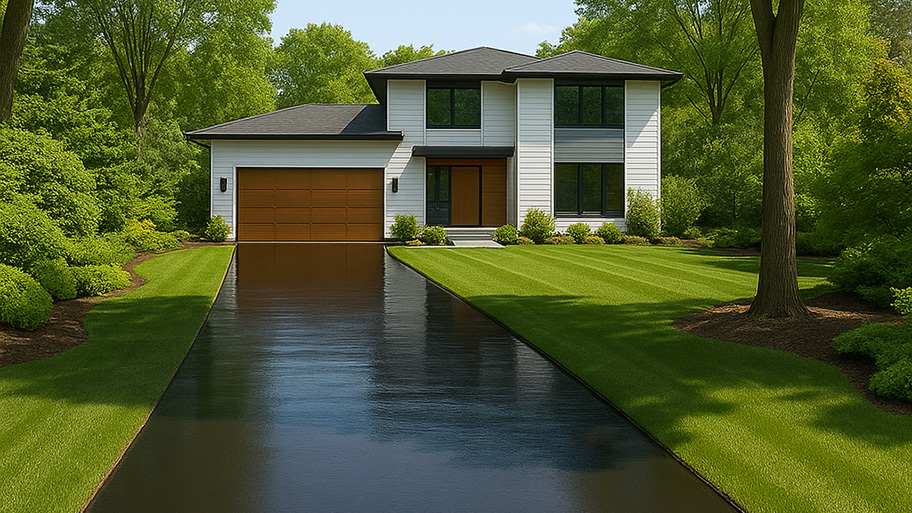
"I recently had the pleasure of hiring A Plus Sealing LLC for my driveway, and I couldn't be happier with the results! From start to finish, their team demonstrated professionalism, expertise, and attention to detail. Not only did they deliver exceptional quality work, but they also completed the project on time and within budget. My driveway looks brand new, and I've received numerous compliments from neighbors. I highly recommend A Plus Asphalt Sealing to anyone in need of asphalt sealing services. Thank you for exceeding my expectations!"
"I only use James when I need some work done to my house. He responds fast, gets the work done quicker than just about anyone else I've ever used and seems very concerned with leaving his customers happy."
We are a professional and energetic landscaping company who puts the WOW into every project, large or small. Our pricing is competitive and our response is quick. We thank you for selecting us.
Gravel is the most economical and least expensive driveway material, costing between $1 and $3 per square foot. This is significantly cheaper than alternatives like asphalt or concrete. However, it's important to consider long-term costs, as gravel driveways require regular maintenance. You will likely need to add new gravel filling once or twice a year and regularly rake it to keep it level, which can add to the overall cost over time.
Instead of a set number of types, asphalt comes in variations designed for different needs. Some are categorized by temperature—hot mix, warm mix, and cold mix. Others are sorted by composition, like dense-graded, gap-graded (such as Stone Matrix Asphalt), porous, and mastic asphalt. There are also modified versions with added compounds like polymers, rubber, or emulsions. Instead of focusing on a number, it may be more useful to understand how contractors customize asphalt for durability, climate, and traffic conditions.
The dimensions of a driveway apron vary based on local building codes, the width of your driveway, and the distance between the driveway and the road. On average, aprons range from 12 to 24 feet wide and 8 to 18 feet long. Typically, the end of the apron connected to the driveway matches its width—such as 10 to 12 feet for a single-car driveway—while the end at the street flares out to allow cars to turn in and out more easily. In some areas, you may not be responsible for the portion of the apron that extends beyond the sidewalk, but this depends on local laws.
Asphalt driveways are affordable and able to withstand sub-zero temperatures. The asphalt surface makes it easy to plow snow, and it has excellent traction for slippery winter days. Another benefit: it absorbs heat from the sun and can then help to melt snow and ice more quickly than other surfaces.
The answer to whether or not you need to get a permit before you start your driveway can vary widely based on local ordinances and the scope of your driveway ideas. In most urban and suburban areas, a permit is needed before building a new driveway to ensure that a homeowner is using safe materials and proper drainage practices while designing and constructing a new driveway. In some rural areas, a homeowner may not be required to apply for a permit. When building a new driveway on your own, always check with your local building department to see if you need to request a permit. When hiring a driveway contractor, verify that the right permits are being used before driveway construction begins.
The Owyhee, NV homeowners’ guide to asphalt driveway services
From average costs to expert advice, get all the answers you need to get your job done.
Adding a new asphalt driveway to your home can boost its overall appearance and give homeowners a nice ROI down the line. But how long do asphalt driveways last, and what can you do to maximize their lifespans? Read this guide to find out.