


Top-rated deck staining pros.

Get matched with top deck staining pros in Mcgill, NV

Enter your zip and get matched with up to 5 pros

Need a pro for your deck staining project in Mcgill, NV?

Select your specific project to find the pro for you.

Find Deck staining pros in Mcgill

Avatar for Welcome Home Moving Services
Welcome Home Moving Services
5.0(
7
)

Serving Mcgill, NV and surrounding areas

In business since 2020

Free estimates

Credit card accepted

"They were excellent, I would highly recommend. Everyone was very professional and showed up right when they said they would. They were gentle and everything arrived intact. They had us on the road in no time."
Additional Photos
Additional Photos
Additional Photos
Additional Photos
Additional Photos

+1

Recommended by100%of homeowners

Deck Staining questions, answered by experts

Staining a deck is typically less expensive upfront than painting. The cost to stain a deck professionally averages around $850, with most homeowners paying between $550 and $1,250, depending on the deck's size. A DIY staining project can cost less than $100. The cost to paint a deck ranges from $500 to $2,000. While the initial cost of staining is lower, it's important to consider long-term expenses. Paint can last up to 10 years, whereas stain needs to be reapplied every few years, which could lead to higher costs over time.

Limewash and whitewash do not harm surfaces if you apply them correctly. Use on non-suitable surfaces can cause issues. For instance, applying limewash or whitewash to surfaces with existing sealants or incompatible materials may lead to poor adhesion or flaking. Also, harsh cleaning agents on limewashed or whitewashed surfaces can damage the finish. Proper preparation, application, and maintenance ensure that limewash and whitewash do not harm surfaces.

Eggshell and satin finishes are best for porches because they sit in the sweet spot between scuffable matte and distracting high gloss. Your porch sees a fair amount of wear and tear, so you don’t want paint that’ll show every mark like matte, but you don’t want to be blinded by glossy paint in the sun either. Eggshell and satin have durability and a look that sits nicely in the middle.

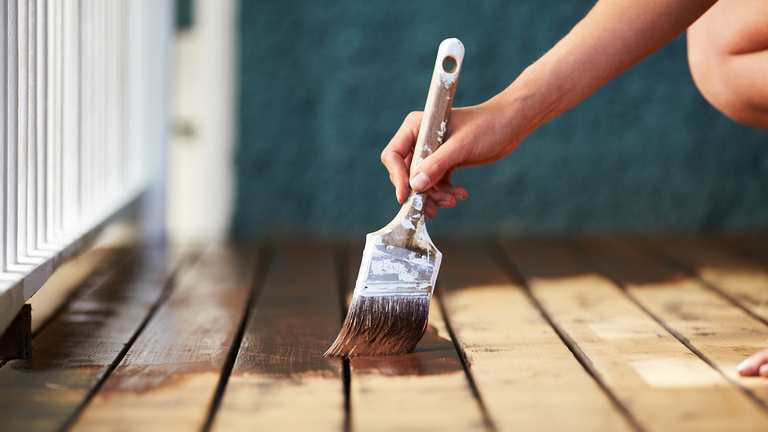
Whether to brush or roll stain on wood depends on the project and your preference. Brushing is ideal for smaller, intricate areas and offers more control over the application, ensuring thorough coverage and penetration into the wood's grain. 

Conversely, rolling is efficient for more extensive, flat surfaces and can save time. However, it is not always the best fit for textured or uneven wood. Some projects may benefit from combining both methods, using a brush for detail work and a roller for broader areas. Ultimately, the choice between brushing and rolling depends on the specific requirements of your staining project.

Unless you’re using a 2-in-1 formula or painting over an existing coat of paint, it pays to apply a coat of primer ahead of your new paint. Decks see a lot of footfall and exposure to extreme and sudden temperature changes and moisture levels. The primer promotes better paint adhesion, moisture repellency, and a smoother finish, which means you’ll often need fewer coats of paint. 

The Mcgill, NV homeowners’ guide to deck staining services

From average costs to expert advice, get all the answers you need to get your job done.