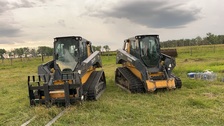
My name is Oakley I started this company 3 years ago at the age of 20 because I knew a lot of people who wanted land cleared and there was a demand and nobody really did it so my objective is always too build a great relationship with the customer and get the job done right.
Clifton Land Leveling and Excavation is committed to excellence in every aspect of our business. We uphold a standard of integrity bound by fairness, honesty and personal responsibility. Our distinction is the quality of service we bring to our customers. Accurate knowledge of our trade combined with ability is what makes us true professionals. Above all, we are watchful of our customers interests, and make their concerns the basis of our business.
Reliant Construction offers full service home improvement crews, including roofing, siding, windows, and gutters. We service Northern Kansas, Eastern Colorado and the entire state of Nebraska. We will travel to your job request site.
There are several methods to hollow out a tree stump, and the best one depends on your tools, experience, and priorities. Common methods include using a chisel and hammer, a chainsaw, or burning.
Chisel and Hammer: This is often considered the easiest approach for those with limited tools or experience, though it is the most time-consuming.
Chainsaw: Using a chainsaw is the fastest method, but it comes with significant safety risks, especially for inexperienced users.
Burning: This can be an effective method, but it is not recommended unless you can first drill holes into the stump. Without holes, the stump will be difficult to light and may not burn completely through.
A power drill with at least a ⅜-inch diameter bit can make the job quicker and easier, regardless of the primary method. While you can use a chisel or chainsaw without a drill, it will require more time and effort. Always wear protective goggles and thick gloves, as splinters are an inevitable risk.
Completion time ranges from days to weeks, contingent on project size, environmental conditions, and regulatory approvals.
Sewer lines can be buried anywhere from 18 inches to 8 feet deep, with a common average depth between 18 and 30 inches. The exact depth depends on local factors like climate and soil type. In colder regions, pipes must be buried deeper (below the frost line) to prevent freezing, sometimes as deep as 8 feet. The digging depth can also impact the cost of sewer line replacement. To find the specific depth for your property, you can check the building plans for your system, which should be on file with your city or local sanitation department since permits are required for installation.
The best way to protect tree roots is to avoid the roots entirely by excavating outside the root radius of the tree. For nearby projects, it’s a good idea to construct a temporary retaining wall. But that’s not always possible, depending on the project and the root system. In these cases, consider using alternative equipment like an auger to tunnel under the ground.
Remember, tree roots can damage nearby cement foundations as they grow. If a tree is close enough to interfere with large excavations, it may be better to remove the tree than risk future problems.
A joint utility trench, or joint trench, is a long, buried ditch on a property that contains two or more utility lines rather than running the lines in multiple trenches. Some utilities, like gas and electric or electric and communication lines, are better suited to joint trenching, while others, like water and sewer, are not allowed to be in the same trench.
The Sargent, NE homeowners’ guide to excavation services
From average costs to expert advice, get all the answers you need to get your job done.
Excavation costs $1,500 to $6,300 for most residential projects—but it depends on factors like the size of the area. This guide will help you plan a budget.
You can't have an in-ground pool without digging into the ground. How much does pool excavation cost, and can you take it on yourself? Our guide explains.