Top-rated landscapers.

Get matched with top landscapers in Curtis, NE

Enter your zip and get matched with up to 5 pros

Need a pro for your landscaping project in Curtis, NE?

Select your specific project to find the pro for you.

Find Landscapers in Curtis

Mark's Landscaping
New to Angi

Serving Curtis, NE and surrounding areas

In business since 2021

Free estimates

Offers commercial services

We are a locally owned and operated company. We value honesty and integrity in all aspects of our business. We offer a variety of home improvement services that are customized to each individual project. We pride ourselves on the quality of our work, as well as our commitment to outstanding results. We look forward to building lasting relationships with our clients and guarantee your satisfaction!

The Landscapin Family Lawn Care & Design - Inicio Facebook
New to Angi

Serving Curtis, NE and surrounding areas

In business since 2020

Free estimates

Credit card accepted

When you are looking for a contractor that follows business practices such as promptly returning phone calls, arriving on time for appointments and following through on promises, then call our reputable business today. We will be the one and only contractor you'll ever need.\nOur customer satisfaction is our top priority. We will earn your trust for a lifetime. We believe in making all clients repeat clients. You can be assured you're in good hands with our crew working for you.\nCall us today at you'll be pleased you did

Showing 1-10 of 28
Landscaping questions, answered by experts

Grass is the most popular and safest option for planting over a septic drain field, but you can also plant small flowering plants and other lightweight plants that don’t have woody or deep roots. Avoid trees and bushes within 10 feet of the field, as the woody roots can crack the perforated pipes. You should also avoid planting vegetable or fruit gardens over your drain field, as a leak from the pipes could contaminate the soil and put anyone who eats the produce at risk.

While there are over 400,000 different flowering plants worldwide, there are five main types of flowers. These flower types are based on their lifecycles, giving each type a unique personality. These types are:

  • Annuals, which complete their entire life cycle within a single growing season. 

  • Perennials, which the tops die off in the winter but regrow in spring. 

  • Biennials, which complete their entire life cycle within two years.

  • Hybrids, which exhibit either annual or perennial behaviors depending on location

  • Flowering shrubs, which are small to medium-sized perennial woody plants, such as shrubs or evergreens.

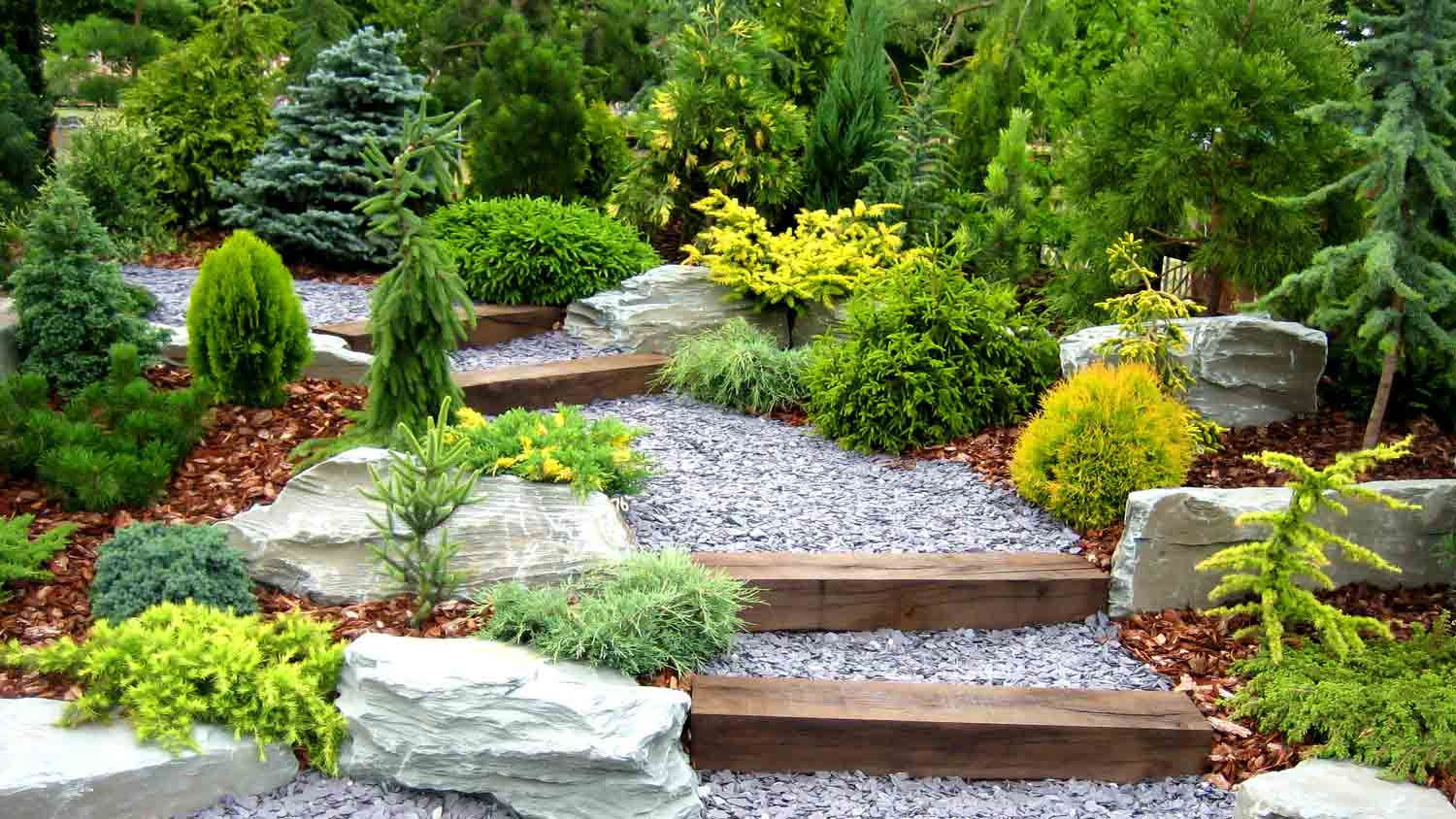
Many ways to landscape a steep slope on a budget exist. Avoiding expensive retaining wall construction is the first step. Consider creating a rocky slope with boulders or large stones, or think about planting perennials that return every year with a single investment. Transplanting small trees from elsewhere on your property is also possible and can help to stabilize steep slopes without purchasing new ones. 

You should plant trees at least 15 to 20 feet away from your house, and more if the tree will grow large and spread its limbs. Trees pose several dangers to houses when planted too close. They can litter the roof with leaves and branches, create fire hazards, make a ladder for larger pests, and even damage the foundation as their roots grow.

Yes, rock gardens do need water. That said, they typically require less regular watering and, instead, more occasional, deep watering since the rocks trap moisture for longer than mulch. Make sure you don’t water your rock garden too much during the winter.

The Curtis, NE homeowners’ guide to landscaping services

From average costs to expert advice, get all the answers you need to get your job done.