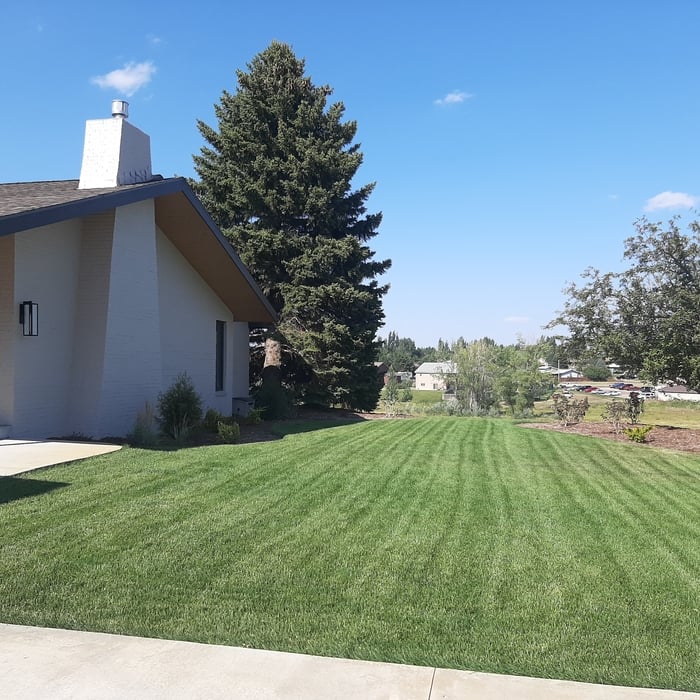
"Showed up on time. Had a good crew of workers who got the job done in about a half a day. Returned to do some adjustments promptly for no extra costs. Offered to come back whenever I needed any additional help."
Bismarck-Septic-Excavating is committed to excellence in every aspect of our business. We uphold a standard of integrity bound by fairness, honesty, and personal responsibility. Our distinction is the quality of service we bring to our customers. Accurate knowledge of our trade combined with ability is what makes us true professionals. Above all, we are watchful of our customers interests and make their concerns the basis of our business.
All Phases Construction is a full service contractor capable of handling all your residential and commercial construction projects. All Phases Construction focuses on the customer needs, and expectations to ensure your project is completed on time and satisfactorily. Customer service, quality products and craftsmanship is all you can expect from All Phases Construction. Call us today!
West River Improvement was established in 2006 with eight years of combined experience. We provide the best customer care available for each home owner. Call us today for a free estimate!
We pride our company on Reliability, Great Communication, Integrity, and Quality work. We strongly believe in giving our absolute best in all of our projects, no matter how big or small. We are experts in our trade, and will always keep you educated on your particular task or project. We look forward to earning your business!
If you’re planning to dig on your property, you’ll need to check for underground utility lines. Call the national call-before-you-dig 811 number. Once connected to an operator, you can schedule a site visit to mark underground lines. This way, you won’t accidentally dig into pipes and can cause major (read: costly) issues.
A trench that is less than 5 feet deep often doesn't require a protective system. Most residential trenches will not go this deep (the typical residential drainage trench is just 18 inches deep). In the event that an excavator needs to dig more than 5 feet beneath the surface, a protective system is required unless the excavation is in entirely stable rock.
Yes, chipmunk holes may have two or more entrances. Chipmunks can create an entire network of burrows. Having multiple entrances makes it easier for them when trying to escape from a predator, such as a snake, or if an entrance collapses due to flooding. Each entrance leads to the nesting chamber underground, which is where the chipmunk spends the majority of its time sleeping.
A crawl space can be as little as 42 inches below the grade of your house, but this is not always recommended in flood-prone areas. At a minimum, there must be at least 16 inches of clearance between the ground and the floor joists to access the space in an emergency.
The time it takes to build a pool—and dig out the area—varies based on the pool size and type. A professional excavator will take between four and eight hours to dig a pool. The process will take longer if they encounter large boulders or tree roots. Keep in mind that this is a small part of the process in the long run. You will need between eight and 12 weeks to build a pool from start to finish, including the time to apply for permits.
The Hebron, ND homeowners’ guide to excavation services
From average costs to expert advice, get all the answers you need to get your job done.
Excavation costs $1,500 to $6,300 for most residential projects—but it depends on factors like the size of the area. This guide will help you plan a budget.
You can't have an in-ground pool without digging into the ground. How much does pool excavation cost, and can you take it on yourself? Our guide explains.